Gloriosa superba, commonly known as the Flame Lily or Climbing Lily, is a stunning perennial climbing plant native to tropical regions of Asia and Africa. Its distinctive flowers, resembling a cluster of vibrant flames, make it a prized ornamental species in horticulture. This versatile plant is valued for its striking appearance, long flowering period, and adaptability to various growing conditions.
I. Basic Introduction
Gloriosa superba is a herbaceous perennial vine indigenous to parts of China (southern Yunnan and Hainan), tropical Asia, and Africa. In its natural habitat, it can be found at elevations up to 1200m, particularly in the Xishuangbanna region of Yunnan.
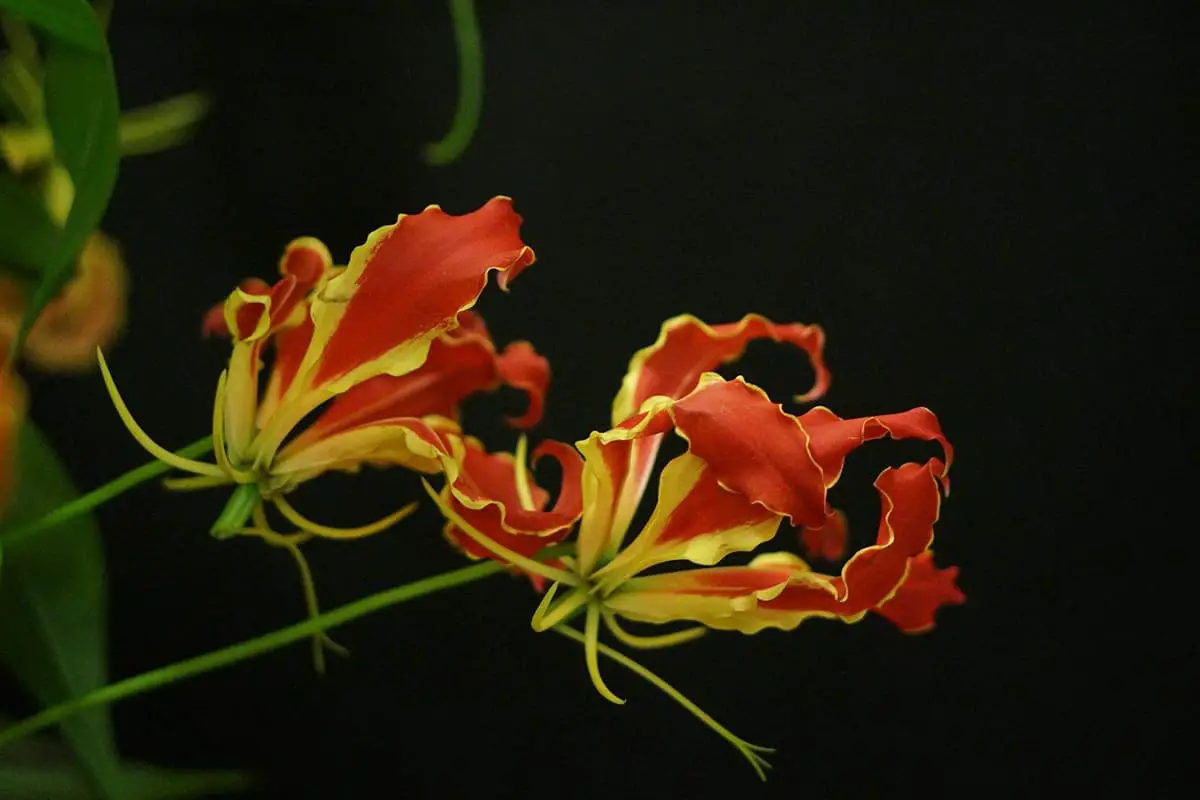
The plant features a horizontal rhizome, approximately 2 cm in diameter, with a light yellow-brown coloration. Growth typically begins in March, with flowering commencing in mid-June and peaking during July and August. Seed maturation occurs from September to October.
The above-ground stem is slender and climbing, reaching heights of up to 3 meters. It’s green in color, less than 1 cm in diameter, and sparsely branched.
II. Common Types
Ornamental Species
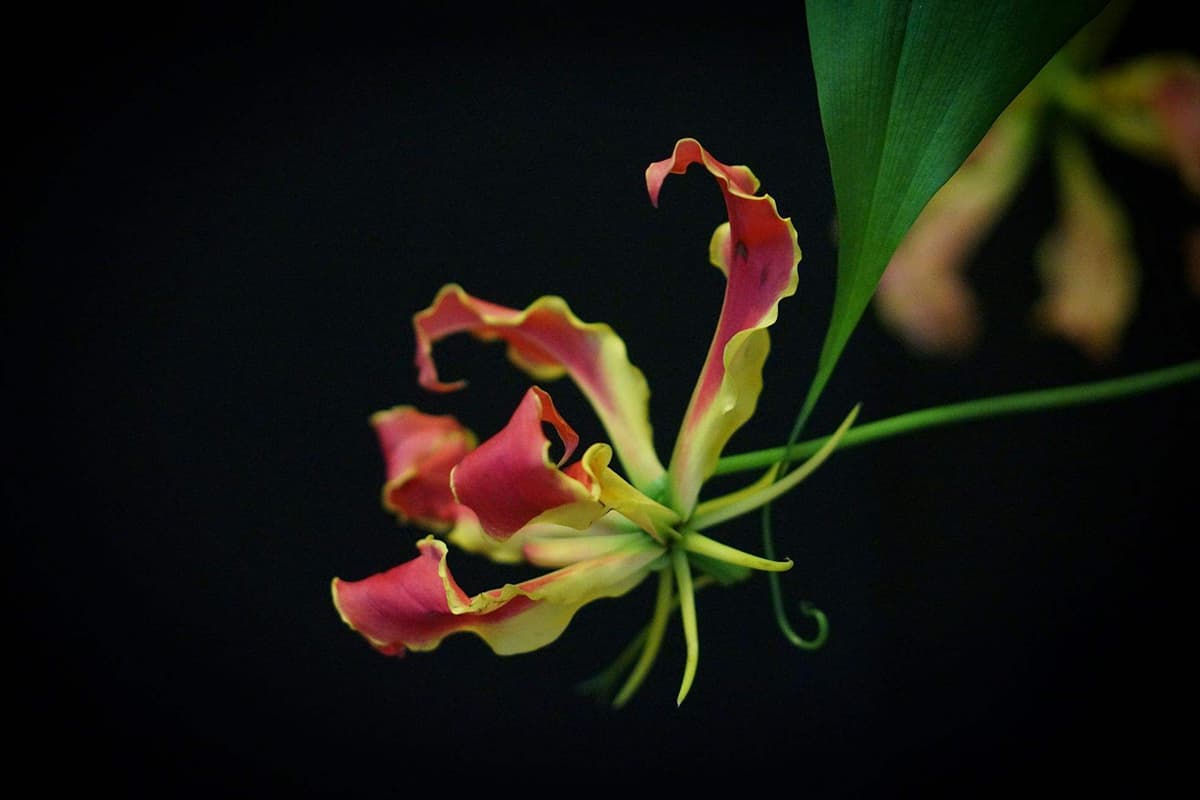
- Gloriosa rothschildiana: Features wide lanceolate leaves and flower tepals that are curled and sometimes wavy at the edges. Petals are orange-red with a golden yellow base.
- Gloriosa virescens: Characterized by oval leaves and red or yellow flowers with smooth petal edges.
- Gloriosa carsonii: Exhibits wide petals in purplish-red with lemon-yellow edges.
- Gloriosa greeneae: Displays wide, flat petals in bright yellow.
- Gloriosa verschurii: Has wide petals with slightly wrinkled edges, colored orange-red with a yellow base.
Cultivated Varieties
- Golden Gloriosa (G. superba cv. Aurea): Features spiral petals in orange-red.
- Peacock: Medium-sized flowers (8-12 cm in diameter) with deep red petals edged in orange-yellow. Dark green, lanceolate leaves.
Varieties
- Large-flowered Gloriosa (var. grandiflora)
III. Growth and Distribution
Gloriosa superba is native to tropical regions in Asia and Africa, thriving in forest understories or among shrubs at elevations between 950-1250 meters.
IV. Characteristics and Features
Gloriosa superba is a unique climbing plant among bulbous flowers, typically reaching heights of 120-160cm, though it can exceed 300cm when provided with adequate support. The plant’s growth is characterized by:
- Underground development correlating with above-ground growth
- Lanceolate leaves arranged alternately, oppositely, or in whorls from the third or fourth node upwards
- Flower formation at upper nodes, with pedicels 10-15cm long
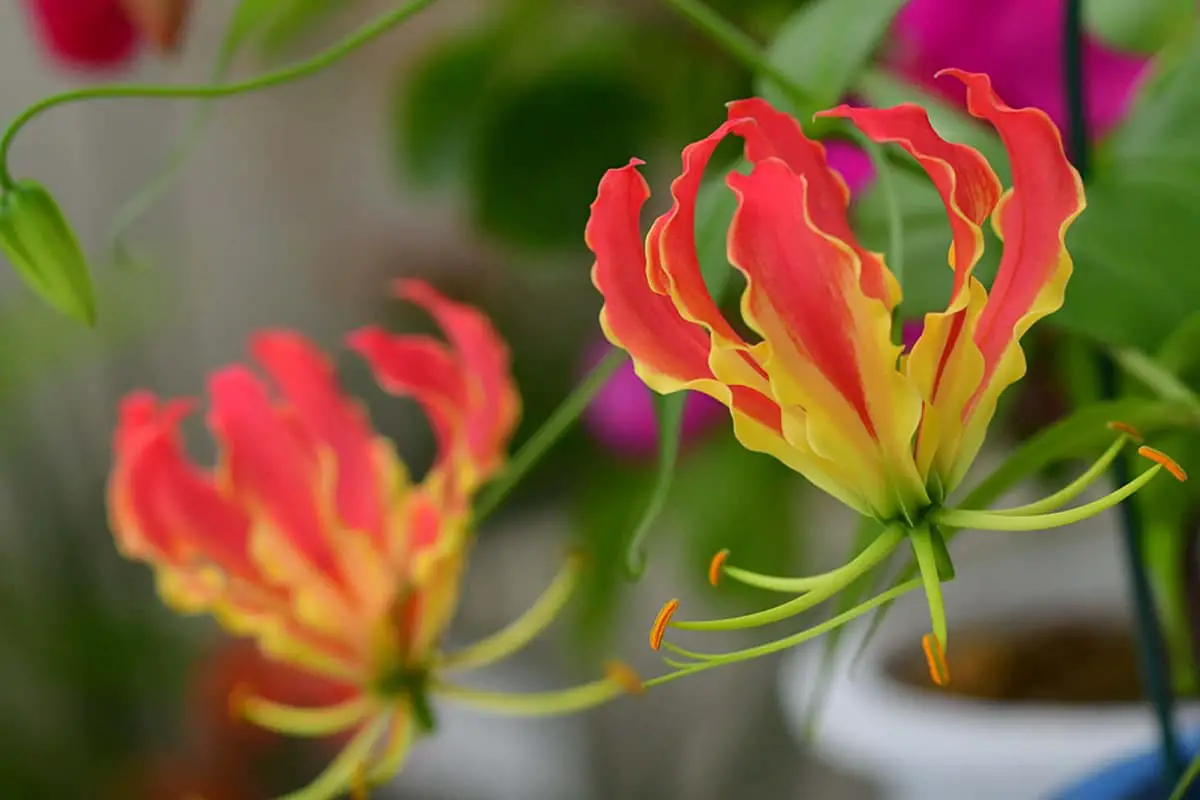
- Six revolute petals with wavy edges
- Six stamens with two chambers and three rooms
- Flower diameter of approximately 8-10cm
V. Habitat and Behavior
Gloriosa superba thrives in warm, humid environments:
- Optimal growth temperature: 22-24°C
- Sensitive to cold; temperatures below 22°C affect flower development
- Frost damage occurs below 15°C
- Requires 40-45% shade during seedling stage, 10-15% during growth and flowering
- Soil humidity should be maintained at about 80%
- Ample water needed during growth, reduced during winter dormancy
- Tubers may need to be dug up and stored in sand or sawdust during dormancy in colder regions
VI. Cultivation Method
Cultivation Technique
- Planting: Late April, plant rhizomes flat in soil, 3cm deep. Use 30cm diameter pots for container growing.
- Support: Add support when sprouts reach 20cm to prevent breakage.
- Care: Regular spraying and fertilization (every two weeks) with balanced NPK fertilizer.
- Flowering: Blooms from July to October/November.
- Pollination: Artificial pollination can increase fruit and seed production.
- Overwintering: Can overwinter at temperatures above 5°C. In colder areas, dig up and store rhizomes.
Cultivation Tips
- Semi-shade plant, suitable for greenhouse cultivation
- Maintain high air humidity, especially during root growth
- Optimal growing temperature: 17-23°C
- Use fertile, well-draining soil
- Plant pre-sprouted bulbs for consistent growth
- Space plants approximately 150cm apart
Harvesting and Post-Harvest Care
- Cut flowers when the first bloom is fully open and at least two buds have formed
- Treat cut flowers with STS and 10% sugar solution, followed by gibberellic acid to extend vase life
- For storage, harvest when lowest buds show color
- Can be stored dry (0-1°C for 4-6 weeks) or wet (0-1°C for up to 4 weeks)
VII. Propagation Methods
- Division: Separate rhizomes in spring before bud break
- Seeding: Sow in spring or autumn
- Tissue culture: Using MS medium with specific hormones and nutrients
VIII. Value and Applications
Gloriosa superba is highly valued in horticulture for its:
- Excellent cut flower qualities
- Suitability as a potted plant for balconies and windowsills
- Unique, flame-like flower shape
- Diverse color variations
- Climbing habit, making it ideal for vertical gardening
- Long flowering period
- Adaptability to indoor and outdoor settings
Its striking appearance and versatility make it a popular choice for both ornamental gardening and floristry, particularly in luxurious or dramatic landscape designs.