600+ Types of Flowers A To Z (With Names and Pictures)
Types Of Flowers By Names (A-Z) Types Of Flowers By Color Types Of Flowers By Season Types Of Flowers By Blooming Time 600+ Types of Flowers No. Flower Name No.…

Gerbera jamesonii, also known as the African Daisy, is a perennial, hairy herbaceous plant of the Asteraceae family and Gerbera genus. The plant is relatively short, generally about 30 to 40 centimeters tall. Its leaves are feather-shaped and deeply lobed, clustered at the base of the plant.
The flower stems are taller than the leaves, and each stem produces a single flower, which is a type of inflorescence. The African Daisy boasts a rich variety of colors, including mocha red, palace pink, orange yellow, and pure white.
It usually blooms from November to the following April, though it can produce flowers year-round, particularly in spring and fall. When in full bloom, its dazzling elegance and delicate beauty are truly a sight to behold, making it a beloved plant for many.
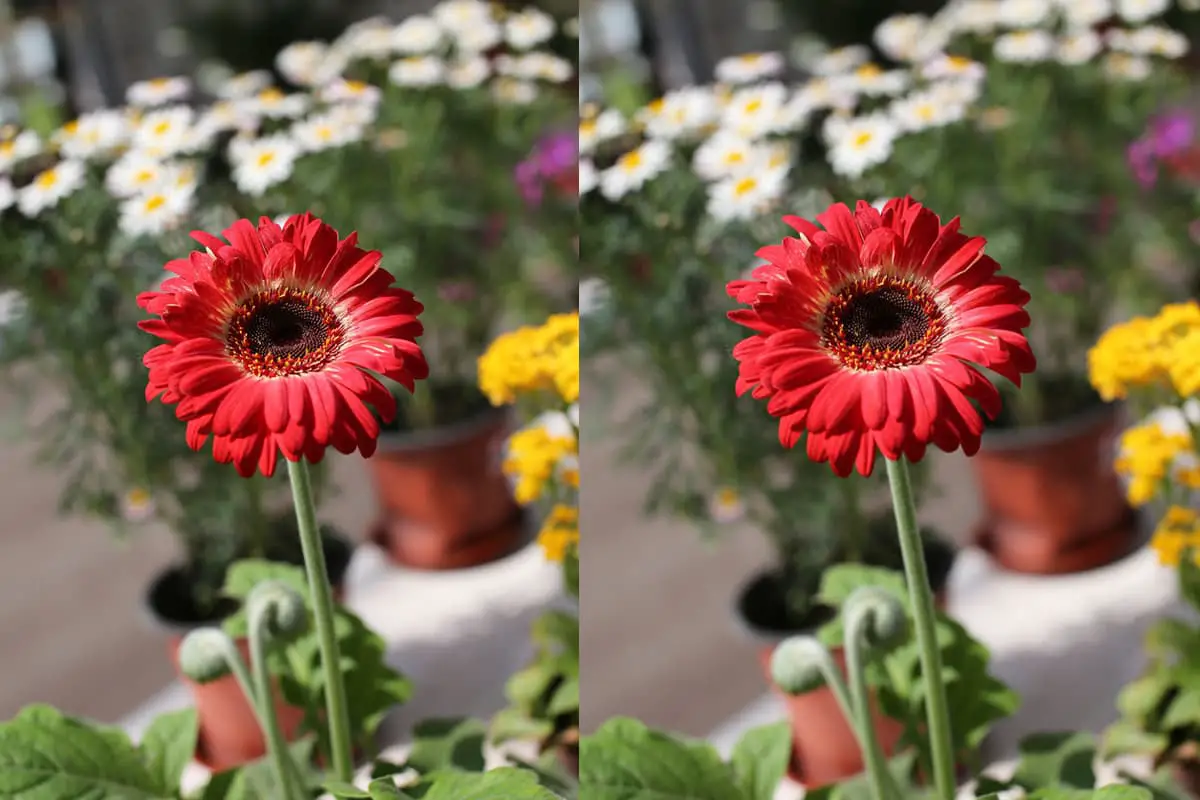
The African Daisy (scientific name: Gerbera jamesonii Bolus) is a perennial, hairy herbaceous plant of the Asteraceae family. It has a short rhizome, encased in residual petioles, and thick adventitious roots.
The leaves are basal and rosette-shaped, elongated oval to oblong, with a short pointed or slightly blunt tip. The leaf stalk has thick longitudinal ridges and is somewhat hairy.
The flower stalks are solitary, or rarely in small clusters, without bracts. The inflorescences are single and atop the flower stalks, the most densely hairy at the top.
The involucres are bell-shaped, the receptacles are flat and exposed, honeycomb-shaped; the corolla tube is short, the anthers have long pointed tails; the achenes are cylindrical, densely covered in white short soft hairs; the pappus is slightly rough, fresh when dirty white, dried when light brown, united at the base.
It blooms from November to the following April.Native to the Transvaal region of Southern Africa, the African Daisy prefers warm, well-ventilated environments with plenty of sunlight.
It comes in a variety of colors, including red, white, yellow, orange, and purple. Its large and vibrant flowers can be used for cut flowers, potted plants, and garden decoration.
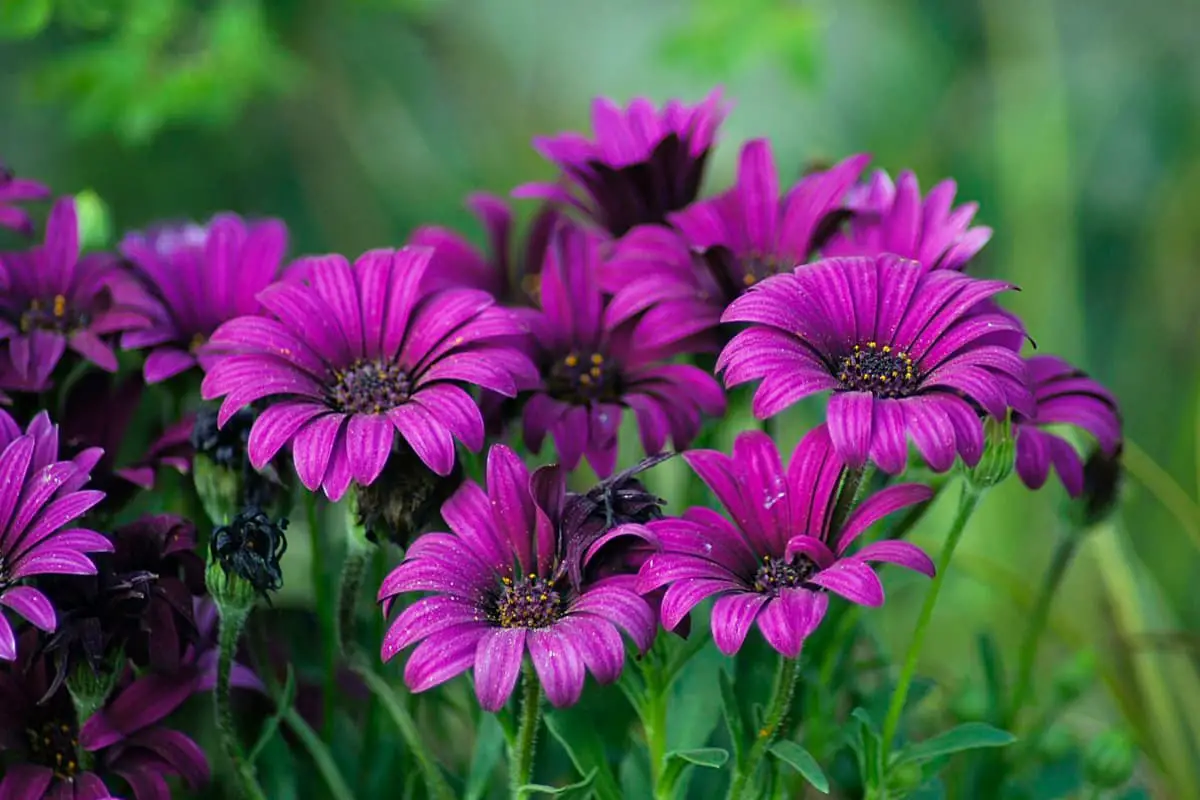
The African Daisy is often used as a cut flower. The cut flowers can be divided into single petal, semi-double petal, and double petal types based on the petals. They can also be categorized into red, yellow, pink, orange, and white color series based on their color.
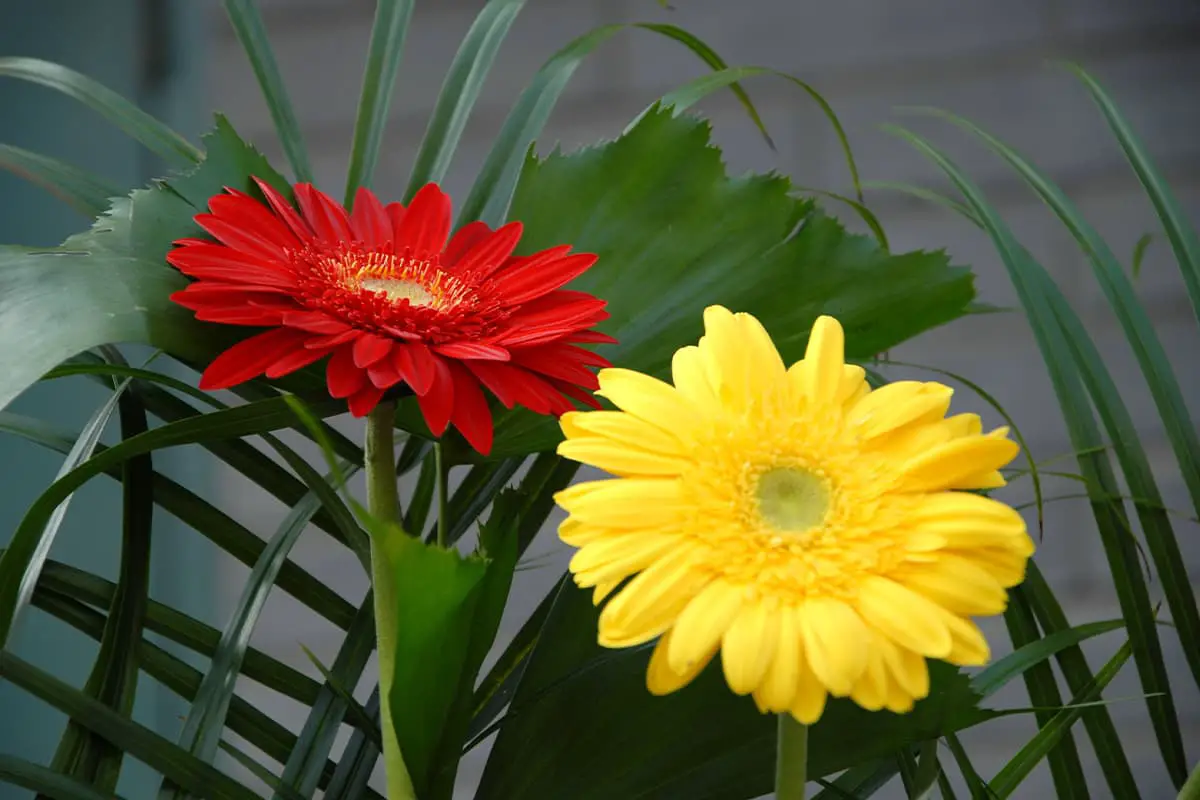
Common cut flower varieties in the red series of African Daisy include “Traversa”, a single-petal, large-flowered variety with high yield. “Shanghai” is known for its dark heart and larger flowers.
“Tramasima” has large, long-lasting flowers. “Sangrila” is a double petal, large flower variety with vivid colors. “Kamrodi” is a double petal variety with a deeper color.
Common varieties in the yellow series of African Daisy include “Yellow Spot”, a double petal, large flower variety. “Traffic”, a single petal, large flower variety with a goose-yellow hue. “Mirigold”, a double petal variety with a black heart, is very beautiful.
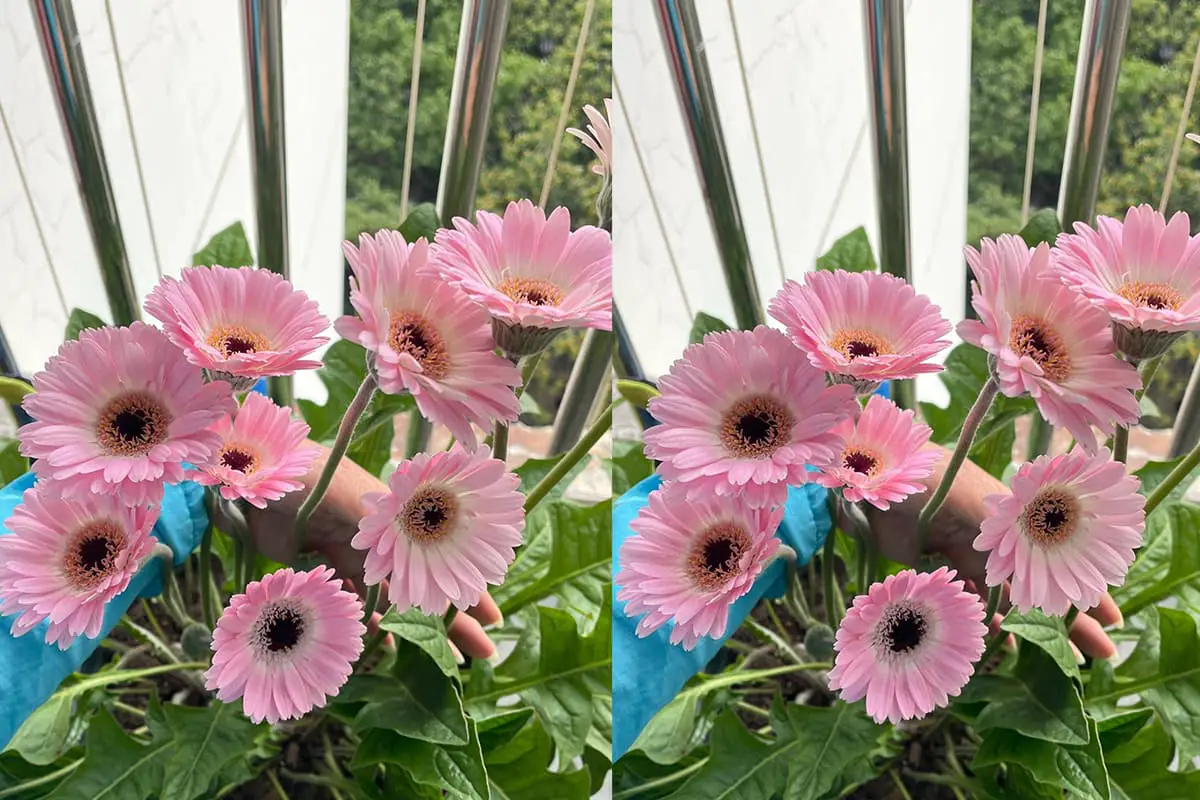
Pink African Daisies include “Estelle”, a pink flower with a black heart and larger flower size. “Tebumba” also has a black heart and a longer stem. “Tracquin” is a major cultivated variety.
The orange series of African Daisy includes the “California” variety, which has large, well-formed flowers. “Tracombie” has a high yield and is a major cultivated variety. “Calimateni” has a yellow-green heart.
The white series of African Daisy has relatively fewer varieties. “Osivea” has a high yield. “Tramente” is a medium yield, large flower variety.
The African Daisy thrives in environments with ample sunlight and good ventilation. It grows best at temperatures between 68°F and 77°F, and in winter, it prefers temperatures between 53.6°F and 59°F. Growth ceases below 50°F, indicating its semi-cold-hardy nature, as it can withstand short periods of 32°F.
The plant prefers loose, fertile, sandy loam rich in humus and with good drainage, avoiding heavy clay soils. It is best suited to slightly acidic soil, but can also grow in neutral and slightly alkaline soils.
The African Daisy is native to Transvaal, in the southern part of Africa, but is frequently cultivated all over China.

This perennial herbaceous plant is covered in short hairs. It has a short rhizome, enveloped by residual petioles, and a coarse root system.
The leaves are basal and form a rosette. The leaf blade is either oblong to elliptic, measuring 10-14 cm in length and 5-6 cm in width. The top end is short and pointed or slightly blunt, with a gradually narrowing base.
The leaf margin is irregularly pinnately shallowly or deeply cut, hairless on the upper surface, and short and softly hairy on the lower surface. When mature, the leaves lose their hair. The midvein is raised on both surfaces, more so on the underside.
The lateral veins, 5-7 pairs, connect in a curved arch away from the margin, with the net veins slightly obvious. The leaf stalk measures 7-15 cm in length and is coarsely longitudinally grooved and somewhat hairy.
The flower stem grows singly or, rarely, in a few clusters, measuring 25-60 cm in length. It is without bract leaves, hairy, and densest at the top. The capitulum is solitary at the top of the flower stem, measuring 6-10 cm in diameter when the ligules unfold during the flowering period.
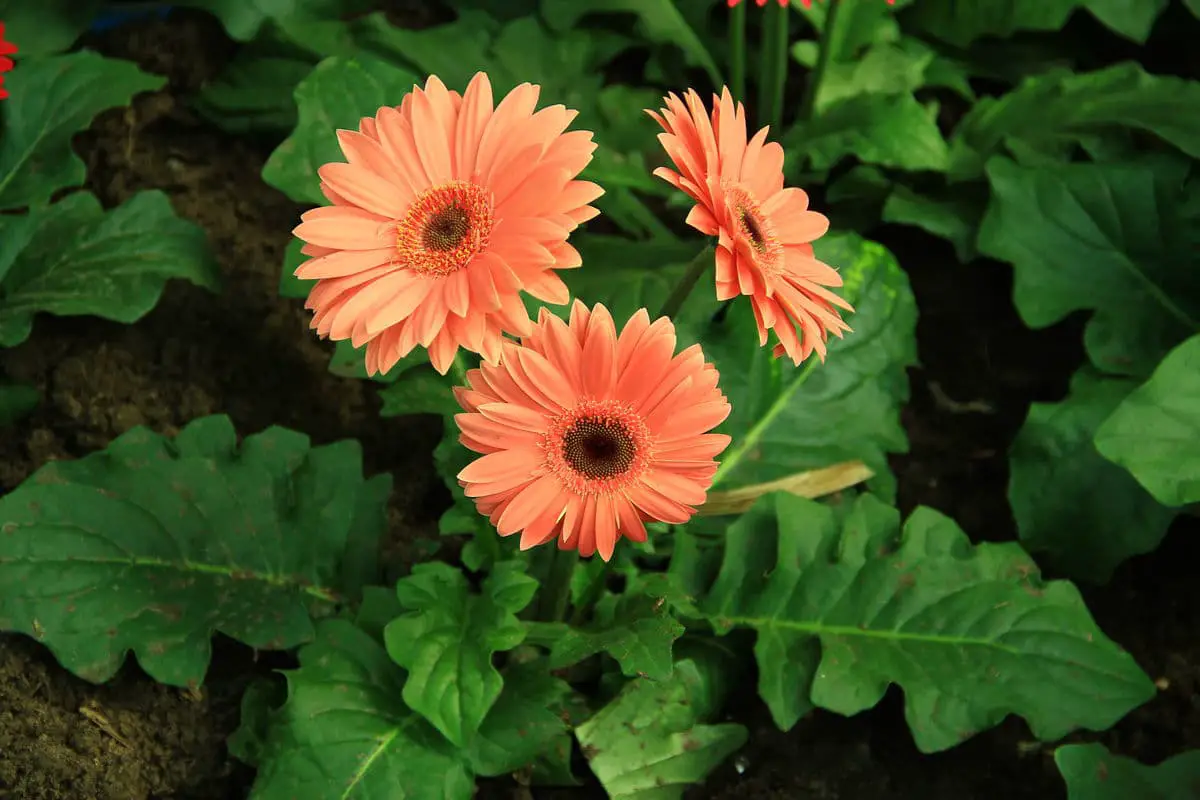
The involucre is bell-shaped, about as long as the bisexual flowers, and can reach 2 cm in diameter. The involucral bracts are in two layers, with the outer layer linear or lanceolate, pointed at the top, 8-10 mm long, about 1-1.5 mm wide, and softly hairy on the back.
The inner layer is oblong lanceolate, with a caudate top, 10-14 mm long, about 2 mm wide, with membranous edges and sparsely soft hairs on the back ridge. The receptacle is flat, exposed, and honeycombed, measuring 6-8 mm in diameter.
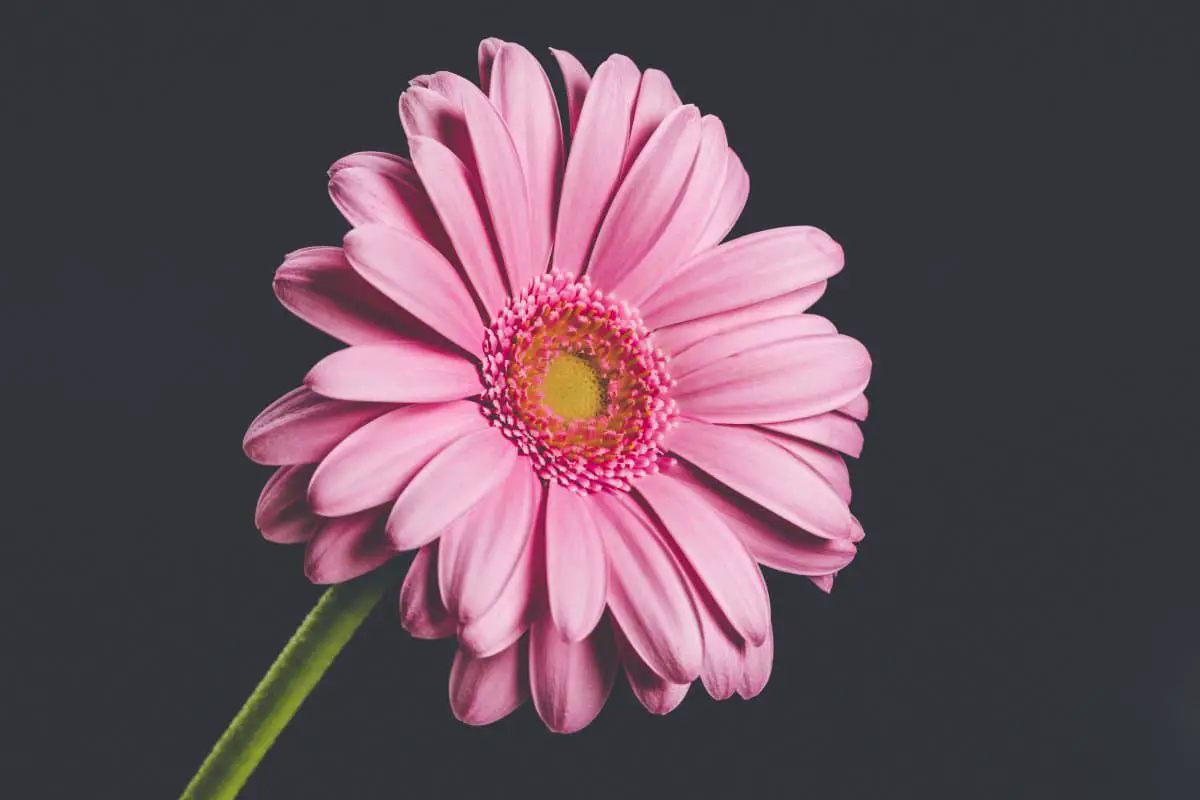
The outer perimeter female flowers are in two layers. The outer layer has a ligulate corolla, whose ligules are pale pink to purplish-red, or white and yellow, oblong, 2.5-3.5 cm long, 2-4 mm wide, with three teeth at the top.
The inner two are filiform, curled, 4-5 mm long, and the corolla tube is short, about 1/8 the length of the ligule. The vestigial stamens are filiform, 3-4 mm long, and extend outside the corolla tube.
The inner layer female flowers are slenderer than the bisexual flowers, tubular bilabiate, 6-7 mm long, with equal-length lips. The outer lip has three thin teeth or sometimes two teeth and one lobe, and the inner lip has two deep splits.
The lobes are linear, about 4 mm long, curled. There are 4-5 vestigial stamens, linear or filamentous, hidden inside the corolla tube. The central bisexual flowers, in majority, are tubular bilabiate, 8-9 mm long, with a large outer lip and three teeth.
The inner lip has two deep splits, and the lobes are usually wide and curled. The anthers are about 4 mm long, with a long pointed tail. The styles of the female and bisexual flowers are both short, blunt at the top, and less than 1 mm long.
The achene is cylindrical, 4-5 mm long, and densely covered with white soft hairs. The pappus is somewhat rough, dirty white when fresh, and light brown when dry, measuring 6-7 mm in length. The base is united. The flowering period is from November to April of the following year.
Soil
African chrysanthemums prefer fertile and loose soil with good drainage. Slightly acidic soil is most suitable, while heavy, clayey soil should be avoided. Ideally, a mixed substrate of peat and perlite should be used.
Light and Temperature
African chrysanthemums thrive in well-lit environments and have a high demand for light. During their growth period, ample light should be maintained.
Artificial lighting is necessary when natural light is insufficient. Additionally, during summer, some shade should be provided to protect the plants from intense sunlight, while in winter, full sunlight should be ensured.
African chrysanthemums cannot tolerate extreme heat or cold. The optimal temperature for their growth is between 20℃ and 25℃. In winter, the temperature should not drop below 10℃, otherwise, the plant will cease to grow.
Watering and Fertilizing
African chrysanthemums require substantial water and nutrients. During the growth period, ample supply of water and fertilizer is needed.
Watering frequency should be adjusted according to the seasons, with more frequent watering in summer and less in winter. The best times to water are in the morning or evening, taking care not to wet the center of the leaves.
These plants also require large amounts of fertilizer. It’s best to apply fertilizer frequently but in small amounts. In spring and autumn, fertilizer can be applied once a week, while in summer and winter, it should be reduced to twice a month. Fertilizing should be stopped when temperatures are too high or too low.
Pruning
During the growth of African chrysanthemums, yellowing or overcrowding of leaves may occur due to the growth of branches and leaves. At this point, pruning is necessary. Yellow leaves, dead leaves, and overly dense leaves should be cut off to provide a good ventilation environment for the chrysanthemums.
Pests and Diseases
During the growth of African chrysanthemums, diseases such as powdery mildew, leaf spot, and virus diseases, as well as pests like mealybugs, caterpillars, and thrips may occur. Any pests or diseases should be dealt with promptly.
This is suitable for African chrysanthemum varieties with strong tillering abilities. Division is usually done between March and May. Each new division must have buds and roots, so they should not be divided too small.
When dividing, use a sharp tool to vertically cut the plant into several parts along each division. After the wound has healed, dig up the separated divisions and transplant them.
This is best done in March or April. With proper management, cuttings can bloom in the second half of the year. For summer cuttings, they will not bloom until the following spring. The parent plant should be at least one year old.
Dig up the healthy plant, wash off the soil from the roots, remove the leaves, cut off the growing point, and carefully retain most of the thick part of the rhizome.
Then plant the rhizome in a planting box. When the temperature is between 22-34℃ and the air humidity is 70%-80%, after 10-14 days, the branches can be taken down for cutting.
To accelerate the rooting of cuttings, first dip the cuttings slightly in a solution of 0.2% potassium permanganate (for disinfection and disease prevention), then insert the base into readily available rooting powder or a solution of 500 mg/L naphthaleneacetic acid, and then proceed with the cutting.
Seeding can be done in spring (March-May) or autumn (September-October). Small seeds should be sown indoors. The optimal germination temperature is 18-22℃, with germination occurring 7-10 days after sowing. Once germinated, move the seedlings to a sunny location.
After the cotyledons are fully expanded, thin the seedlings. Once the seedlings have grown two true leaves, they can be transplanted. The best time to transplant is in May or June. After transplanting, flowering can be expected within 2-3 months.
Leaf Spot Disease
Leaf spot disease threatens the leaves, with sporadic spots on the leaves appearing circular or near-circular, often surrounded by concentric circles or a wider purplish-brown edge. Tiny black dots may be scattered or clumped on the spots.
The disease is spread by wind and rain, as well as through propagation of the plant, with outbreaks more severe in high temperatures and humidity. To manage this, promptly remove affected leaves and older outer leaves, control humidity, and prevent rainfall. Regularly spray fungicides like Polyoxin, Mancozeb, and Prochloraz.
Root Rot Disease
Plants can be affected at any stage, but this disease is most severe during the flowering period. The disease starts at the base of the stem near the ground and extends downwards, softening the tissues, causing water-stained, odorless decay that is blackish-brown in color.
The leaves wilt suddenly or turn purplish-red, and the roots easily break when pulled out, often with the outer layer of skin rotten and fallen off, exposing the discolored center. In damp conditions, a sparse white mold may grow on the affected parts.
The disease is more severe in high temperatures and heavy rainfall, especially in low-lying areas with poor drainage. To prevent this, choose well-drained, high and dry areas for planting, avoid overwatering, and preferably use drip irrigation. Regularly spray the base of the stem with Prochloraz.
Powdery Mildew
Powdery mildew mainly affects the leaves, initially forming white powdery spots on the leaf surface, which gradually spread across the entire leaf, eventually turning it yellow-brown and dry.
The fungus survives the winter on the affected leaves and leaf debris, and it can spread throughout the year via rain and air currents, but outbreaks are more severe in May and June. The disease is more severe in humid and enclosed environments.
At the end of the plant’s growth period, promptly remove and burn diseased tissues to prevent continuous cropping; apply more phosphorus and potassium fertilizers, avoid excessive nitrogen fertilizers, and improve the plant’s disease resistance.
Enhance ventilation and light penetration, and avoid excessive humidity. Spray fungicides like sulfur emulsion, Fungus Clear, and Prochloraz at the early stage of the disease.
Spider Mites
Spider mites, either adults or juveniles, damage the plants by sucking on the underside of the leaves. Initially, the leaves show numerous green spots which can turn brown when severely affected, the tissue thickens, and the leaf edges curl up.
As buds sprout, mites move to the young petals, turning them brown and preventing them from opening fully. This is a year-round problem in greenhouses. Damage is more severe in hot and dry conditions. When mite damage is detected, spray acaricides like Avid, Hexythiazox, and Fenpyroximate for control.
Greenhouse Whitefly
Greenhouse whiteflies are small, white, and good flyers, resembling tiny moths. They damage leaves, causing them to fade and become sticky, leading to premature leaf drop. Their secretions can induce sooty mold, affecting the quality of the cut flowers.
Control methods include trapping the adults using yellow plastic boards coated with sticky oil as the adults are attracted to yellow. Insecticides like Thiamethoxam, Imidacloprid, and Abamectin can also be used for prevention and control.
Leafminer Fly
The adult leafminer fly is a small fly, and its larvae are small, yellowish-white maggots. The larvae cause the most damage by creating winding tunnels within the leaves or leaf stems. These tunnels are regular, with alternating black fecal stripes on both sides.
This destroys the chlorophyll and leaf cells, weakening photosynthesis and leading to poor plant growth, extensive leaf drop, flower drop, seedling death, bud drop, and decreased ornamental value.
Control methods include trapping the adults using yellow boards during the adult stage, similar to the method used for the whiteflies. Insecticides like Abamectin and Imidacloprid can also be sprayed for prevention and control.
Aesthetics
The African Daisy is a beautifully refined flower, with vivid colors, and blooms year-round. It is highly decorative and tolerant to long-distance transportation. The flowers last a long time when cut and placed in a vase, making it an ideal cut flower.
With proper cultivation, an average of 30 cut flowers can be harvested per plant per year. It is also suitable for pot cultivation, perfect for adorning halls, door sides, window sills, and desks.
In warm areas like Southern China, African Daisies are used as perennial flowers, applied in yard clusters, flower bed arrangements, and lawn edge decorations, all offering excellent effects.
Environmental Protection
The African Daisy has the ability to eliminate formaldehyde and benzene pollution caused by decoration, serving as a green weapon against these pollutants and helping to keep indoor air fresh.
Origin of the Alias
The African Daisy is also known as the Bridal Flower, with large red varieties often used in bridal bouquets. It is said that in the early 20th century, Madagascar, located in southern Africa, was a small country rich in tropical flowers.
A local girl named Eini loved to grow wildflowers with curved stems and drooping buds. When she got married, she requested more of these flowers to enhance the wedding atmosphere. The guests sang, danced, and toasted.
However, the groom, with a low tolerance for alcohol, was drunk after only three rounds. He leaned and swayed, and the bride had to support him to the bedroom to rest.
The guests noticed the similarity between the groom’s posture and that of the wildflowers, and many said in unison, “Oh, the flower really looks like it’s supporting the groom!” Hence, the name Bridal Flower spread.
Flower Language
The African Daisy symbolizes eternal happiness, mystery, mutual respect and love, perseverance, braving difficulties, and a pursuit of a rich life. In China, the most common meanings associated with it are nobility, elegance, and seclusion.
The brightly colored African Daisy, like little suns radiating light, is full of vitality. Its vibrant colors and radiant light captivate and inspire people, bringing a sense of joy and cheerfulness.
It also conveys the meaning of thriving and prospering. The African Daisy is very suitable as a gift and can be used on various occasions.

Peggie was once a high school mathematics teacher, but she set aside her chalkboard and textbooks to follow her lifelong passion for flowers. After years of dedication and learning, she not only established a thriving flower shop but also founded this blog, “Flowers Library”. If you have any questions or wish to learn more about flowers, feel free to contact Peggie.
 English
  العربية
  Bahasa Indonesia
  Deutsch
  Français
  Italiano
  Nederlands
  Português
  Русский
  日本語
日本語