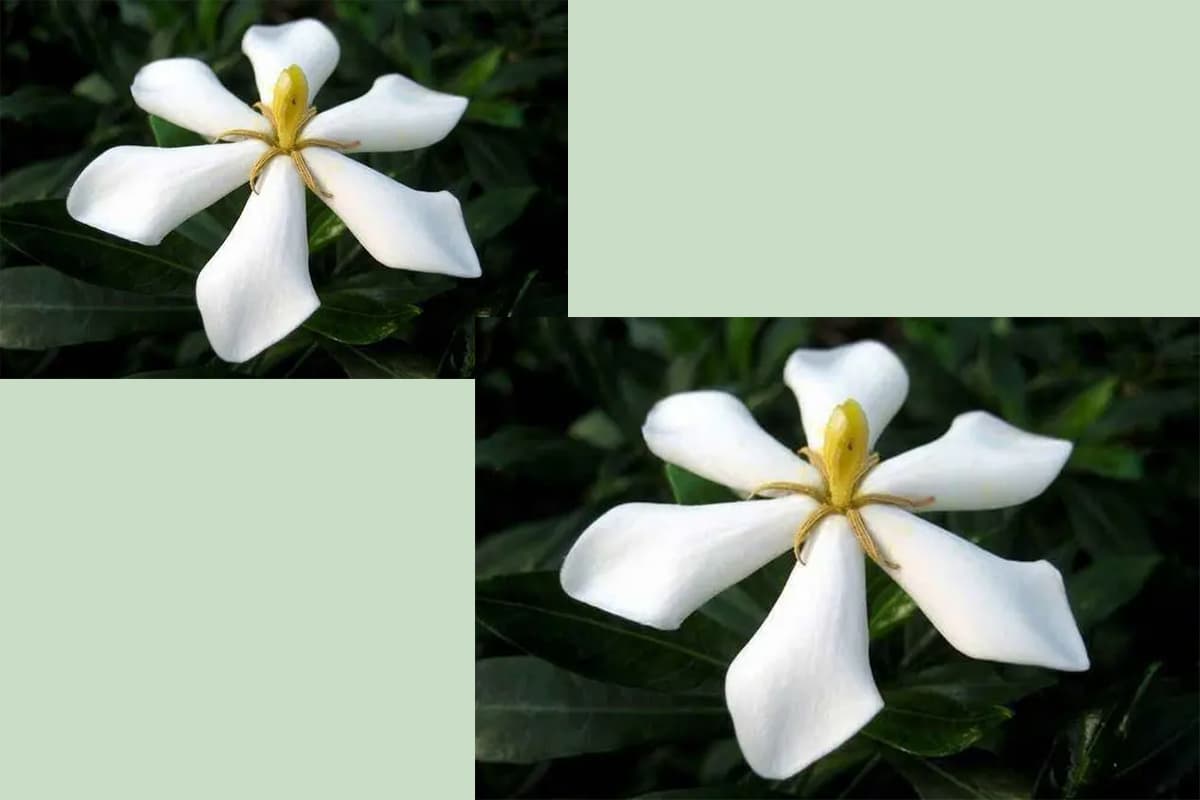
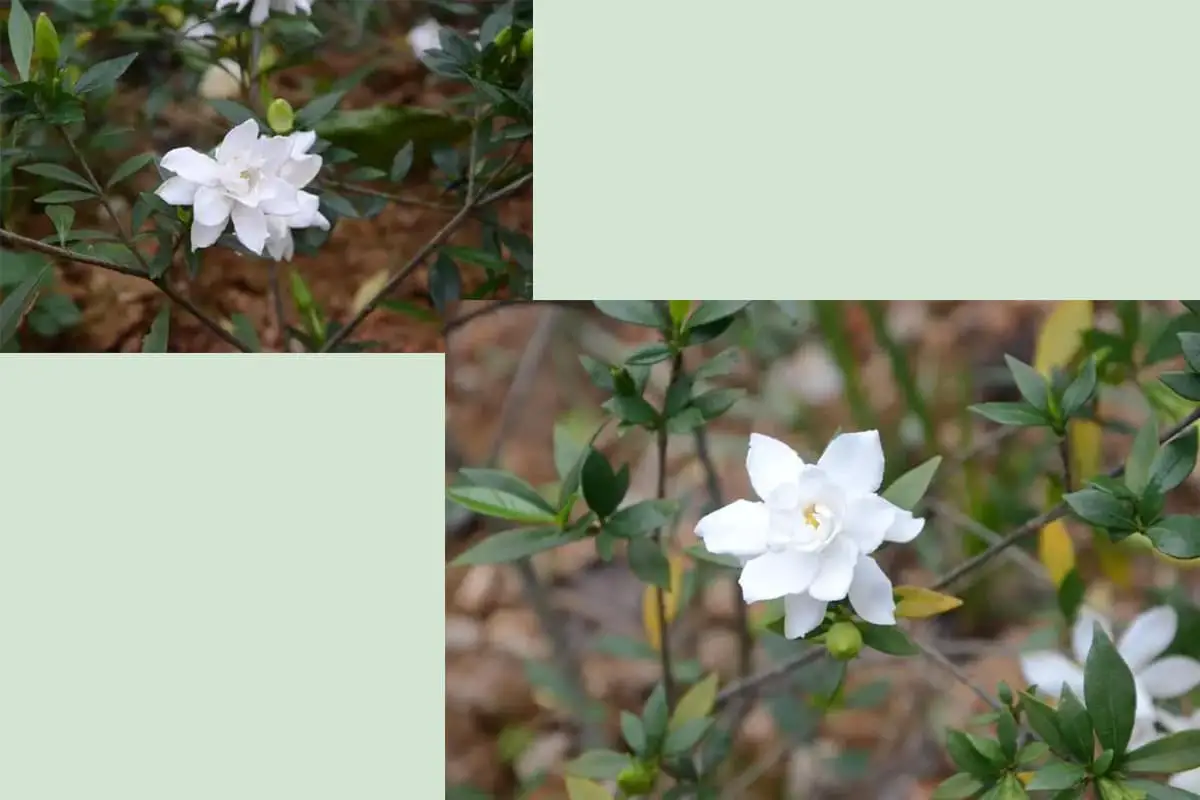
The Gardenia jasminoides Ellis, also known as the Sparrow Tongue Gardenia, Small Flower Gardenia, and Sparrow Tongue Flower, is an evergreen plant with fragrant and simple flowers. Its green leaves and white flowers are exceptionally pretty and lovely.
Moreover, the Small Leaf Gardenia is a prolific bloomer. It grows best at temperatures between 15 and 25 degrees Celsius, and with ample sunlight, it can bloom all year round.
As a fine aromatic plant, its flowers can be used as a tea scent, and its fruit has anti-inflammatory and cooling effects.
I. Growth and Distribution
The Gardenia prefers a warm and humid climate and is not cold-resistant. It favors sunlight but cannot withstand strong sunlight, so it is best suited for slightly shaded areas. It thrives in loose, fertile, well-drained, slightly sticky acidic soil, making it a typical acid-loving plant.
It prefers warmth, humidity, and sunlight, but should avoid direct, intense sunlight. It enjoys high air temperatures and good ventilation, and requires loose, fertile, well-drained acidic soil, making it a typical acidophilic plant.
It is not cold-resistant, tolerates semi-shade, and dislikes waterlogging. In the northeast, north, and northwest, it can only be grown as a greenhouse potted plant.
The Gardenia is resistant to sulfur dioxide and can absorb sulfur to purify the air. 0.5 kg of leaves can absorb 0.002-0.005 kg of sulfur.
It is cultivated in most regions of the country.
II. Characteristics and Features
The Gardenia jasminoides Ellis is an evergreen shrub or small tree, standing 100-200 cm tall, with most plants being relatively low. The trunk is gray, and the small branches are green.
The leaves are opposite or whorled on the main branches. The leaf blade is ovate to long elliptical, 5-14 cm long, glossy, and entire. The flowers are solitary at the branch tips or leaf axils, white, and heavily fragrant.
The corolla is high-foot dish-shaped, with 6 lobes. The blooming period is from June to August. The fruit ripens in October. The fruit is egg-shaped, with 6 longitudinal ribs. The seeds are flat.
This evergreen shrub is a woody flower. It stands over 1 meter tall. The leaves are opposite or whorled in threes, with short stems.
The leaf blade is leathery, ovate or rectangular ovate, gradually pointed at the top, slightly blunt at the head, glossy on the surface, with short hairs clustered in the vein axils underneath, and the stipules are sheath-like.
The flowers are large, white, fragrant, with short stems, and solitary at the branch tips. The calyx lobes are ovate to inverted lanceolate, extending, and the anthers are exposed. The flowers have 6 petals, with double-petal varieties (large flower gardenia).
The blooming period is long, continuously blooming from May-June until August. The fruit ripens in October, is yellow, egg-shaped to long elliptical, has 5-9 wing-like straight edges, and a single chamber. There are many seeds, embedded in the fleshy placenta.
III. Cultivation Methods
Cultivation and Care
For potting, the soil should be composed of 40% garden soil, 15% coarse sand, 30% farmyard manure, and 15% decomposed leaf soil. During the seedling stage of gardenia, it’s important to regularly water and keep the soil moist. Apply decomposed thin fertilizer frequently.
Rainwater or fermented rice-washing water is ideal for watering. During the growing period, watering with 0.2% ferrous sulfate or alum every 10 to 15 days can prevent the soil from becoming alkaline, replenish iron in the soil, and prevent gardenia leaves from turning yellow.
In summer, mist the leaves with water every morning and evening to increase air humidity and promote leaf gloss. After blooming in August, only water with clean water and control the water quantity.
Before the cold dew in October, move the gardenia indoors to a sunny spot. Strictly control watering in winter, but frequently mist leaves with clean water.
From May to July, when the growth of gardenia is slowing down, prune the plants and remove the top shoots to promote branching, making the plant shape beautiful and flowering abundant in the future.
Gardenia is usually propagated by cutting and layering, but can also be propagated by division and seeding, although these methods are rarely used. Cutting can be divided into spring cutting and autumn cutting.
Spring cutting is done in late February, and autumn cutting is done from late September to late October. Choose branches that are 2-3 years old, cut them into 10-12 cm sections, leave two leaves on the top, cut off half of each, and then insert them obliquely into the cutting bed.
Only one node should be left above the soil surface. Shade and maintain certain humidity. Usually, roots will form in a month and can be transplanted a year later.
In the south, they also propagate by water cutting, i.e., inserting the cuttings on a disk woven with reeds, letting them float on the water surface, allowing the lower part to root in the water, and then transplanting.
Layering can be carried out around Qingming Festival in April or during the plum rain season. Choose robust branches that are one year old from a three-year-old mother plant, pull them to the ground, wound the part of the branch that goes into the soil.
If 200ppm powder case acetic acid is applied to the wound, and then covered with soil and compacted, they will root more easily. Generally, they can be separated from the mother plant a month after rooting, and transplanted with soil in the following spring.
Field Management
Gardenia likes fertility, but it is better to apply thin fertilizer frequently. The soil should be slightly acidic and well-drained.
After the seedlings are transplanted, they can be top-dressed once a month; prune the plants once in May to July each year, cut off the top shoots to promote branching and form a complete crown.
Remove the faded flowers from the mature trees, which is beneficial for vigorous flowering and prolongs the flowering period. After the rain, the potted gardenia should drain the accumulated water in time, and apply alum fertilizer water when the leaves turn yellow.
In the north, the gardenia introduced from the south often has large flowers in the first year, but the flowers become smaller in the second year, the leaves turn yellow and fall off easily, and in severe cases, the plants die.
The main reasons are that the soil in the north is alkaline, the climate is dry, and the water quality is not suitable for its growth. Therefore, when introducing from the south, try to bring as much soil as possible for transplantation.
Usually, water stored rainwater or soak green grass and fruit peels in water, or use salt-free swill water after fermentation. If 0.1 kg of ferrous sulfate is added to 50 kg of water, the effect will be better.
Applying liquid fertilizer during the vigorous growth period can promote dense leaves with a bright dark green color. In spring and autumn, the growth slows down. Apply thin liquid fertilizer once every 2-3 weeks.
After summer, as the temperature rises and growth becomes vigorous, liquid fertilizer can be applied once every 7-10 days. In the morning and evening, the leaves and nearby ground can also be showered with clean water to increase air humidity.
Before the frost in autumn, move to an environment where the winter temperature is not lower than 0℃ for overwintering.
Site Selection and Land Preparation:
Choose a sunny slope with deep sandy loam for planting. It can be planted on the edge of the field or intercropped with legumes.
Before planting, fully cultivate the land, remove miscellaneous trees, and dig holes according to a plant-row distance of 4×4 feet. The hole should be 1 foot square and 0.8-1 foot deep. Apply 10-15 kg of mixed soil fertilizer to each hole, mix it with the soil, and wait for planting.
Planting:
Site Selection and Land Preparation: Gardenia is not strict with soil requirements, and can be cultivated on slopes, earth houses, field edges, and corners. In the selected site, dig holes with a plant-row distance of 4-6 feet (the distance can be larger if the soil is good, otherwise smaller). The hole should be 1 foot in diameter and 0.8-1 foot deep. Apply mixed soil fertilizer, green manure, or human and animal dung as base fertilizer, and wait for planting after mixing the soil and fertilizer.
Planting: Planting should be done on a cloudy day in March or April. After the seedlings are unearthed, they should be planted in time to avoid wind and sun. If the transportation distance is long, the roots should be coated with yellow mud and covered with grass for moisture retention. Plant one plant per hole, cover with soil, compact, and water.
Field Management: After planting, hoe, weed, and top-dress once in spring and summer each year. Human and animal dung, farmyard manure, compost, and cake fertilizer can all be applied. Before flowering in summer, it is better to apply fertilizer with more phosphorus and potassium. Fertilizing is usually carried out after weeding and loosening the soil.
IV. Reproduction Methods
Cutting Propagation
In the north, cutting propagation can be done in greenhouses from October to November, and in the south from April to late summer. However, the survival rate is highest between summer and autumn.
Select healthy 2-year-old branches for cutting, about 10-12 cm in length, trim off the lower leaves, dip in vitamin B12 solution, then plant in sand.
Under conditions of about 80% relative humidity and a temperature of 20-24°C, roots should start to form after about 15 days. Soaking the cuttings in a solution of indolebutyric acid (2010-6 to 5010-6) for 24 hours can enhance the effect.
When the rooted cuttings start to grow, they can be transplanted or potted individually, and they should bloom after 2 years.
Layering Propagation
In April, select robust branches from 3-year-old mother plants for layering propagation. These branches should be 25-30 cm long. If there are forked branches, three seedlings can be obtained from one fork.
Generally, roots can develop after about 20-30 days and the layers can be separated from the mother plant in June. By the following spring, they can be transplanted or potted individually.
Seed Propagation
This is mostly done in spring. Seeds germinate slowly and will sprout about a year after sowing, and will flower after 3-4 years. It is challenging to collect seeds from potted plants in the north.
Gardenia reproduction includes seed propagation, cutting propagation, and division propagation. Seed propagation is the main method.
Seed Propagation
(1) Seed Selection: Choose mature fruits that are plump and deep red in color, dry them in their shells for seeds.
Before sowing, cut open the seed casing with scissors, extract the seeds, rub them in hot water to separate, remove any floaters or impurities, then scoop out the sinking, full seeds, spread them on a bamboo mat, and dry them in a well-ventilated area to remove excess moisture before sowing.
(2) Site Selection and Land Preparation: Choose loose, fertile sandy loam with a deep soil layer. Plow to a depth of 1-1.5 feet, form ridges 4-5 feet wide and 6 inches high, apply 20-30 loads of human manure per acre.
After the soil dries, lightly harrow the soil clods and level the ridge surface. Open sowing trenches on the ridge surface, about 1 inch deep, and wait for sowing.
(3) Seed Sowing and Seedling Cultivation: Sowing can be done in spring or autumn. Spring sowing is done around the time of rain, and autumn sowing is done around the time of the autumn equinox.
At the time of sowing, mix the seeds evenly with fire ash and sow them in the sowing trench, then cover the trench with fine soil or fired soil, cover with straw and water, always keep the soil moist to facilitate germination, use 4-6 pounds of seeds per acre.
After the seedlings emerge, pay attention to remove the cover grass in time. During the seedling stage, weed regularly, taking care not to damage the roots of the seedlings.
After weeding, apply diluted human manure water, and the seedlings can be transplanted after a year of cultivation.
Plant Propagation
Common methods are cutting propagation and layering propagation. For cuttings, during the rainy season, use tender stems about 15 cm long and plant them in the nursery bed.
They should root in about 10-12 days. For layering, in April, select 2-year-old branches about 20-25 cm long, bury them in the soil, keep them moist, they should root in about 30 days, separate them from the mother plant in summer, and transplant them the next spring.
Transplant seedlings or potted plants preferably in the spring, during the rainy season, and they should have a soil ball. Keep the soil moist during the growing period, water frequently during the flowering period and peak summer.
Fertilize once a month, add phosphorus and potassium fertilizer once before flowering. Prune and shape the plants in early spring of the following year, and promptly remove dead branches and excessive growth.
V. Disease Prevention and Control
Gardenias are often susceptible to chlorosis, a condition that causes the leaves to turn yellow. This can be due to various reasons, thus different measures must be taken for prevention and treatment.
Nitrogen deficiency: the leaves turn yellow, with new ones appearing small and brittle.
Potassium deficiency: the older leaves transition from green to brown.
Phosphorus deficiency: the older leaves turn purple-red or dark red. In all these cases, applying well-rotted human manure or cake fertilizer can be beneficial.
Iron deficiency: new leaves appear pale yellow or white, with green veins, which may also turn yellow or white in severe cases, eventually leading to leaf desiccation and death. In this situation, spraying a 0.2% – 0.5% ferrous sulfate solution can help.
Magnesium deficiency: chlorosis starts from the older leaves and gradually spreads to the new ones, with the veins remaining green, and in severe cases, leading to leaf drop and death.
In this case, spraying a 0.7% – 0.8% boron-magnesium fertilizer can be effective. Overwatering and freezing can also cause yellowing, so care must be taken during maintenance.
In winter, gardenias are prone to scale insects and sooty mold disease due to poor indoor ventilation and high humidity. Scale insects can be manually scraped off or treated with a spray of emulsified oil diluted in 200 times water.
For sooty mold, it can be cleaned with water or treated with a 1000 times dilution of mancozeb.
Pests that harm gardenias include aphids, flea beetles, and caterpillars of moths. The first two can be treated with imidacloprid or diazinon, and the latter with sevin dust or by handpicking.
Gardenias can become yellow for various reasons, often due to a physiological disease called “chlorosis”. Whether potted or planted in the ground, if the soil is alkaline or lacks iron, this is quite common.
Iron deficiency manifests as yellowing between the veins in young leaves, and in severe cases, can cause the entire plant to turn yellow, even leading to leaf scorch and branch wilt, and ultimately, plant death.
Therefore, gardenias planted in the ground should be in well-drained, loose, fertile, acidic soil; potted ones should use 2 parts leaf mold, 1 part garden soil, and some mountain clay for better results.
During the growth period from May to September, if chlorosis occurs, adding 0.1% ferrous sulfate or 0.5% ammonium sulfate to the fertilizer once or twice a month can yield good results.
VI. Value and Other Aspects
With its evergreen leaves and fragrant, elegant white flowers, the gardenia is exceptionally lovely. It’s suitable for placement by steps, ponds, and roadsides, and can also be used as a hedging plant or for ornamental pot planting. The flowers can be used for floral arrangements and wearable decorations.
The gardenia, with its lush foliage, beautiful flowers, and strong fragrance, is an excellent beautifying element for courtyards. It can be potted or made into bonsai, used as cut flowers, and its fruit skin can be used as a yellow dye. The wood is hard and fine, making it good for carving.
Share
Facebook
Twitter
LinkedIn
Email
Share is Caring.
Peggie
Founder of FlowersLib
Peggie was once a high school mathematics teacher, but she set aside her chalkboard and textbooks to follow her lifelong passion for flowers. After years of dedication and learning, she not only established a thriving flower shop but also founded this blog, “Flowers Library”. If you have any questions or wish to learn more about flowers, feel free to contact Peggie.
Before you go
You May Also Like
We picked them just for you. Keep reading and learn more!
The Large-flowered Gardenia, scientifically known as Gardenia jasminoides, is a plant in the Rubiaceae family and a variant of the gardenia. It’s also known as the Large-leaf Gardenia, Peony Gardenia,…
Gardenia jasminoides ‘Variegata’, commonly known as the Variegated Gardenia or Spotted Leaf Gardenia, is a striking cultivar of the classic gardenia from the Rubiaceae family. This variant is distinguished by…
The Gardenia jasminoieles Ellis, also known as Cape Jasmine, Zhi Zi Flower, and Yu Ou Flower, is a variant of the Rubiaceae plant family native to China and Japan. It…
The Gardenia jasminoides, commonly known as cape jasmine or simply gardenia, is a prized evergreen shrub belonging to the Rubiaceae family. Renowned for its lustrous, dark green foliage and exquisitely…
The Gardenia jasminoides Radicans, also known as the Creeping Gardenia, can grow up to 2 meters high. It has light yellow roots, plenty of branches, a smooth plant body, and…
The Mountain Gardenia, also known as the Wild Gardenia, Yellow Gardenia, Yellow Branch Flower, Mountain Yellow Branch, Mountain Gardenia, and Gardenia Flower, is a wild variety of the Gardenia flower.…
The Gardenia sootepensis Hutchins, a member of the Rubiaceae family, grows in Thailand, Laos, and China, thriving on hillsides, near villages or streams in forests at altitudes of 700-1600 meters.…
The Gardenia Ellis Fortuniana, also known as the Four Seasons Gardenia, is a plant of the Rubiaceae family. This variety is a dwarf shrub with many branches growing in oblique…
The gardenia, with its pure white blossoms, abundant fragrance, evergreen leaves, dense foliage, and diverse leaf shapes, holds considerable aesthetic appeal and has always been beloved. But what variety of…


 English
  العربية
  Bahasa Indonesia
  Deutsch
  Français
  Italiano
  Nederlands
  Português
  Русский
  日本語
日本語