600+ Types of Flowers A To Z (With Names and Pictures)
Types Of Flowers By Names (A-Z) Types Of Flowers By Color Types Of Flowers By Season Types Of Flowers By Blooming Time 600+ Types of Flowers No. Flower Name No.…

Erythrina crista-galli, also known as Cockspur Coral Tree, Brazilian Coral Tree, or Ivory Coral Tree, gets its name from its resemblance to a rooster’s comb.
It is a deciduous shrub or small tree with stems and leaf stalks slightly covered in thorns. Its feather-like compound leaves have 3 leaflets, which are long ovate or lanceolate-oblong in shape.
The flowering period is from approximately April to July, with the flowers being red in color and long-lasting, making it suitable for garden decoration and roadside landscaping.
It prefers sunlight but can tolerate light shade, and thrives in high temperatures while also having strong cold resistance. It is native to tropical regions of South America, including Brazil, and is cultivated in Southern China and Taiwan.
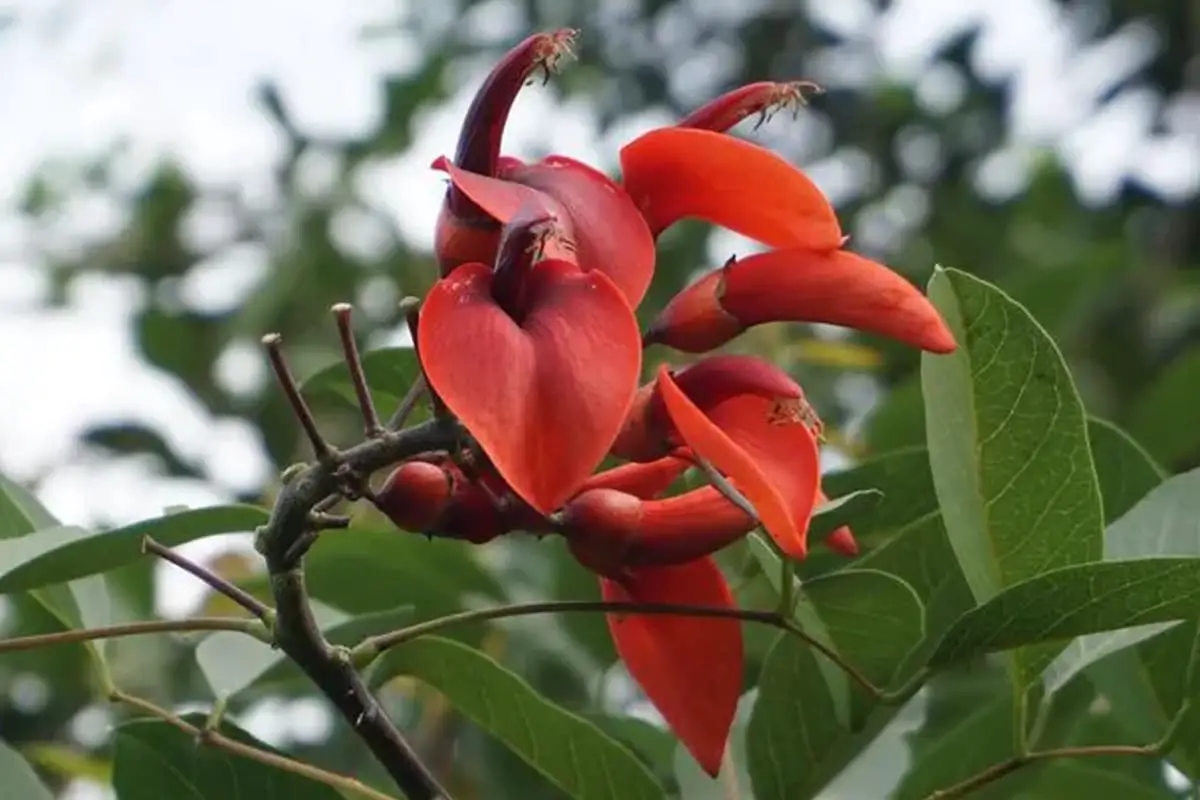
Shrub or small tree with stems and leaf stalks slightly covered in thorns.
Its feather-like compound leaves have 3 leaflets, which are long ovate or lanceolate-oblong in shape, measuring about 7-10 centimeters in length and 3-4.5 centimeters in width, with a blunt apex and a near circular base.
The flowers and leaves appear together, arranged in terminal racemes, with 1-3 flowers per section. The flowers are deep red, measuring about 3-5 centimeters in length, slightly drooping or forming a right angle with the raceme axis.
The calyx is bell-shaped with two shallow lobes at the apex. It has two stamens and the ovary has a stalk with fine hairs. The pod is approximately 15 centimeters long, brown in color, with contracted spaces between the seeds. The seeds are large and shiny brown.
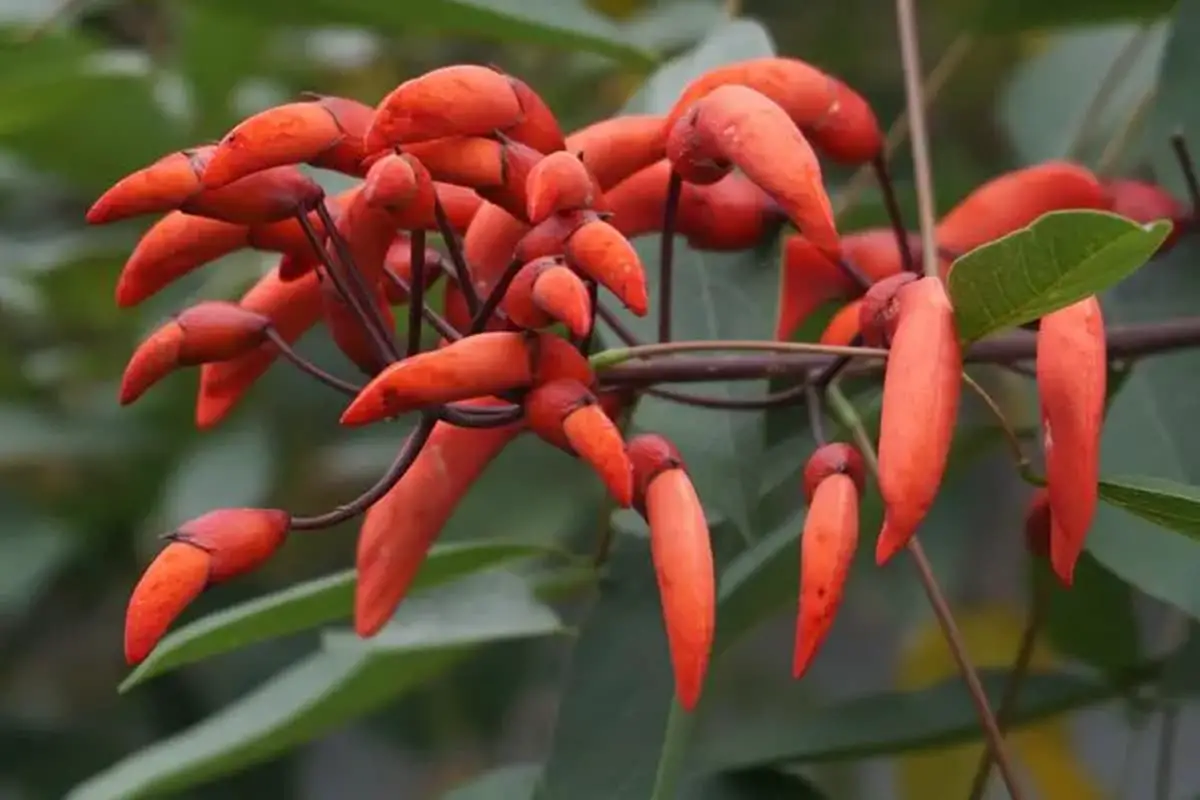
It prefers sunlight but can tolerate light shade, and thrives in high temperatures while also having strong cold resistance. It is highly adaptable, vigorous, drought-tolerant, and able to withstand poor soil conditions and salt-alkaline environments.
However, it is not tolerant of waterlogging. It is not very demanding in terms of soil requirements, but grows best in well-drained fertile loamy soil or sandy loam. When grown in pots in northern regions, the temperature should be maintained above 4°C during winter.
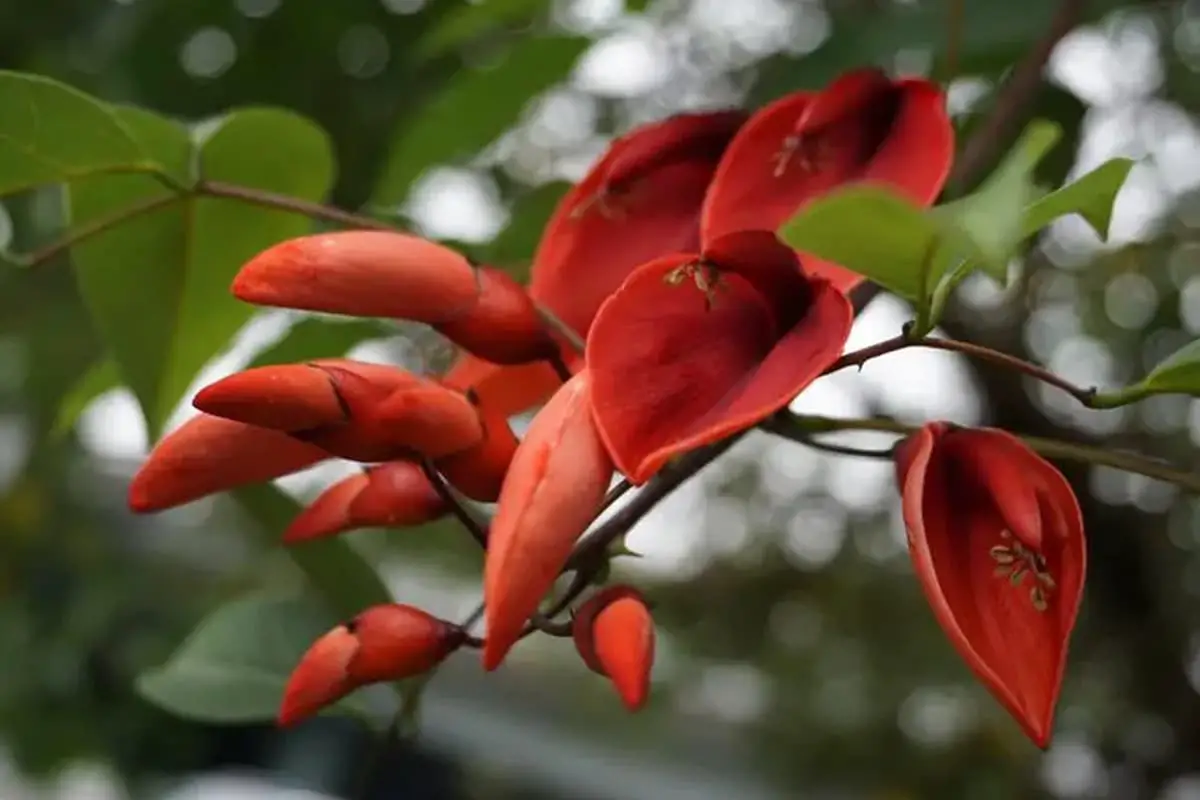
Native to Brazil, Peru, and Southeast Asia, including the Philippines and Indonesia.
It is best to sow the seeds immediately after harvesting. Prior to sowing, it is recommended to soak the seeds for a certain period. Sow the seeds directly in a nursery bed with loose sandy loam soil.
The depth of soil covering the seeds should be about twice the height of the seeds. Pay attention to watering for moisture retention.
The seeds will germinate in about 10 days, and after one month, when the seedlings reach a height of 20 centimeters, they can be transplanted.
Take semi-woody branches measuring approximately 20-40 centimeters in length. Insert them into a sandy or well-drained nursery bed, keeping it moist.
Roots and shoots will emerge in about 15 days, and the cuttings will become seedlings in 1-2 months. In the coastal regions of Southern China, long branch cuttings are commonly used, and they can root in 1-2 months.
Bark rot is a deadly disease that often affects the trunk, large branches, and root collar of the coral tree, often in conjunction with bark beetles. In the early stages, the affected bark becomes wet and starts to decay, rapidly spreading to the surrounding healthy tissues.
In the later stages, the affected bark becomes dry and easily peels off from the phloem, leading to the death of the entire tree when the diseased area surrounds the trunk or branches.
This disease primarily affects the leaves. After infection, the leaf tips and edges start to develop gray-brown spots with small gray-black dots.
As the disease progresses, the spots enlarge, causing the leaves to become translucent and fragile, severely affecting the normal growth and ornamental value of the coral tree.
This pest seriously damages plants in the Erythrina genus, causing deformities, swelling, necrosis, and galls on leaves and tender branches. In severe cases, it can lead to leaf drop and plant death.
Control methods: First, remove the decayed bark and apply pesticides to the tree crown and trunk, using spraying or wrapping methods.
Second, apply pesticides to the soil around the trunk and carry out comprehensive disinfection.
Finally, prune the crown and tender branches of the affected coral tree, and destroy the pruned branches and leaves.
The Cockspur Coral Tree has strong adaptability, an elegant tree shape, a robust trunk, and abundant and beautiful flowers with a unique shape. It has a long flowering period and high ornamental value.
When planted on lawns, it appears vibrant and eye-catching, making it an excellent tree species for parks, squares, gardens, and road landscaping.

Peggie was once a high school mathematics teacher, but she set aside her chalkboard and textbooks to follow her lifelong passion for flowers. After years of dedication and learning, she not only established a thriving flower shop but also founded this blog, “Flowers Library”. If you have any questions or wish to learn more about flowers, feel free to contact Peggie.
 English
  العربية
  Bahasa Indonesia
  Deutsch
  Français
  Italiano
  Nederlands
  Português
  Русский
  日本語
日本語