600+ Types of Flowers A To Z (With Names and Pictures)
Types Of Flowers By Names (A-Z) Types Of Flowers By Color Types Of Flowers By Season Types Of Flowers By Blooming Time 600+ Types of Flowers No. Flower Name No.…

Dipladenia sanderi is an innovative climbing plant species. Also referred to as Red Riding Vine, Double Gland Vine, Double Happiness Vine, Wen Vine, and Red Cicada Flower, it originates from the tropical Americas and is a perennial evergreen member of the Apocynaceae family.
The twining stems of Brazilian Jasmine are soft yet resilient, spiraling upwards with support, and its trumpet-like pink blossoms are large and upright, with flower stems reaching 6 to 8 centimeters.
This vine thrives in warm and moist conditions, although it has poor branching. During its blooming period, Brazilian Jasmine often presents a spectacle of more flowers than leaves.
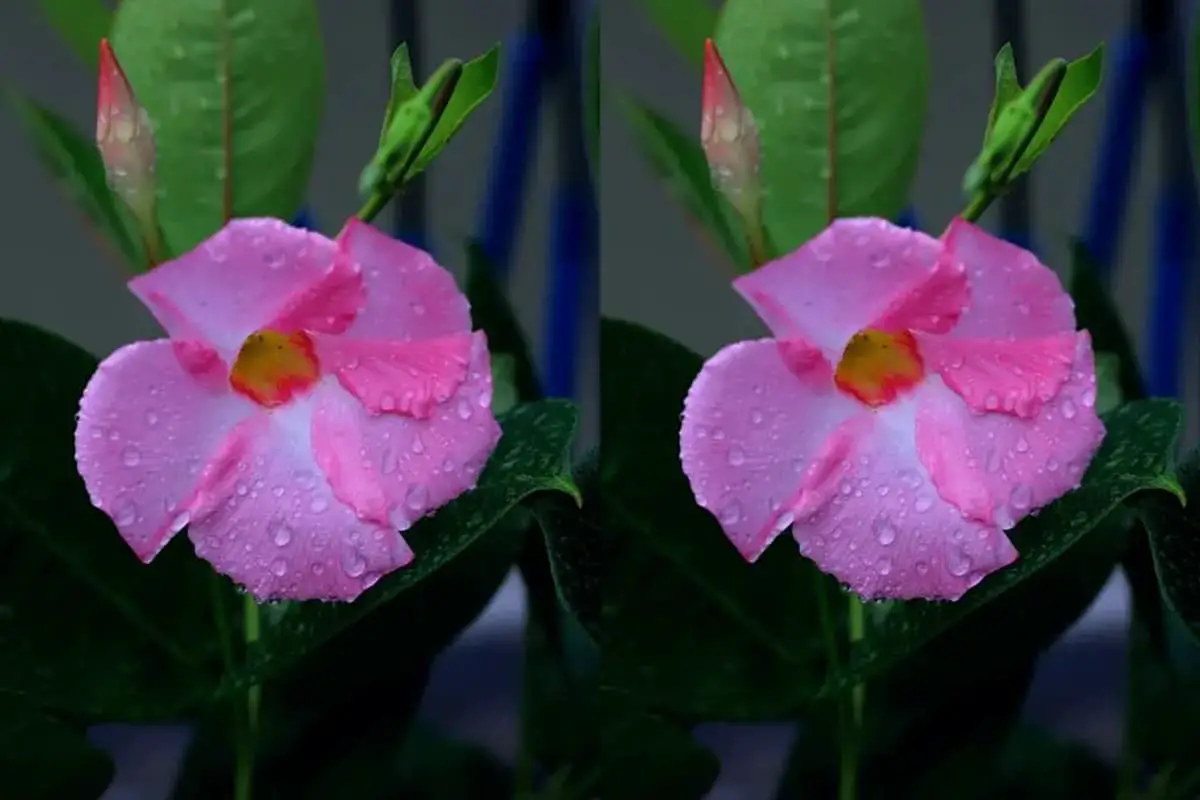
With the gentle breeze, wafts of its delicate fragrance provide a delightful sense of spaciousness and joy, hence the poetic name “Fragrant Vine.”
As a perennial evergreen climber from the Apocynaceae family, Brazilian Jasmine has large, oval, wrinkled, almost entire leaves that are dark green and glossy. The leaves taper to a sharp point and are leathery to the touch.
The flowers are funnel-shaped and predominantly deep pink; they are strikingly beautiful and unique, with soft branches that can be shaped in various ways. This vine blooms continuously from early spring to late autumn, with flowers blossoming from the bottom up.
The color of the flowers deepens from spring to summer, becoming more vivid and symbolizing wealth and prosperity. Its high ornamental value and charm make it a beloved plant.
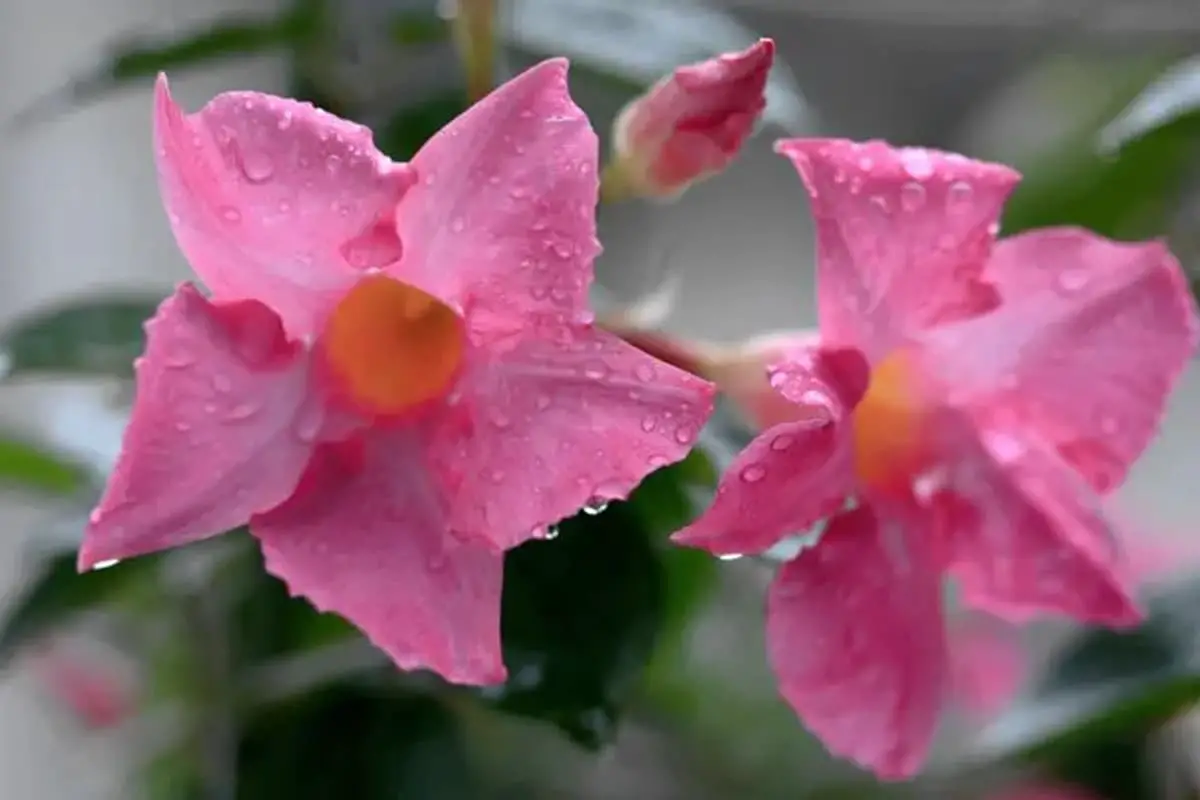
Flowers are axillary with a funnel-shaped corolla, varying in colors such as red, peach, gold, and different shades of pink, exhibiting a rich diversity.
It has earned the title “Queen of Tropical Climbing Plants” due to its striking appearance. The plant primarily blooms in summer and autumn, but with proper care, it can also flower in other seasons.
Brazilian Jasmine is native to the tropical regions of the Americas.
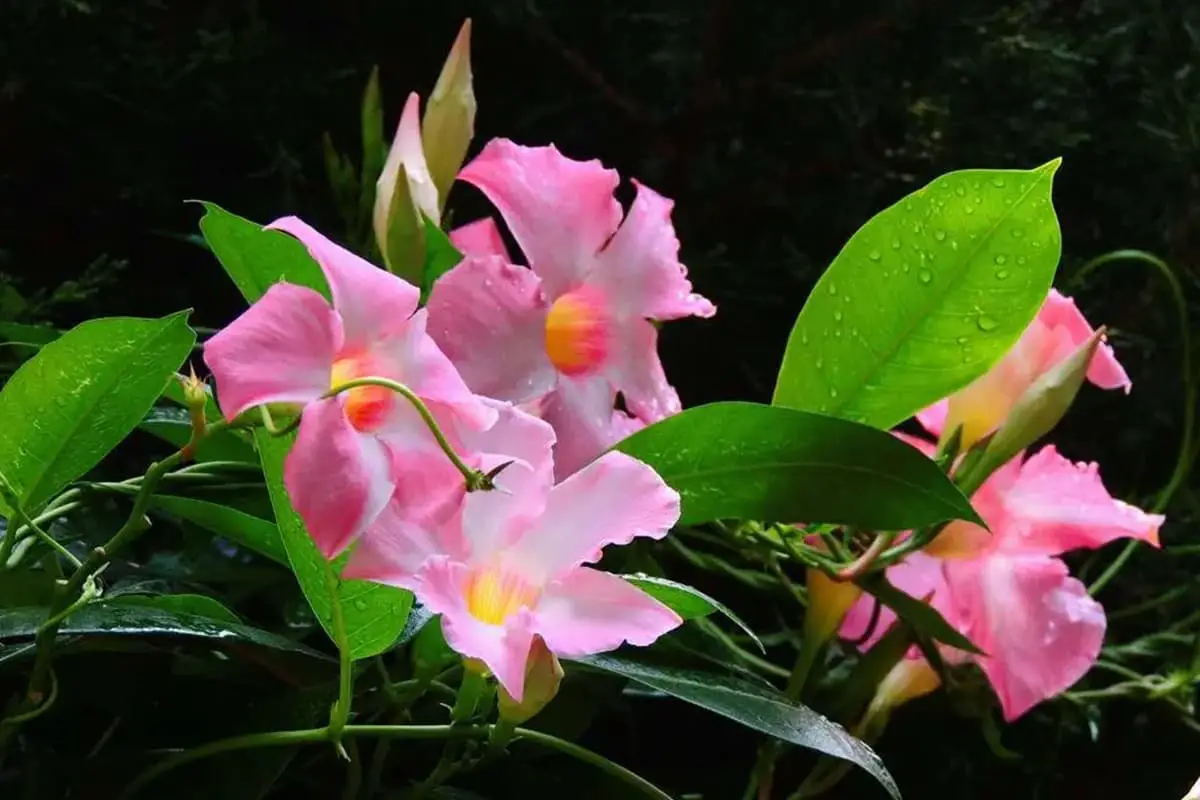
This vine prefers warm, moist, and well-lit environments but can also thrive in slightly shaded areas, though less light results in fewer blooms.
The optimal growing temperature is between 20-31°C, with the maximum temperature not exceeding 35°C, and a minimum of 14°C. Temperatures below 10°C may cause frost damage.
The plant is quite adaptable to various soil types, flourishing best in sandy loam that is rich in humus and well-drained.
Dipladenia sanderi can be propagated through seeding, cutting, or tissue culture for rapid multiplication. Seeding requires temperatures between 18-23°C, typically done in the spring.
Cutting is the most common method, where semi-hardwood segments, usually one internode in length, are used as cuttings. Rooting can take over a month, but using rooting hormone powder can expedite the process.
Placement: Indoors, it’s best to place potted Dipladenia in a bright area with diffused light and avoid direct sunlight. This plant has a strong resistance to adverse conditions and is less prone to diseases.
Therefore, a monthly application of fungicide is sufficient for disease prevention during the growing season.
Dipladenia vines are ideal for indoor balconies where they can be admired for their vigorous climbing nature and the abundance of large red and pink blossoms that emit waves of sweet fragrance, uplifting the spirits.
They are also suitable for outdoor displays, thriving in strong light and heat resistance, making them perfect for summer gardens in both northern and southern regions.
They can be used in containers, on fences, pergolas, or rooftops for small garden beautification, adding a touch of tropical exoticism to the yard.
Peggie was once a high school mathematics teacher, but she set aside her chalkboard and textbooks to follow her lifelong passion for flowers. After years of dedication and learning, she not only established a thriving flower shop but also founded this blog, “Flowers Library”. If you have any questions or wish to learn more about flowers, feel free to contact Peggie.
 English
  العربية
  Bahasa Indonesia
  Deutsch
  Français
  Italiano
  Nederlands
  Português
  Русский
  日本語
日本語