600+ Types of Flowers A To Z (With Names and Pictures)
Types Of Flowers By Names (A-Z) Types Of Flowers By Color Types Of Flowers By Season Types Of Flowers By Blooming Time 600+ Types of Flowers No. Flower Name No.…

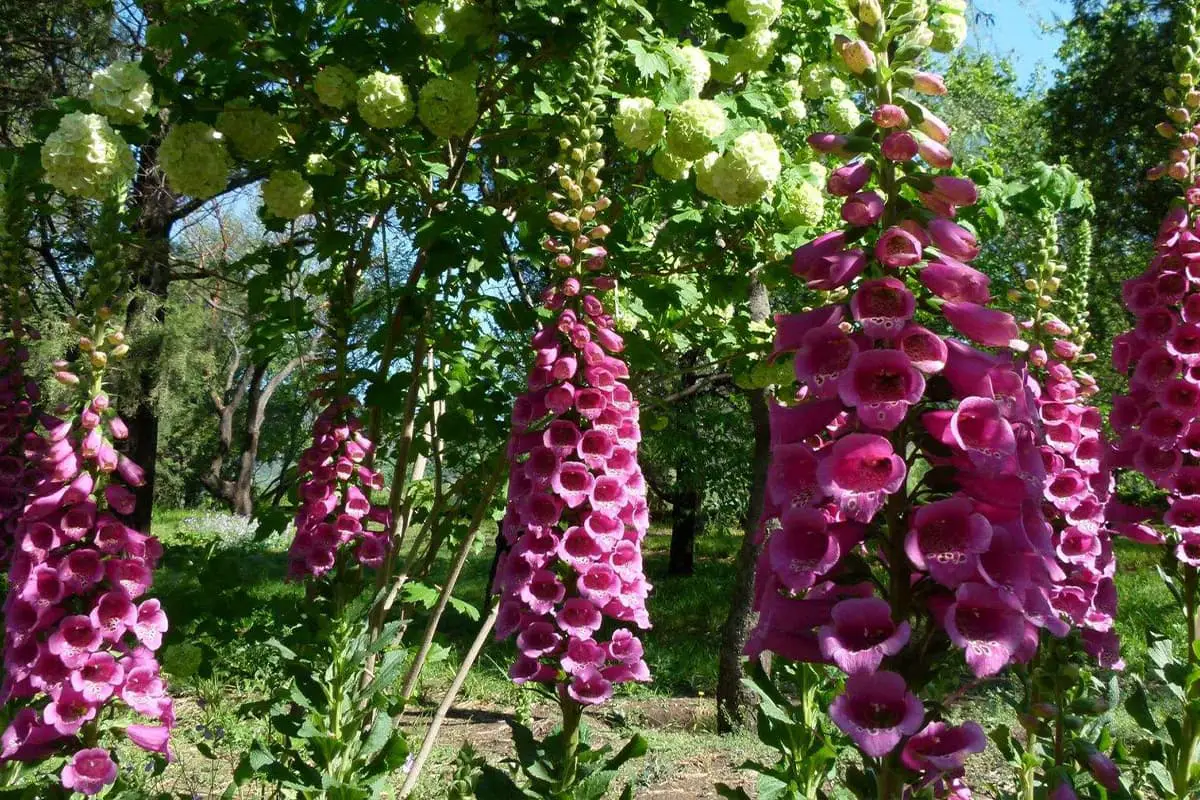
Digitalis purpurea, commonly known as the Foxglove, is a biennial or perennial herbaceous plant. Except for its corolla, the entire plant is covered with short, gray-white hairs and glandular hairs. At times, the stem is almost hairless. The plant stands 60-120 cm tall, with single stems or multiple clustered stems.
The leaves are ovate or lanceolate, coarse, wrinkled, with the basal leaves possessing long petioles. From base to top, the leaves gradually reduce in size. The terminal raceme measures 50-80 cm in length. The bell-shaped corolla is approximately 7.5 cm long, wax-purple-red in color with light white spots inside. The fruit is ovoid, with the flowering period from May to June and the fruit ripening from August to October. The seeds are tiny.
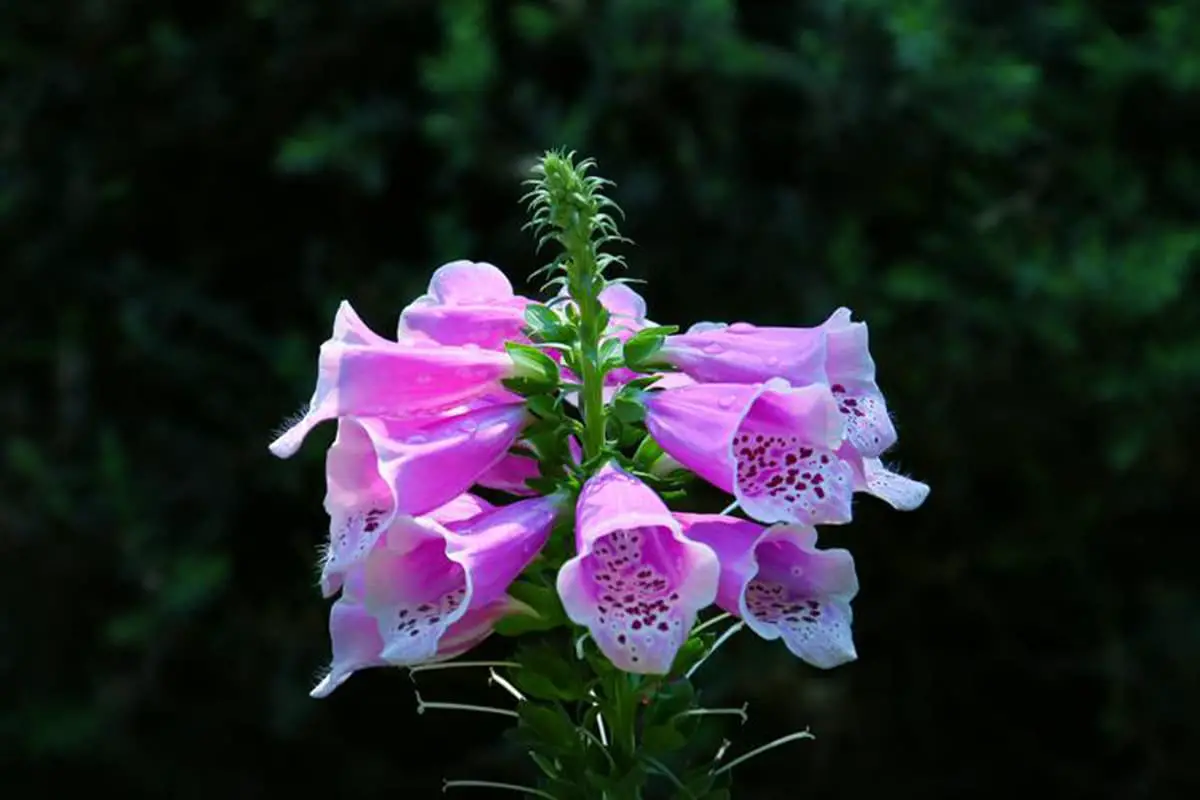
Cultivated varieties come in white, pink, and dark red, typically classified as white bells, large bells, and double bells. They are commonly used in flower beds and rock gardens, or for natural floral arrangements. Originating from Europe, they are sporadically cultivated throughout Taiwan, with large populations found in locations such as Alishan, Taipingshan, Qingjing Farm, and Nantianchi.
Morphological Characteristics
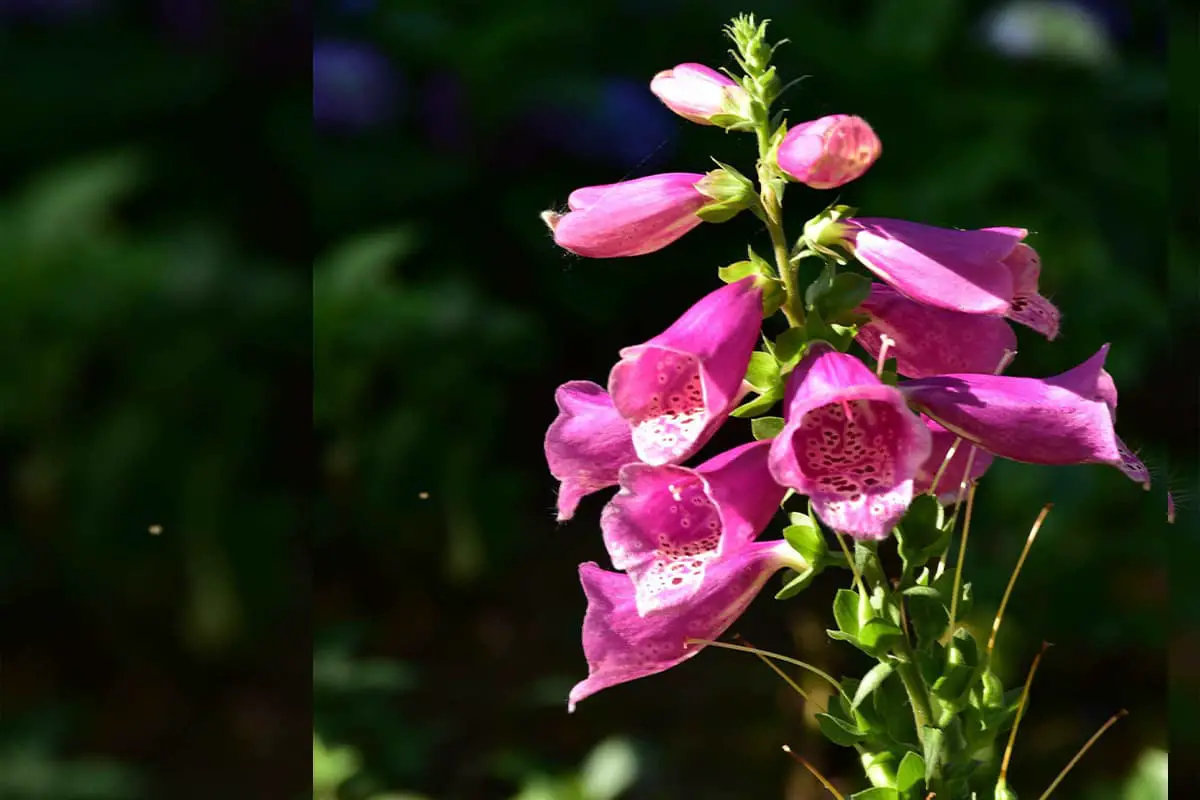
As a biennial or perennial herb, the whole plant, excluding the corolla, is covered with grayish-white soft and glandular hairs. Sometimes the stem is nearly hairless, growing 60-120 cm tall with a single stem or a cluster of stems.
The basal leaves often form a rosette, with petioles having narrow wings up to 15 cm long. The leaves are ovate or elongated oval, 5-15 cm in length, tapering or blunt at the end, gradually narrow at the base, with round teeth on the edges, and rarely saw-toothed. Lower stem leaves are similar in shape to the basal leaves, gradually reducing in size upwards, with the petiole shortening until they become bracts.
The calyx is bell-shaped, about 1 cm long, slightly larger in fruit, almost divided to the base, with blunt or abruptly pointed lobes. The corolla is purple-red with spots inside, 3-4.5 cm long, with very short lobes, and the ends covered with white soft hair. The fruit is ovoid, about 1.5 cm long. The seeds are short-rod-shaped, covered with a honeycomb-like texture and extremely fine soft hair. The flowering period is from May to June.
Growing Habits
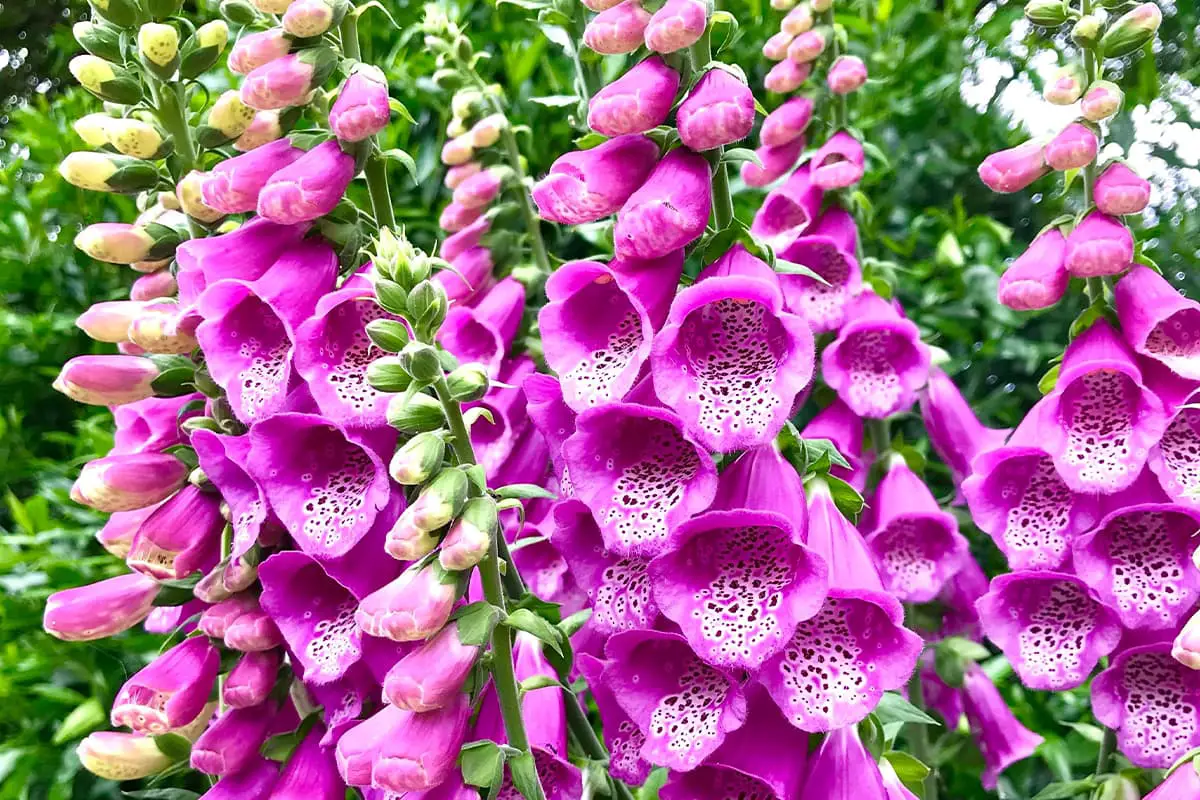
It grows in mountainous regions at altitudes of 1200-1800 meters. The plant is robust, cold-tolerant, drought-tolerant, heat-intolerant, and thrives in poor soil. It prefers sunlight and can tolerate shade, suitable for growth in moist soil with good drainage.
Name Origin
The plant derives its Chinese name from the woolly stem and leaves that resemble a local plant known as “di huang”. Given its European origin, it is also known as the “foreign di huang”.
Distribution Range
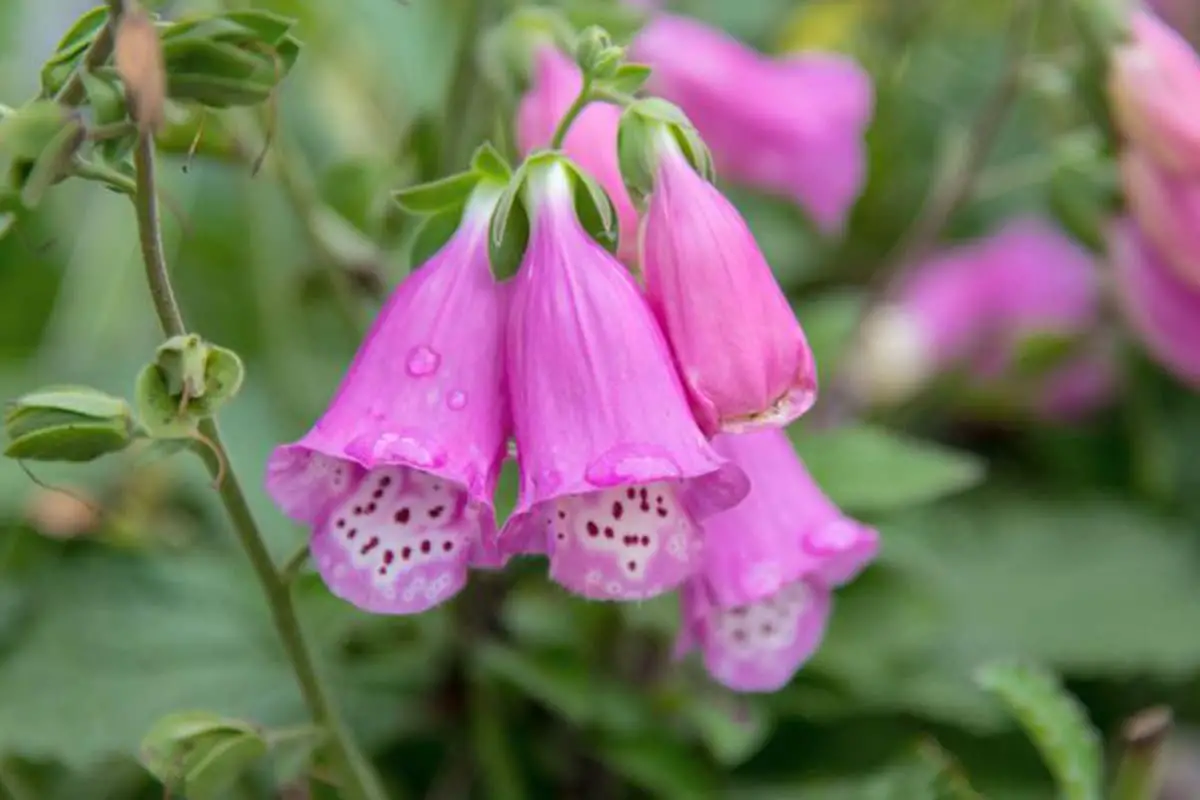
The Foxglove is native to Europe and is sporadically cultivated throughout Taiwan, with substantial naturalized populations found in areas such as Alishan, Taipingshan, Qingjing Farm, and Nantianchi.
Growth and Reproduction
Propagation is typically done through seeding and direct sowing of seeds. In the south, flat or raised beds are used for seedlings, while in the north, sunny beds are more common. Mature horse manure is used as a base fertilizer in sunny beds, and after the fertilizer granules are fully mixed with the bed soil and flattened, seeds are sown in early March. The seeds are sown in rows or scattered at a row distance of 6 cm, then covered with a thin mat for insulation.
Generally, the mat is opened around 10 AM and covered again at 4 PM to promote moisture. By mid-May, when the seedlings have grown 3-5 leaves, they are transplanted to the field at a row spacing of 30 cm × 20 cm and watered after planting.
Direct sowing saves labor. In the north, it’s done in early to mid-April after the soil has thawed or before the soil freezes in November; in the south, late autumn is preferred. The seeds can be directly sown or germinated in warm water at 20℃ before sowing. The row distance when sowing is 30 cm, and the sowing depth is about 1 cm.
Pest and Disease Control
Symptoms: The affected plants initially exhibit dark spots near the stem base close to the ground, which enlarge to a brownish-black color and then shrink and decay. The fungus causes dark green, water-soaked circular spots on the leaves and brown decay on the leaf stalk.
When damp, white filaments can be seen at the site of the disease spot, and severe cases result in plant collapse. The fungus does not produce spores and is spread by mycelium. Initially, the mycelium is colorless, turning light brown later. It overwinters in the soil or diseased tissues and thrives at appropriate temperatures (20-24 degrees) and high humidity.
Overwatering or prolonged rain, causing soil waterlogging, can lead to severe disease occurrence and plant decay.
Control methods:
(1) Use fresh soil rich in organic matter or pond mud and river mud that are darker, solid, and less powdery when dry. It’s best not to use old potting soil. The base fertilizer applied should be fully decomposed.
(2) Strengthen field management. When the air humidity is high, water less or not at all, maintaining the pot soil at a moist level. Apply less nitrogen fertilizer, more phosphorus, and potassium fertilizer, and promptly remove and destroy diseased and old leaves in contact with the soil.
Disease name: Stem rot; Pathogen: Aspergillus niger van Teigh, a semi-conscious fungus; Symptoms: Diseased plant leaves are light green. Most of them show water-soaked decay on the leaf stubs left after hemp cutting, producing yellow-brown or red-brown disease marks, and juice flows out when pressed by hand.
Prevention and Control Methods
① Apply lime. The application of lime can prevent diseases, promote growth, and increase the rate of hemp production. Generally, diseased fields should be treated at a rate of 0.5 kg per plant, and non-diseased fields at 0.25 kg per plant, for 2-3 consecutive years.
② Adjust the leaf cutting period. The leaf cutting period of diseased fields and susceptible fields can be adjusted to periods of low humidity. Advance the leaf cutting originally scheduled before June to before mid-March; Delay the leaf cutting originally scheduled after July until after early November. Be careful not to use a reverse blade to cut leaves.
③ Chemical prevention and control. After cutting the leaves, diseased fields and susceptible fields should be sprayed with 200 times diluted 40% metaxenia or 400 times diluted 25% polyoxin within 3 days. The dosage of the drug solution is 20-25 kg per 666.7m2.
④ Breeding and cultivation of disease-resistant varieties.
Foxglove is a typical naturalized plant, originally from the temperate region of Western Europe. It is called Foxglove (also known as Digitalis in scientific terms) because it has stems and leaves covered with villi and leaves similar to those of Comfrey, hence the name Foxglove. Because it comes from far away Europe, it is also known as Western Comfrey.
According to legend, a wicked fairy gave the Foxglove flower to a fox, allowing the fox to put the flower on its feet to reduce the sound of its footsteps when foraging among the Foxgloves. Therefore, Foxglove has another name – Fox’s Gloves. In addition, Foxglove also has other names such as Witch’s Gloves, Fox Cover, Fairy Gloves, and Dead Man’s Bells.
Deep red: Hidden love
Purple-red: Lies, dishonesty

Peggie was once a high school mathematics teacher, but she set aside her chalkboard and textbooks to follow her lifelong passion for flowers. After years of dedication and learning, she not only established a thriving flower shop but also founded this blog, “Flowers Library”. If you have any questions or wish to learn more about flowers, feel free to contact Peggie.
 English
  العربية
  Bahasa Indonesia
  Deutsch
  Français
  Italiano
  Nederlands
  Português
  Русский
  日本語
日本語