600+ Types of Flowers A To Z (With Names and Pictures)
Types Of Flowers By Names (A-Z) Types Of Flowers By Color Types Of Flowers By Season Types Of Flowers By Blooming Time 600+ Types of Flowers No. Flower Name No.…

Dendrobium Nobile, a prominent member of the Orchidaceae family, is renowned for its diverse varieties, including the Golden Hairpin Dendrobium, Dense Flower Dendrobium, and Drumstick Dendrobium. This orchid species, often referred to as the “father’s flower,” is characterized by its robust nature and harmonious appearance.
Dendrobium Nobile exhibits a wide range of colors, with white and purple being the most prevalent. Its natural habitat spans across Asia, Australia, and New Zealand, with a significant concentration in Southwest China, South China, and Taiwan. In these regions, the orchids are commonly found epiphytically growing on tree trunks or within tree hollows.
Beyond its ornamental value, Dendrobium Nobile is recognized for its medicinal properties, particularly its cooling and rejuvenating effects.
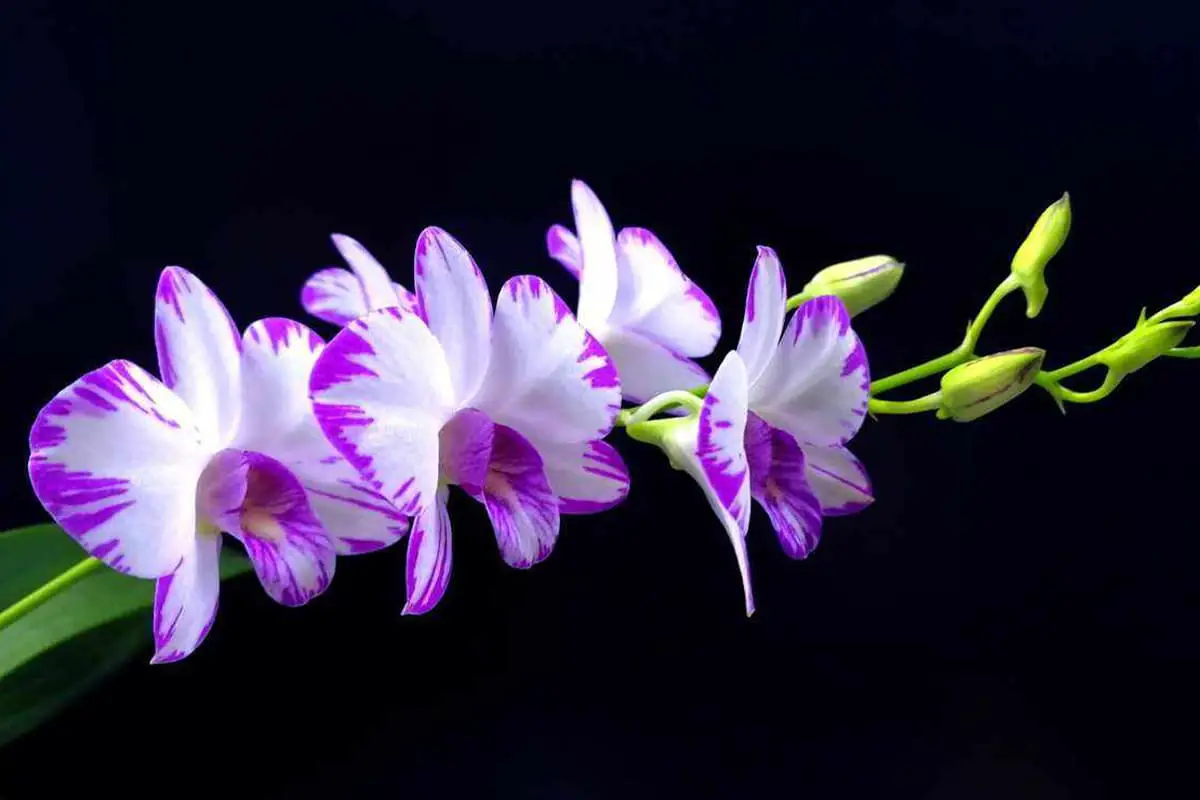
Dendrobium, a genus within the Orchidaceae family, was initially classified under the tribe of Stem Lip Orchids but has since been elevated to its own tribe. It is valued not only for its ornamental qualities but also for its therapeutic benefits, including the ability to dispel inner heat and boost vitality.
The Dendrobium plant structure consists of fleshy stems approximately as thick as a middle finger, with bamboo-like leaves arranged alternately on the stem nodes. The inflorescence emerges from the leaf axils, typically bearing seven to eight flowers, though some varieties can produce over 20 flowers per inflorescence.
Each Dendrobium flower features six petals radiating outwards, with a slightly rounded labellum (lip petal) at the center. Many varieties display purple petal edges with white centers, while some exhibit yellow or orange hues.
Scientific Classifications:
Family: Orchidaceae
Genus: Dendrobium
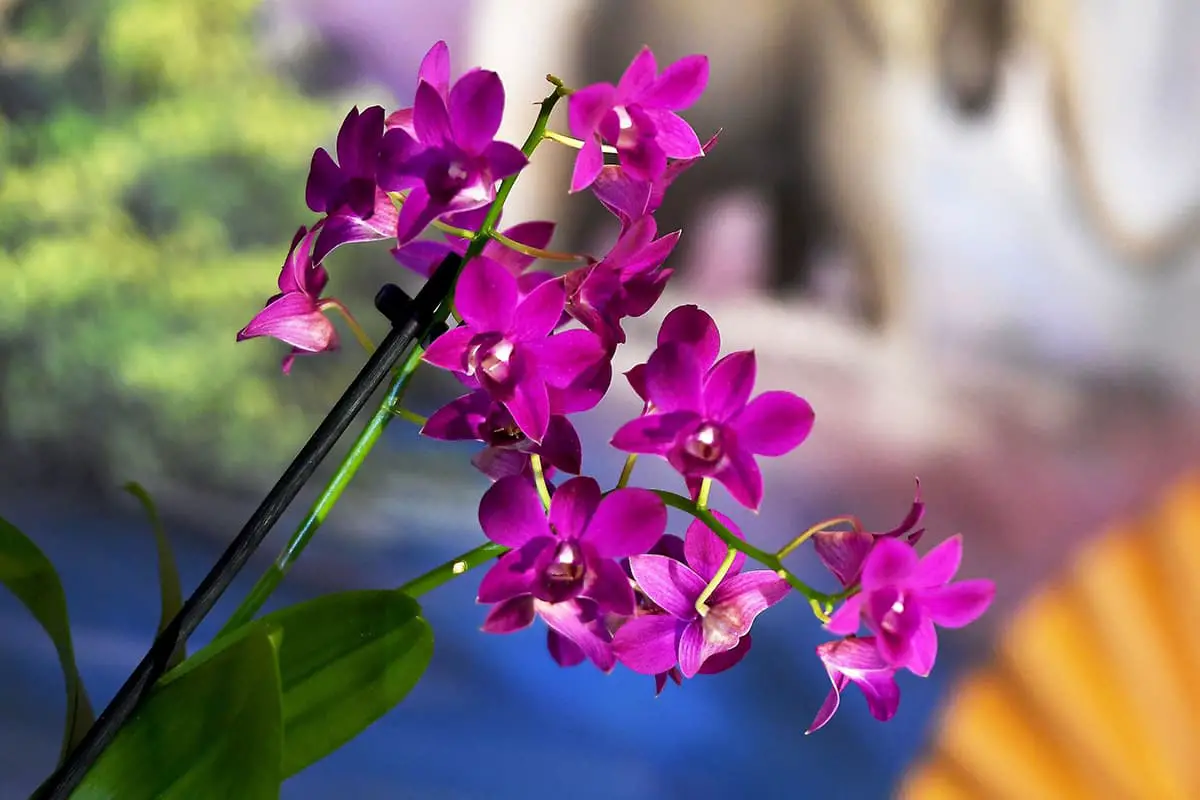
Alternative Names: Butterfly Orchid Type Dendrobium, Dendrobium Orchid
Origin: With over 1,000 species, Dendrobiums are primarily native to China, Japan, Southeast Asia, Northern Australia, low-altitude tropical forests of New Guinea, and Pacific islands.
Distribution: Suitable for cultivation throughout Taiwan, in both northern and southern regions.
Uses: Cut flowers, potted plants, epiphytic cultivation, and ornamental purposes.
Cultivation: Dendrobium orchids thrive in a mix of bark chips and some inorganic material, placed in a location with bright, indirect light (shade during midday). Watering frequency varies seasonally, with daily or every other day watering from spring to autumn, reducing to once or twice weekly in winter. Fertilization can be done monthly with diluted liquid fertilizer or sparingly with granular fertilizer.
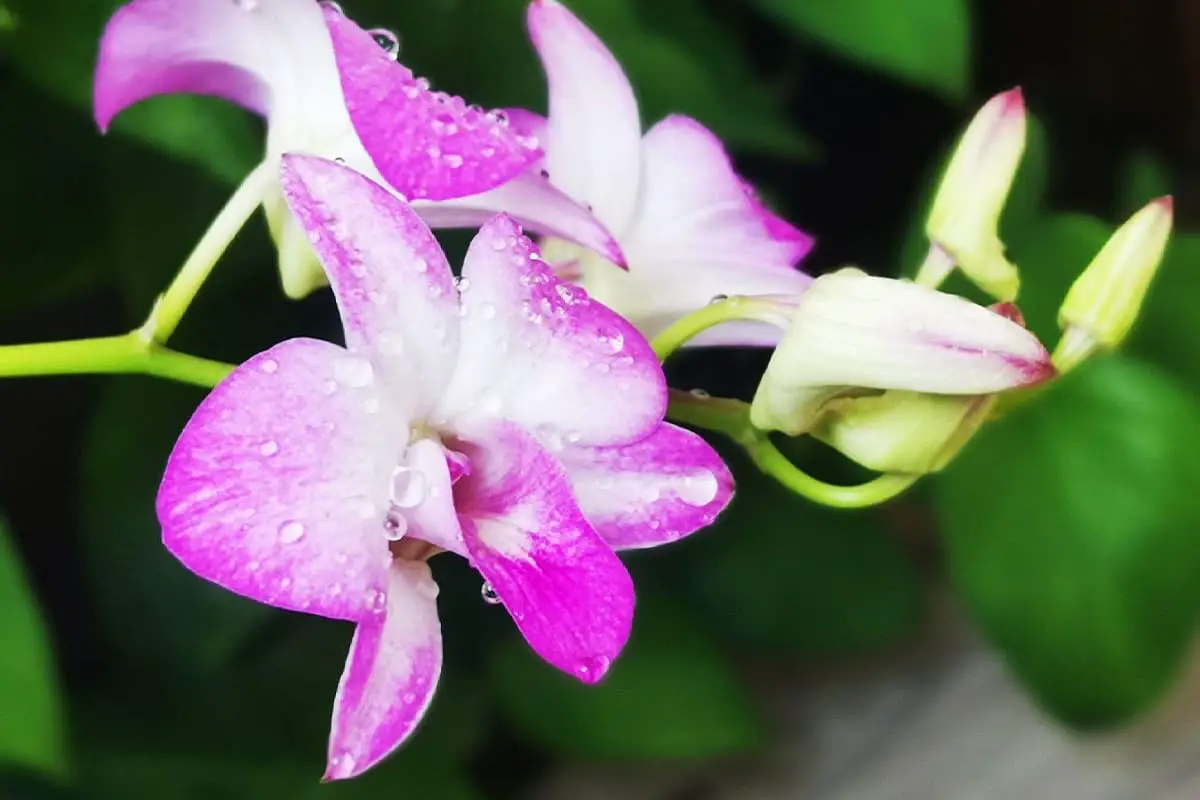
Most Dendrobiums undergo leaf senescence in winter. Repotting with fresh medium every two years in spring is recommended to prevent substrate decay and promote vigorous growth and flowering.
Habitat: Dendrobiums are epiphytic plants with specific microclimate requirements. They often grow on cool, humid, partially shaded slopes or slightly acidic rock faces. Their natural habitats typically feature overhead tree cover and nearby water sources. During dry periods, they may shed leaves to conserve resources.
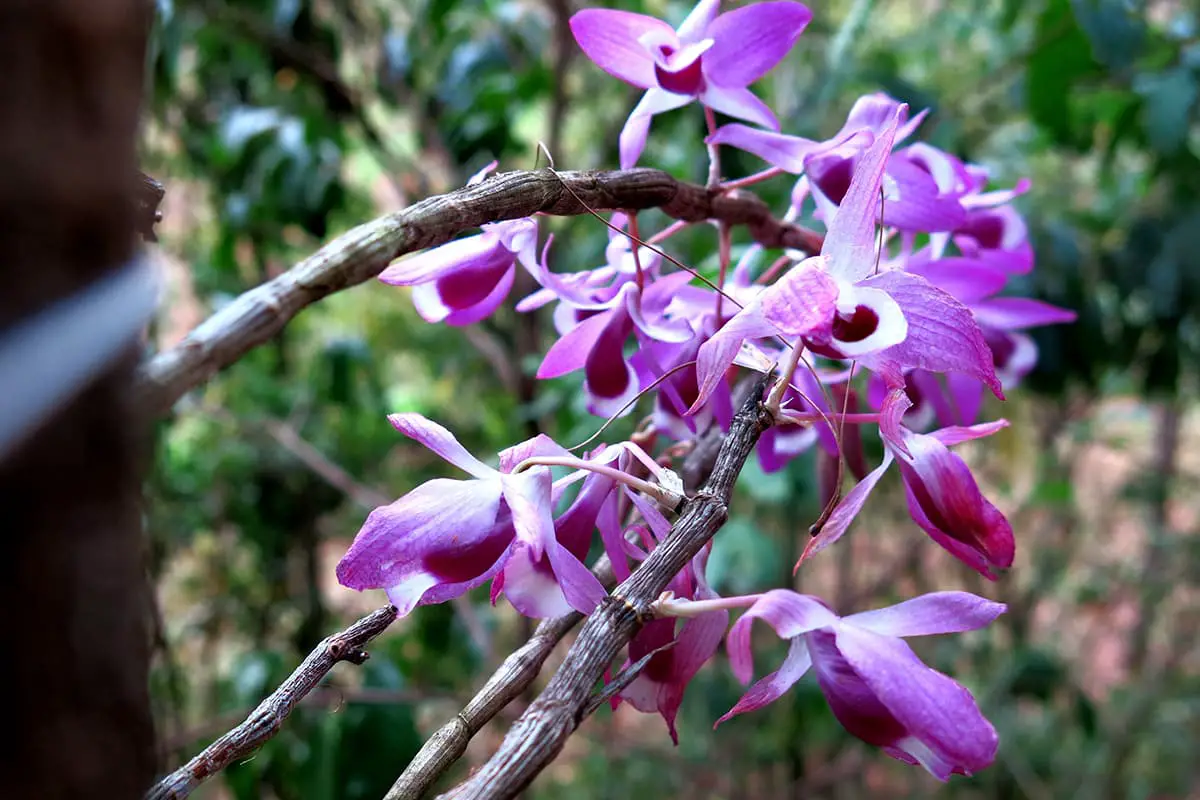
Dendrobiums utilize their dense root systems to anchor themselves and absorb nutrients from their substrate. Their exposed aerial roots can absorb atmospheric moisture and perform photosynthesis.
Conservation: Wild populations of some Dendrobium species, such as the Iron Skin Dendrobium, are nationally protected rare and endangered plants in their native ranges, with collection and sale prohibited to preserve these valuable orchid species.
Dendrobium is a diverse genus with over 1,500 species globally, primarily belonging to the epiphytic orchid family. In China, 76 species have been identified, accounting for about 5% of the world’s Dendrobium diversity. Despite this relatively small percentage, China’s historical use and development of Dendrobium for medicinal purposes have been at the forefront globally, establishing it as a significant Chinese herbal medicine.
Notable species include:
Global Distribution:
Dendrobium species are predominantly found in tropical and subtropical regions between 15°31′ north latitude and 25°12′ south latitude. In China, they are mainly distributed south of 30° north latitude, with some species extending to areas between 30° and 35° north latitude.
Common Cultivated Varieties:
Additional Notable Ornamental Species:
The diversity of Dendrobium species and cultivars offers a wide range of ornamental and medicinal applications, contributing to their significance in both horticulture and traditional medicine.
Dendrobium orchids are typically epiphytic, growing on tree trunks or lithophytic, growing on rocks in forest environments at elevations ranging from 480 to 1700 meters. These orchids thrive in warm, humid, and partially shaded conditions, and lack cold hardiness.
The optimal temperature range for Dendrobium growth is between 18°C and 30°C (64°F to 86°F). However, they perform best at 16°C to 21°C (61°F to 70°F) during the active growing season and 16°C to 18°C (61°F to 64°F) during dormancy. Ideal evening temperatures fall between 10°C and 13°C (50°F to 55°F), with a diurnal temperature variation of 10°C to 15°C (18°F to 27°F) being most beneficial.
While daytime temperatures exceeding 30°C (86°F) do not significantly impede growth, winter temperatures should not drop below 10°C (50°F). Seedlings are particularly susceptible to frost damage at temperatures below this threshold.
Dendrobiums are sensitive to both drought and waterlogging, especially during the emergence of new shoots and root formation, which necessitates adequate moisture. However, excessive moisture, particularly in conjunction with low temperatures, can lead to root rot.
During periods of sunny, dry weather, it is crucial to supplement regular watering with frequent misting to maintain high atmospheric humidity. Evergreen Dendrobium species can tolerate consistent moisture levels in winter, while deciduous species prefer slightly drier conditions, albeit with high ambient humidity.
Although Dendrobiums naturally occur in forest habitats, cultivated specimens benefit from controlled light exposure. Ideal conditions include 50% shade during summer and autumn, reducing to 30% shade in winter and spring. Excessive light can cause stem swelling and yellowing, as well as chlorotic foliage. However, sufficient sunlight promotes prolific autumn flowering.
The growing medium for Dendrobiums should be well-draining and aerated. A suitable substrate might comprise crushed tree fern roots, sphagnum moss, charcoal pieces, broken tiles, and perlite, with an emphasis on tree fern roots and sphagnum moss.
Dendrobium is the most speciose genus within the Orchidaceae family, encompassing approximately 1500 species. Its distribution is primarily centered in tropical Asia and the Pacific Islands. In China, 63 Dendrobium species are documented, with 39 recognized for their medicinal properties.
The native range of Dendrobium in China extends south of the Qinling Mountains and the Huai River. Latitudinally, most species are concentrated between 15°30’N and 25°12’N, with species diversity gradually diminishing northward and not exceeding 34°24’N. Altitudinally, they occur from 100 to 3000 meters above sea level. The genus Dendrobium represents an evolutionary adaptation to subtropical climatic conditions, with its center of diversity in Southeast Asia.
The Dendrobium specimen depicted, known as the Iron Maple Cup from Lao Yan Mountain, is considered among the finest of its genus. This particular variety is characterized by its high gel content, leaving no residue after prolonged mastication, substantial weight, and is renowned for its superior medicinal efficacy.
Stem: Dendrobium orchids are primarily epiphytic, growing on tree trunks or in tree crevices. Their stems, also known as canes or pseudobulbs, are elongated and typically cylindrical. These stems can be rhizomatous (growing horizontally), erect, creeping, or pseudobulbous, depending on the species. The pseudobulbs grow in clusters and can reach heights of 60-70 cm. The base of the stem is often covered by a grayish protective sheath, with distinct nodes along its length.
Leaves: The leaf count in Dendrobium orchids varies significantly among species. Some may have a single leaf, while others possess multiple leaves. Typically, the leaves are boat-shaped or lanceolate, measuring 10-20 cm long. They are usually arranged alternately along the stem, with the majority clustered near the apex of the pseudobulb.
Flowers: Dendrobium flowers are renowned for their diversity and beauty. They exhibit a wide range of colors, with white and various shades of purple being predominant. The flowers typically have narrow petals and sepals, giving them a delicate appearance. The labellum (lip) is a distinctive feature, either entire or tri-lobed, and is attached at the base of the column.
Flowers are borne on inflorescences that emerge from the leaf axils near the top of the pseudobulb. Each flower stalk can reach up to 60 cm in length and bear 4-18 flowers, depending on the species and growing conditions.
Fruit: After pollination, Dendrobium orchids produce capsules containing numerous tiny seeds. These capsules split open when mature, releasing the dust-like seeds for wind dispersal.
Distribution and Adaptation: The Dendrobium genus is one of the largest in the Orchidaceae family, comprising over 1,000 species. These orchids are widely distributed across Asia, extending from India to Japan, Southeast Asia, and as far as Australia and New Zealand. Their epiphytic nature allows them to thrive in various habitats, from tropical lowlands to high-altitude montane forests.
Unique Features:
Select a cool, moist location for planting. Construct a rectangular raised bed 9 cm high using stones to prevent soil erosion from rainfall. Fill the bed with nutrient-rich humus and level the soil surface.
Erect a 2-meter high shade structure over the bed, with a grass curtain on the south side to shield the plants from intense sunlight. Plant the divided Dendrobium orchids in the prepared bed and cover with 2 cm of fine soil. Secure the plants with small pebbles to ensure stability.
To expedite propagation, plant Dendrobium at 15 cm x 20 cm spacing, leaving only the shoot tips exposed. Once the cut stems develop new buds and white aerial roots, carefully excavate them and arrange horizontally in the bed. Cover with a thin 0.5 cm layer of soil. When new shoots reach 5 cm in height, they are ready for division and transplantation.
Choose a shaded, moist rock with an established moss growth. Create a planting area by excavating a 1.5-meter wide face to a depth of 18 cm. Position the rocks and place divided Dendrobium orchids in the natural recesses or secure them within rock crevices.
Prepare a nutrient-rich mixture using moss-derived soil, well-composted cow manure, and bean dregs to anchor the roots and provide essential nutrients for Dendrobium growth.
Optimal timing for attachment is early spring or autumn. Select broad-leaved trees with thick trunks and high water content, such as Catalpa, Camphor, Maple, Ginkgo, or Pear trees. Choose healthy Dendrobium clusters with abundant roots and vibrant green stems.
Prepare the Dendrobium by removing dead stems, broken branches, and old growth. Trim aerial roots to 1.5 cm length and divide large plants, retaining 5 young leafy stems per cluster.
Create a shallow incision in the tree trunk and securely fasten the base of the Dendrobium cluster using bamboo nails. For protruding trunks, create a flat surface before nailing. Reinforce with bamboo splints or natural fiber ropes. Avoid attaching to decaying branches or loose bark.
After securing, apply a nourishing mixture of composted cow manure, bean dregs, and balanced orchid fertilizer around the Dendrobium roots and surrounding bark. Take care to avoid direct contact with the stem base. The number of attached plants depends on trunk size and branching structure, ranging from several clusters to hundreds per tree.
Division method: Perform after flowering. Remove the parent plant from its container and divide into 2-3 clusters, each retaining 3-4 mature pseudobulbs to promote blooming. After gently washing and partially drying the roots, plant in a wooden frame or a pot with adequate drainage holes. Use a well-aerated, fast-draining substrate composed of fern roots, sphagnum moss, pine bark, and coarse river sand. Avoid overly fertile or compacted soil mixtures. Line the pot’s base with charcoal and ceramic granules to enhance drainage. Top-dress with white stones or Sedum lineare for moisture retention and aesthetics. Water thoroughly and place in a semi-shaded location.
Cutting method: Select tender, actively growing stems for propagation. The rainy season is ideal for this technique. Use sterile perlite or coarse river sand as the rooting medium. Maintain high humidity and provide dappled shade until root formation occurs, then transplant.
Sterile seeding method: Employ tissue culture techniques to germinate sterilized seeds on a specialized culture medium. Incubate in a controlled environment until seedlings emerge, then transplant.
For potted Dendrobium, use a light, well-draining, and aerated growing medium comprising peat moss, chopped fern roots, bark chunks, and horticultural charcoal. Incorporate pottery shards or crushed bricks at the pot’s base to promote root development and enhance drainage.
Lighting requirements:
Provide bright, indirect light and ensure adequate ventilation to promote robust growth and abundant flowering.
Water requirements:
During the active growth period in spring and summer, water thoroughly to support pseudobulb development. Gradually reduce watering from September onwards to encourage pseudobulb maturation and promote blooming. Maintain high ambient humidity, but avoid waterlogged conditions in the growing medium. Mist the surrounding area frequently to increase air moisture.
Fertilizer requirements:
Apply a balanced, dilute orchid fertilizer every 10 days during the active growth phase, reducing frequency in autumn. Avoid concentrated fertilizers. Adjust the NPK ratio according to the growth stage, alternating between foliar sprays and root irrigation. Cease fertilization during pseudobulb maturation and winter dormancy.
Repotting:
Repot Dendrobium orchids that have been cultivated for 2-3 years or more when the plant becomes crowded, roots fill the container, or the potting medium shows signs of decomposition. For both evergreen and deciduous species, repot after flowering. Minimize root disturbance during the process to prevent stress-induced leaf yellowing and abscission, particularly in cooler temperatures.
Dendrobium, also known as forest orchid, forbidden life, Du Lan, golden hairpin flower, thousand-year-runn, yellow grass, or hanging orchid flower, has been valued in traditional medicine for centuries.
Medicinal part: Stem
Characteristics of medicinal materials:
Fresh Dendrobium: Cylindrical or flattened cylindrical stems, about 30 cm long and 0.4 to 1.2 cm in diameter. The surface is yellow-green with a smooth texture or vertical striations. Nodes are prominent and darker, with membranous leaf sheaths. The stems are fleshy, juicy, and easily breakable. They have a subtle aroma, a slightly bitter taste with a sweet aftertaste, and become sticky when chewed.
Dried Dendrobium (Ring grass Dendrobium): Slender cylindrical stems, often curved or coiled, 15 to 35 cm long and 0.1 to 0.3 cm in diameter, with nodes 1 to 2 cm apart. The surface is golden and glossy with fine vertical striations. The texture is flexible yet solid, with a relatively flat cross-section. It is odorless with a mild taste.
Medicinal properties and uses:
Dendrobium is renowned for its diverse medicinal applications due to its rich and balanced composition of bioactive compounds. It is commonly used in treating:
The Lao Yan Mountain Dendrobium from Zhejiang Province is considered the highest quality, characterized by its high colloid content, chewy texture, and superior medicinal efficacy. However, its cultivation is challenging, resulting in limited yield.
Harvesting and processing: Dendrobium can be harvested year-round. For fresh use, remove roots and soil debris. For dry use, remove impurities, briefly scald or bake until pliable, then rub to clean leaf sheaths and dry thoroughly. Some varieties are twisted into spiral or spring shapes during processing, known as “earring Dendrobium.”
Traditional Chinese Medicine properties:
Functions: Benefit the stomach and promote fluid production, nourish yin and clear heat. Indicated for yin deficiency with fluid depletion, dry mouth, thirst, poor appetite, post-illness deficiency heat, and blurred vision.
Dosage and administration:
Contraindications: Not suitable for early stages of heat diseases before yin damage, damp-heat conditions before dryness sets in, or spleen and stomach deficiency cold (low stomach acid secretion).
Modern pharmacological effects:
Dendrobium species, particularly Dendrobium ringens and Dendrobium officinale, are valued for their nutritional and therapeutic properties.
Characteristics: Sweet taste, slightly cold nature. Functions to nourish yin, clear heat, benefit the stomach, and produce saliva.
Key components: Alkaloids (e.g., Dendrobine), mucilage, starch
Effects: Antipyretic, analgesic, promotes gastric secretion, aids digestion, enhances metabolism, and exhibits anti-aging properties.
Indications: Heat injury to body fluids, low-grade fever with thirst, stomach yin deficiency, dry throat, nausea, poor appetite, kidney yin deficiency, and blurred vision.
Dosage: 10-15 grams daily (dried), 30 grams if fresh. Can be prepared as soup, tea, or decoction.
Therapeutic recipes:
These therapeutic recipes showcase the versatility of Dendrobium in traditional Chinese dietary therapy, addressing various health concerns while providing nutritional benefits.

Peggie was once a high school mathematics teacher, but she set aside her chalkboard and textbooks to follow her lifelong passion for flowers. After years of dedication and learning, she not only established a thriving flower shop but also founded this blog, “Flowers Library”. If you have any questions or wish to learn more about flowers, feel free to contact Peggie.
 English
  العربية
  Bahasa Indonesia
  Deutsch
  Français
  Italiano
  Nederlands
  Português
  Русский
  日本語
日本語