600+ Types of Flowers A To Z (With Names and Pictures)
Types Of Flowers By Names (A-Z) Types Of Flowers By Color Types Of Flowers By Season Types Of Flowers By Blooming Time 600+ Types of Flowers No. Flower Name No.…

The Delphinium anthriscifolium, a perennial herb from the buttercup family, Ranunculaceae, and genus Delphinium, can grow up to 78 centimeters tall with equidistant leaves on branching stems.
The pinnately compound leaves, often withering at the base during blooming, are diamond- or triangular-shaped, with narrow ovate leaflets sparsely covered in short soft hairs on the top and hairless or nearly hairless on the bottom; leaf stalks are also hairless or nearly so.
Its racemose inflorescence can feature up to 15 flowers; the axis and pedicels are covered in short soft hairs; the bracts at the base are leaf-like, with smaller bracts mid-stem, resembling lanceolate linear shapes, while the sepals are violet or purple, elliptical to oblong, with staminodes the same color as the sepals and hairless, and the seeds are flat spheroids. It flowers from March to May.
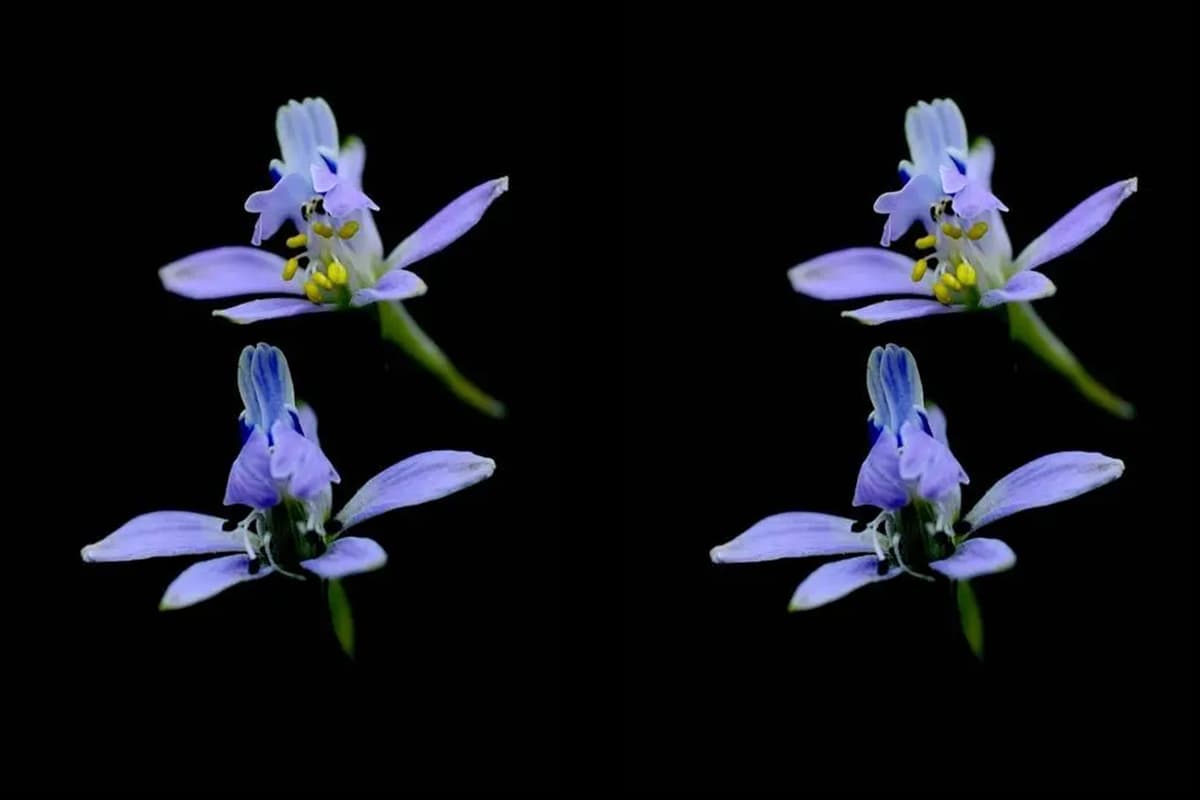
This plant can be annual or biennial, ranging in height from 12 to 78 centimeters, hairless or sparsely covered with recurved short soft hairs. The leaves are pinnately compound, sometimes trifoliate, with long or short petioles.
The leaves near the base often wither during the flowering period; the leaflets are diamond-shaped or triangular, 5-11 centimeters long and 4.5-8 centimeters wide, with 2-4 pairs of leaflets that are opposite or rarely alternate, the lower leaflets petiolate, narrow ovate, tapering, usually divided near the midrib, the terminal leaflets narrow ovate or lanceolate, typically 2-4 millimeters wide, softly hairy on top, and hairless or nearly so on the bottom.
The leaf stalks are 2.5-6 centimeters long, hairless or nearly so.
The racemose inflorescence has 1 to 15 flowers; the axis and pedicels are covered with recurved short soft hairs; the basal bracts are leaf-like, others are small, lanceolate to lance-linear, 2.5-4.5 millimeters long; the pedicels are 0.4-1.2 centimeters long; the bractlets are mid-stem, lanceolate linear, 2.5-4 millimeters long; the flowers are 1-1.8 (up to 2.5) centimeters long.
The sepals are violet or purple, elliptical to oblong, 6-9 (up to 11) millimeters long, sparsely covered with short soft hairs on the outside, with spurs either fusiform or conical, 5-9 (up to 15) millimeters long, slightly curved upward or almost straight.
The petals are purple, hairless, widening at the top; staminodes are the same color as the sepals, hairless, the segments hatchet-shaped, deeply divided near the base; the stamens are hairless; there are three carpels, ovaries sparsely covered with short soft hairs or nearly hairless.
The follicles are 1.1-1.6 centimeters long; the seeds are flat-spheroid, 2-2.5 millimeters in diameter, with spiral membranous wings on the upper part and about five concentric membranous wings on the lower part. It flowers from March to May.
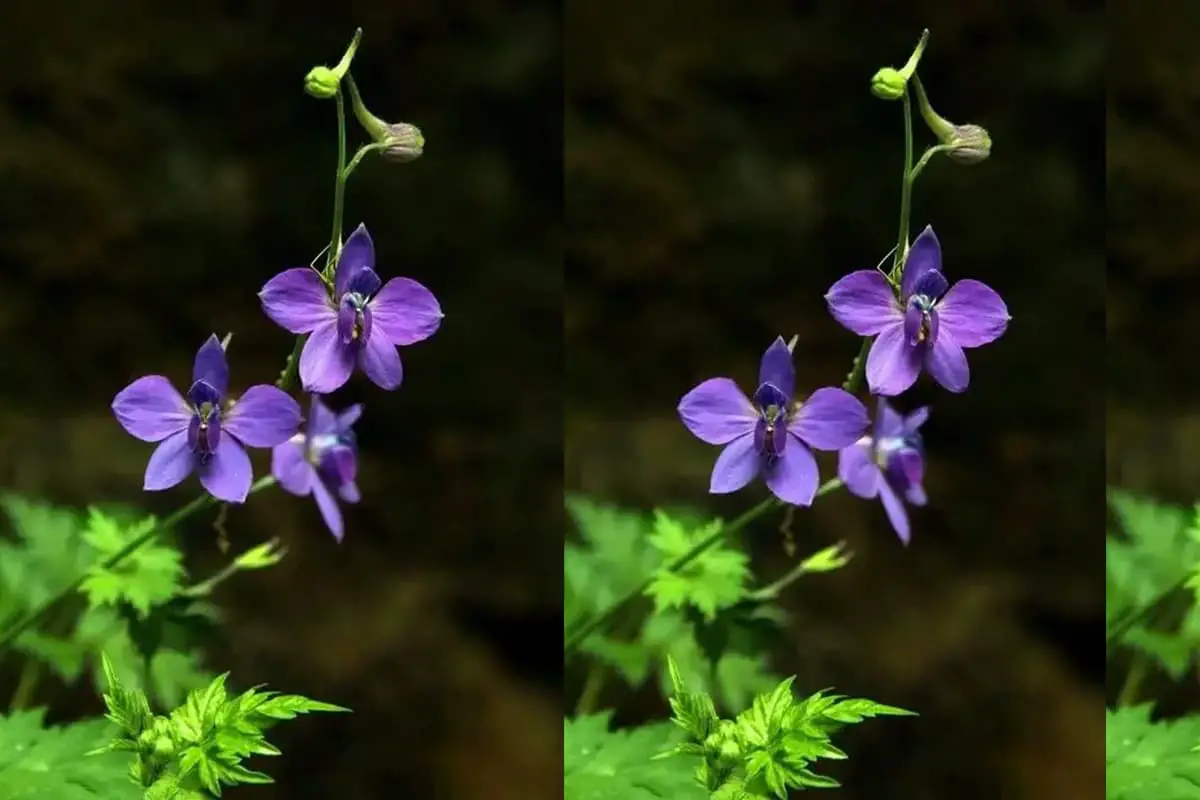
Delphinium anthriscifolium thrives on hillsides or meadows by streams at altitudes of 200 to 1200 meters, with the type specimen collected from southern Guangdong.
It prefers full sunlight and cool climates, tolerates cold and drought but is sensitive to waterlogging. It grows best in fertile, humus-rich, clayey soils.
Delphinium anthriscifolium is a taprooted plant with few fibrous roots, suited to direct sowing and transplanting with soil clumps. It is cold hardy, enjoys sunlight, dislikes heat, and is adverse to waterlogging, preferring to grow in deep, fertile sandy soils.
It should be planted in cooler locations during summer, with daytime temperatures of 20-25°C and night temperatures of 13-15°C. Acidic soil is preferable.
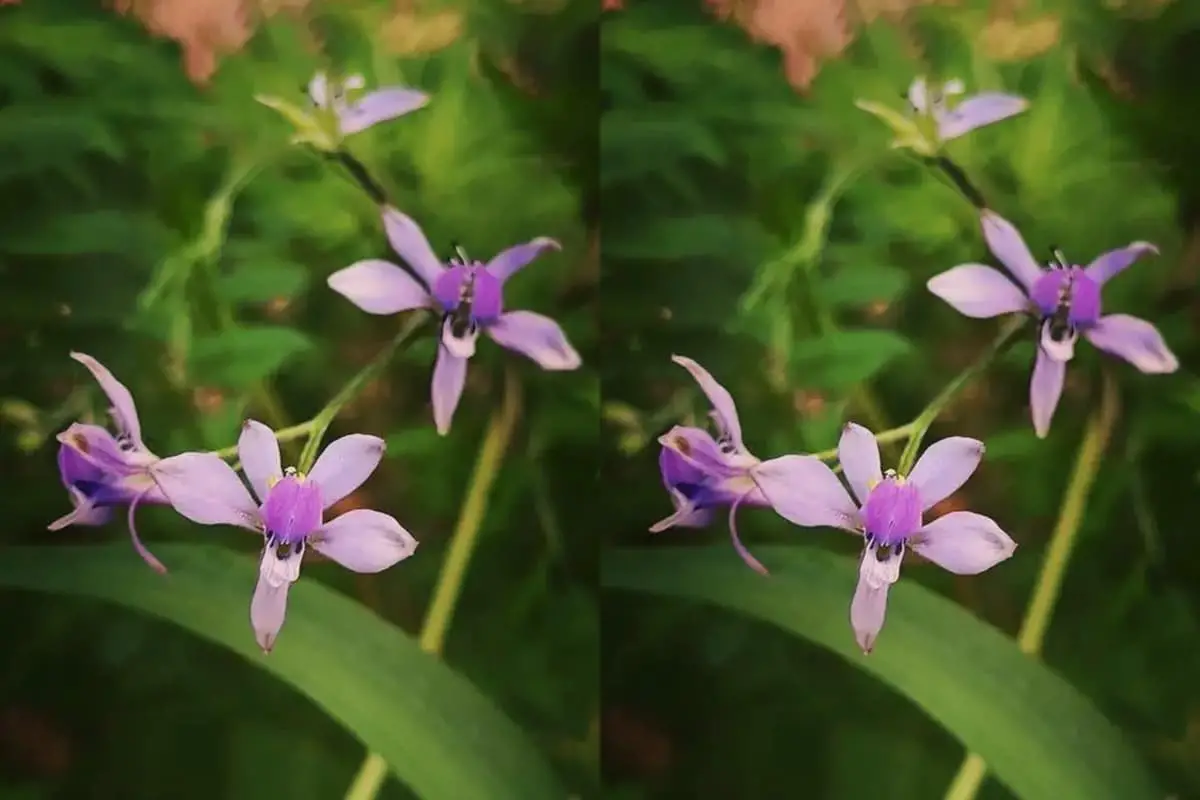
Propagation is commonly done through sowing. Seeds can be sown in spring or autumn, with autumn sowing being more favorable, germinating about two weeks after sowing. High temperatures can lead to uneven seedling emergence.
Common diseases include black spot disease, root neck rot, and chrysanthemum leaf blight, which affect the leaves, flower buds, and stems. A 500-fold dilution of 30% tolclofos-methyl wettable powder can be sprayed for prevention.
For insect pests such as aphids and moths, a 2000-fold dilution of 10% cypermethrin EC can be used for control.
Delphinium anthriscifolium, with its tall stature, delicate leaves, full inflorescences, and dense flowering, has become the “belle of the ball” in European gardens and is widely used.
Cultivated in all provinces of China, this beautiful flower is gaining more extensive use amid the trend of promoting the beautification of gardens with native flora.
The whole plant (Delphinium anthriscifolium): pungent and warm, with toxic properties. It dispels wind and dampness, relieves pain, and activates the meridians.
It is used for rheumatic pain, hemiplegia, food stagnation and fullness, cough; externally for carbuncles, ringworm, and scabies.
Legend: A wildflower mentioned in Greek mythology, a Mediterranean type of Delphinium anthriscifolium, also called “Larkspur,” is known as ‘Ajax,’ named after the Trojan War hero ‘Aias.’ It’s said that after Achilles’ death, Aias and Odysseus competed for Achilles’ armor and weapons.
Aias won, but Athena’s judgment granted these prizes to Odysseus. This led Aias to madness and suicide. The blood he shed stained a flower, forming the letters “AI.” His tragic end (he killed himself with his sword) is depicted on countless vase paintings.
A heart-wrenching legend from Southern Europe tells of a persecuted tribe whose members fled and were killed. Their souls transformed into swallows (some say larks) and flew back to their homeland, hiding in the tender branches of grass.
These swallows turned into beautiful flowers that bloom year after year in their native soil, longing for “justice” and “freedom.”
Flower Language: Clarity, justice, freedom.

Peggie was once a high school mathematics teacher, but she set aside her chalkboard and textbooks to follow her lifelong passion for flowers. After years of dedication and learning, she not only established a thriving flower shop but also founded this blog, “Flowers Library”. If you have any questions or wish to learn more about flowers, feel free to contact Peggie.
 English
  العربية
  Bahasa Indonesia
  Deutsch
  Français
  Italiano
  Nederlands
  Português
  Русский
  日本語
日本語