600+ Types of Flowers A To Z (With Names and Pictures)
Types Of Flowers By Names (A-Z) Types Of Flowers By Color Types Of Flowers By Season Types Of Flowers By Blooming Time 600+ Types of Flowers No. Flower Name No.…

Datura stramonium, also known as Mandrake, Devil’s Snare, and Thorn Apple, is a plant of the Solanaceae family and the Datura genus. The Mandrake possesses a thick, erect stem, with a height varying between 50 to 150cm. Flowers bloom individually at the branch forks or leaf axils, standing upright on short stalks. Depending on the variety, the flowers may present in white, red, or purple hues.
Blooming season extends from June to October, and fruiting from July to November. It is widely distributed across all major continents, and in every province and region of China, growing alongside residences, roadsides, or on grasslands. The Mandrake is highly toxic, with the entire plant poisonous.
Common poisoning occurs due to the accidental consumption of its seeds, fruits, leaves, or flowers, so caution is needed.
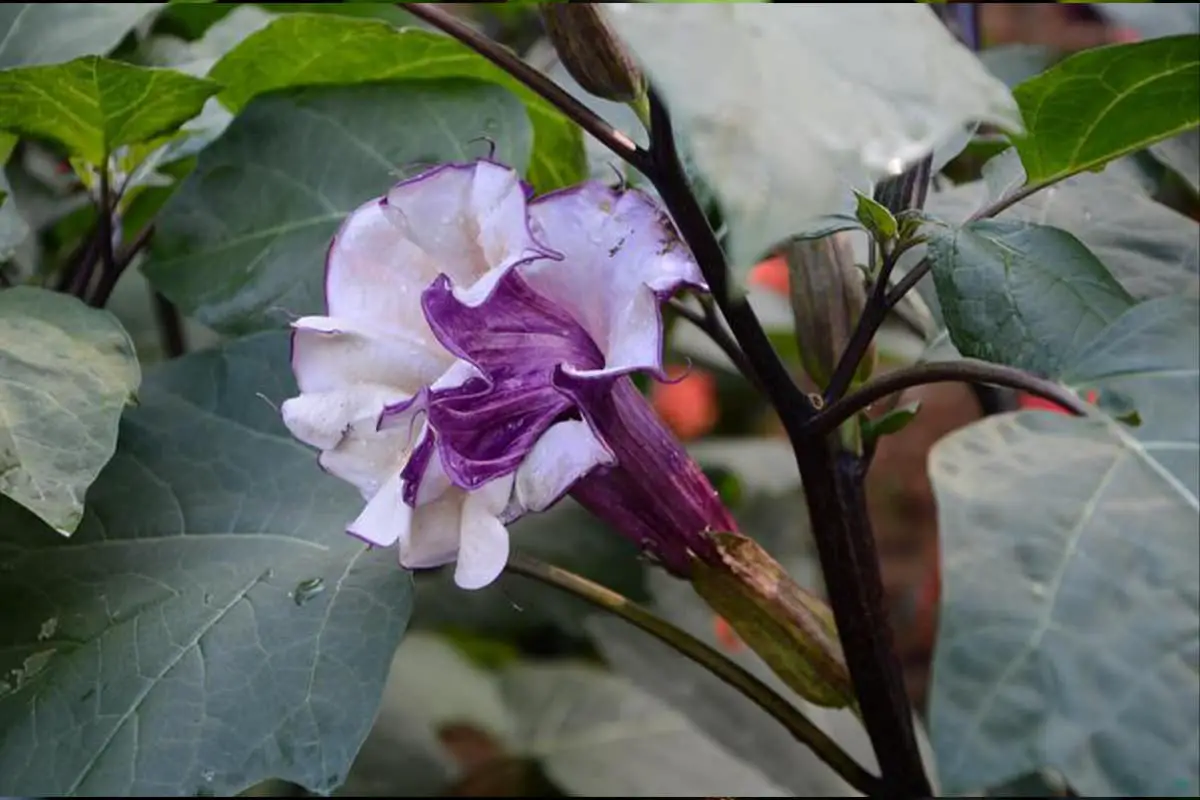
The Mandrake, a plant in the Solanaceae family, can be herbaceous or semi-shrub in nature, standing 0.5-1.5 meters tall. Its thick, cylindrical stem can be light green or tinged with purple, becoming woody at the base. The leaves are broad ovoid, tapering at the top, and asymmetrically wedged at the base, with irregular wavy shallow splits along the edges.
The flowers bloom individually at the branch forks or leaf axils, standing upright on short stalks. The calyx is tubular, 4-5cm long, with five ridges on the tube, and the fruit stands erect, oval-shaped, 3-4.5cm long and 2-4cm in diameter. The flowering period extends from June to October, and fruiting from July to November.
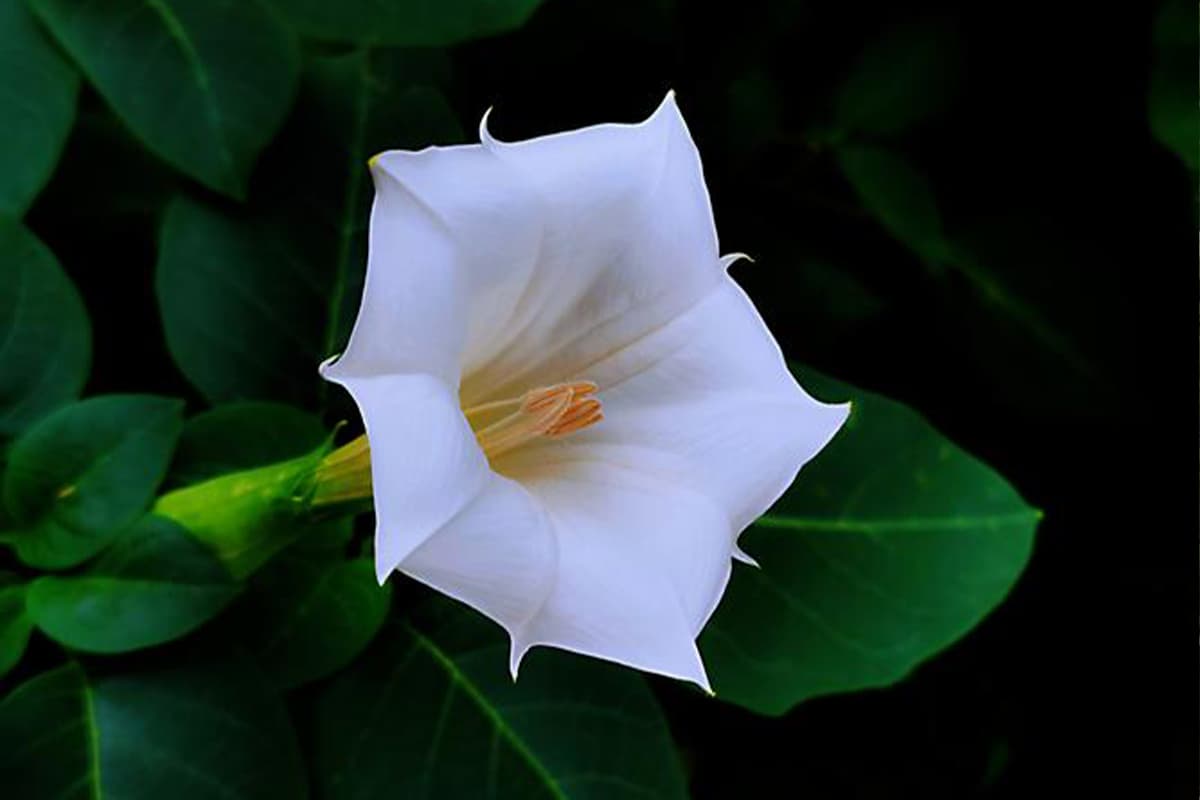
The Mandrake also has medicinal value; it is not only used for anesthesia but also in disease diagnosis and treatment. Thanks to its large and beautiful flowers, it offers ornamental value and can be cultivated in gardens or courtyards to beautify the surroundings. Moreover, the seed oil can be used to make soap and mixed oils, and as an insecticide and bactericide.
The Mandrake commonly grows alongside residences, roadsides, or on grasslands. It is widespread across all major continents, and in every province and region of China.
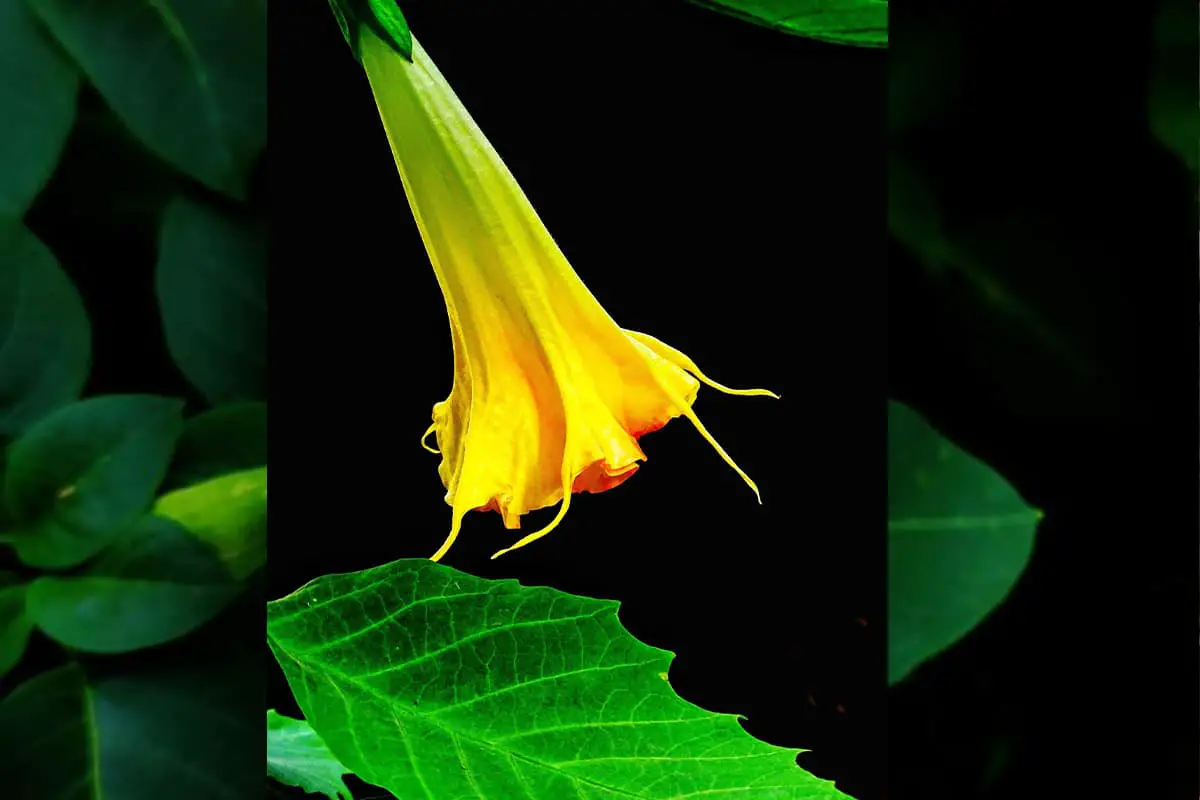
The Mandrake is a wild, erect, woody, annual herbaceous plant of the Solanaceae family. It can be herbaceous or semi-shrub in nature, standing 0.5-1.5 meters tall, almost smooth throughout or short soft-haired in its young parts. Its thick, cylindrical stem can be light green or tinged with purple, becoming woody at the base.
The leaves are broad ovoid, tapering at the top, and asymmetrically wedged at the base, with irregular wavy shallow splits along the edges, sometimes having wavy teeth. There are 3-5 lateral veins on each side, extending to the tips of the splits, and measuring 8-17cm long and 4-12cm wide. The petioles are 3-5cm long.
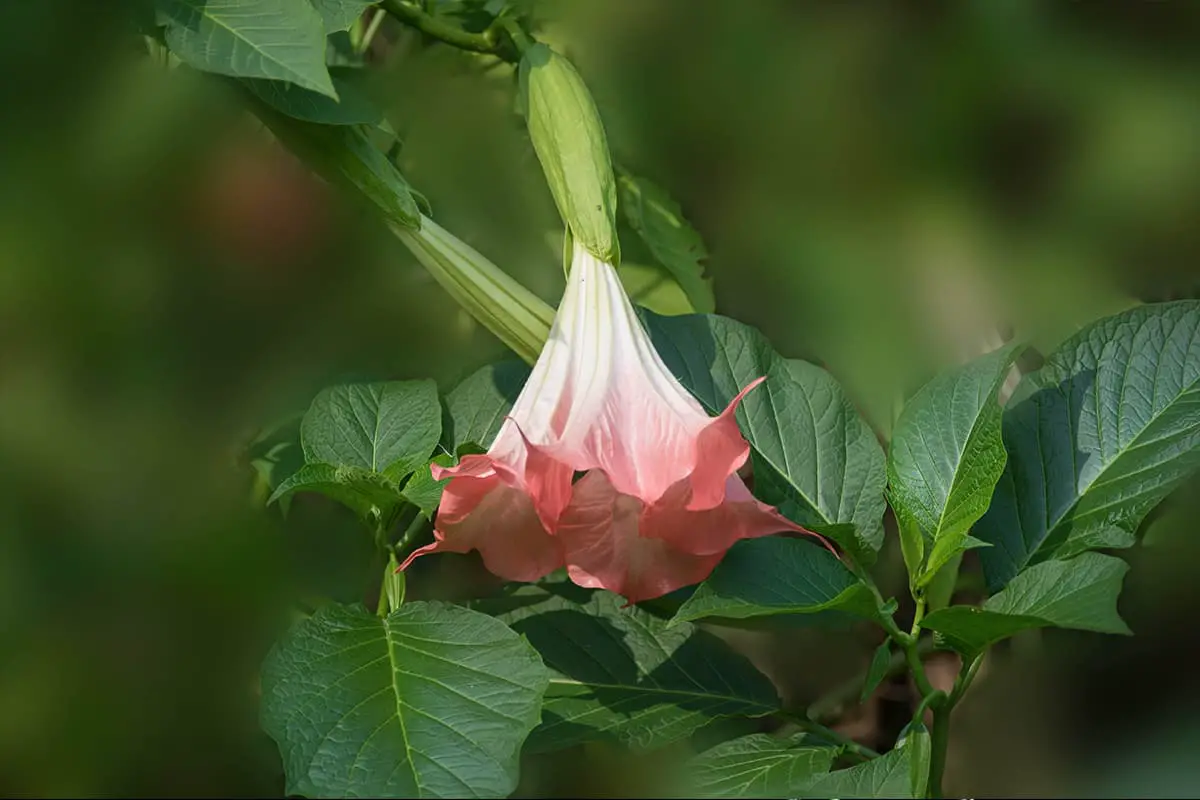
Each flower blooms individually at the branch forks or leaf axils, standing upright on short stalks. The calyx is tubular, 4-5cm long, with five ridges on the tube, slightly indented between the ridges, slightly swollen at the base, tightly surrounding the corolla tube at the top, with five shallow splits. The split pieces are triangular, and after flowering, they break from near the base, with the remaining parts increasing in size with the fruit and folding outwards.
The corolla is funnel-shaped, greenish at the lower half, and white or light purple at the top. The border has five shallow splits, with short pointed tips, measuring 6-10cm long, with a border diameter of 3-5cm. The stamens do not protrude from the corolla, the filament is about 3cm long, and the anther is about 4mm long. The ovary is densely covered with soft needle hairs, and the style is about 6cm long.
The fruit stands upright, oval-shaped, 3-4.5cm long and 2-4cm in diameter, the surface has hard spines or sometimes is nearly smooth and spineless, pale yellow when mature, regularly splitting into four segments. The seeds are ovoid, slightly flattened, about 4mm long, and black. The flowering period extends from June to October, and fruiting from July to November.
Mandrake thrives in places with ample sunlight and adapts well to different soil types, although it prefers soil rich in organic matter and lime. Avoid planting Mandrake after Solanaceous crops to prevent worsening of diseases and pests. It is advisable to plant Mandrake after fallow land, legumes, or cereal crops. Once the site is selected, apply 2500kg of well-rotted farmyard manure, prepare the soil well, and then ridge the soil for sowing.
Open holes at a plant and row spacing of 0.66m×0.66m, with a hole depth of 12cm. Sow 4-5 seeds per hole, using about 150g of seeds per acre. After sowing, lightly cover the soil. When the temperature reaches 15℃, the seeds can germinate within 2-3 weeks.
Seedlings can be obtained directly from the broadcasting field or can be raised in a nursery. In the middle or late April, choose a warm and sunny plot, apply well-rotted fertilizer, till and level the land, prepare the bed, then sow. Broadcasting or row sowing is acceptable, with a row spacing of about 12cm for row sowing.
After sowing, sprinkle fine soil to cover the seeds properly, then cover with a thin layer of rice straw to retain moisture and water thoroughly with a watering can. Seedlings can emerge within half a month, and the rice straw is removed after the seedlings emerge. When the seedlings have 4-6 true leaves, they can be transplanted with soil in the early morning or evening.
As mandrakes prefer more open plots, weeds in the field or overly dense seedlings can inhibit plant growth, increase branching height, result in thin plants, and impact yield.
Therefore, field management should be particularly emphasized during the seedling stage. After seedling emergence, loosen the soil and level the holes. When the seedlings have 3-4 leaves, thin them once. When they have 5-6 leaves, finalize the seedlings. After thinning and finalizing seedlings, weed the field 3-4 times. Retain one healthy plant per hole. Timely earth up to prevent lodging.
Propagation by seeds. In Jilin Province, sowing can be done in the middle or late April. Open holes at a plant and row spacing of 0.66m×0.66m, with a hole depth of 12cm. Sow 4-5 seeds per hole, using about 150g of seeds per acre. After sowing, lightly cover the soil. When the temperature reaches 15℃, the seeds can germinate within 2-3 weeks.
Black Spot Disease
Symptoms: Black spots on the leaves, nearly circular in shape, 2-14mm in diameter. Initially light brown, gradually turning to gray-brown, and finally to brown. Characterized by concentric circles, in humid air, pale black moldy substances grow on the spots. In severe cases, the spots merge, leading to localized death. This disease can also harm chrysanthemums.
Control measures: Clear the garden in the autumn, burn diseased plant residues to reduce the source of bacteria. You can also spray 500-600 times solution of 75% Chlorothalonil or 500 times solution of compound Chlorothalonil at the beginning of the disease.
Tobacco Cutworm
Symptoms: The larvae harm the buds and flowers of mandrake, especially the buds. The larvae burrow into the buds and chew the pistils and stamens, causing the buds and flowers to rot quickly, affecting the yield of flowers.
Control methods: A 1000 times solution of 40% Leptophos can be used for prevention and control.
Twenty-eight Spotted Lady Beetle
Symptoms: The adult and larval stages feed on the leaves of mandrake, leaving only the veins and the upper epidermis on the damaged leaves, forming many irregular transparent indentations that later turn into brown spots. Overfeeding can lead to leaf wilting.
Control methods: ① Manually capture adults, take advantage of the adult beetle’s thanatosis, knock down the plant with a pot to catch the falling insects; ② Manually remove egg masses, as female beetles lay eggs in concentrated clusters. The bright color is easy to spot and remove; ③ Apply pesticides before the larvae disperse, you can spray a 1000 times solution of 50% Parathion emulsion, or a 3000 times solution of 40% Deltamethrin emulsion, or a 3000 times solution of 2.5% Bifenthrin emulsion.
Medicinal
Not only can the flowers of the mandrake be used for anesthesia, but they can also be used to treat diseases. Its leaves, flowers, and seeds can be used as medicine, and they have a spicy, warm, and highly toxic nature. The flowers can treat rheumatism, asthma, pain, epilepsy, and cough due to cold.
A decoction made from the flowers can be used to treat stubborn rheumatism and athlete’s foot caused by cold and dampness. The analgesic effect of the flower petals is particularly good, and can be used to treat neuralgia and other conditions. Leaves and seeds can be used to treat cough and pain.
Ornamental
Mandrake has ornamental value because of its large and beautiful flowers. It can be planted in gardens and courtyards to beautify the environment.
Economic
Seed oil can be used to make soap and to blend paint. It can be used as an insecticide and bactericide: 1 kilogram of mandrake is boiled with 8 kilograms of water to make 4 kilograms of base liquid. Each kilogram of base liquid is mixed with 4 kilograms of water. It can be sprayed for use, and it is 90% effective against aphids and corn snails. It has been proven effective in practice.
All parts of the mandrake plant are toxic, with the fruit, especially the seeds, being the most toxic, followed by young leaves. The toxicity of dried leaves is less than that of fresh leaves. Symptoms of mandrake poisoning generally appear within half an hour after ingestion, and the fastest onset is within 20 minutes.
The latest onset does not exceed 3 hours. Symptoms usually disappear or basically disappear within 24 hours. In severe cases, patients will fall into a coma, convulse, and have cyanosis 24 hours later, eventually dying in a coma.
The main toxic components of mandrake are scopolamine, atropine, and hyoscyamine (mandrake extract), all of which are alkaloids. They are muscarinic receptor blockers, which competitively block muscarinic receptors and disrupt the function of the parasympathetic nervous system.
Atropine has the effect of stimulating or inhibiting the central nervous system, and its half-life is 2.5 hours. Hyoscyamine (mandrake extract) is an atropine-like substance, which can block M-cholinergic receptors and stimulate the respiratory center. Its central effects are mainly inhibitory, it can inhibit glandular secretion and has a sedative and hypnotic effect on the brain. Its half-life is 8 hours.
The effects of scopolamine are stronger in both the peripheral and central nervous systems. It is used as an antidote to acetylcholinesterase and as an adjuvant to parasympathomimetics. Its half-life is 3.5 hours. The toxic effects of alkaloids are mainly to excite and then inhibit the central nervous system, to block acetylcholine responses.
After poisoning, a state of high sympathetic nerve excitement can occur, which can stimulate brain cells to become intensely agitated, stimulate the spinal nerve reflex system, and cause convulsions and spasms.
The mandrake originates from India, and its name carries a deep sense of religious mystery. Mandrake is a transliteration of the Sanskrit word Mandala. It is also translated as “Mandala”, “Manjaro”, etc. The literal translation is “altar” or “altar field”, meaning flatness.
Li Shizhen recorded the origin of the mandrake flower in detail in “Compendium of Materia Medica”, “The Lotus Sutra speaks of the Buddha preaching, and the sky raining mandrake flowers. Also, the Daoist Big Dipper has a messenger of the Tuo Luo star holding this flower. Therefore, later people named the flower after this. Mandrake is a Sanskrit word for mixed colors.”
In Buddhist scriptures, the mandrake flower means aptness, and the model of the microcosm in Tibetan Buddhism is called “Mandala”, which is what Buddhists call “one flower, one world, one leaf, one Tathagata. It embodies the spirit of insight into the hidden and the bright, transcendent enlightenment, and infinite transformation.
Pink Mandrake — Aptness
Green Mandrake — Hope
Black Mandrake — Unpredictable darkness, death, and love in exile
Gold Mandrake — Happiness
White Mandrake — Anesthesia
Purple Mandrake — Terror
Blue Mandrake — Deceptive love

Peggie was once a high school mathematics teacher, but she set aside her chalkboard and textbooks to follow her lifelong passion for flowers. After years of dedication and learning, she not only established a thriving flower shop but also founded this blog, “Flowers Library”. If you have any questions or wish to learn more about flowers, feel free to contact Peggie.
 English
  العربية
  Bahasa Indonesia
  Deutsch
  Français
  Italiano
  Nederlands
  Português
  Русский
  日本語
日本語