600+ Types of Flowers A To Z (With Names and Pictures)
Types Of Flowers By Names (A-Z) Types Of Flowers By Color Types Of Flowers By Season Types Of Flowers By Blooming Time 600+ Types of Flowers No. Flower Name No.…

Cymbidium hybridum, also known as Ximibilan and Chanlan, is a plant of the Orchidaceae family and Cymbidium genus. It is a large-flowered species with strong epiphytic characteristics, originally from India, Myanmar, Thailand, Vietnam, and southern China.
It is mainly obtained through artificial hybridization using these original species as parents. The perianth consists of six segments, with three outer sepals and petal-like inner segments. The lower segment is specialized into a labellum.
The fruit of Cymbidium hybridum is a capsule, with varying shapes and sizes depending on the parents or original species.
The seeds are very small, with underdeveloped embryos and almost no endosperm, making it difficult for them to germinate under natural conditions. Many green varieties have a fragrance.
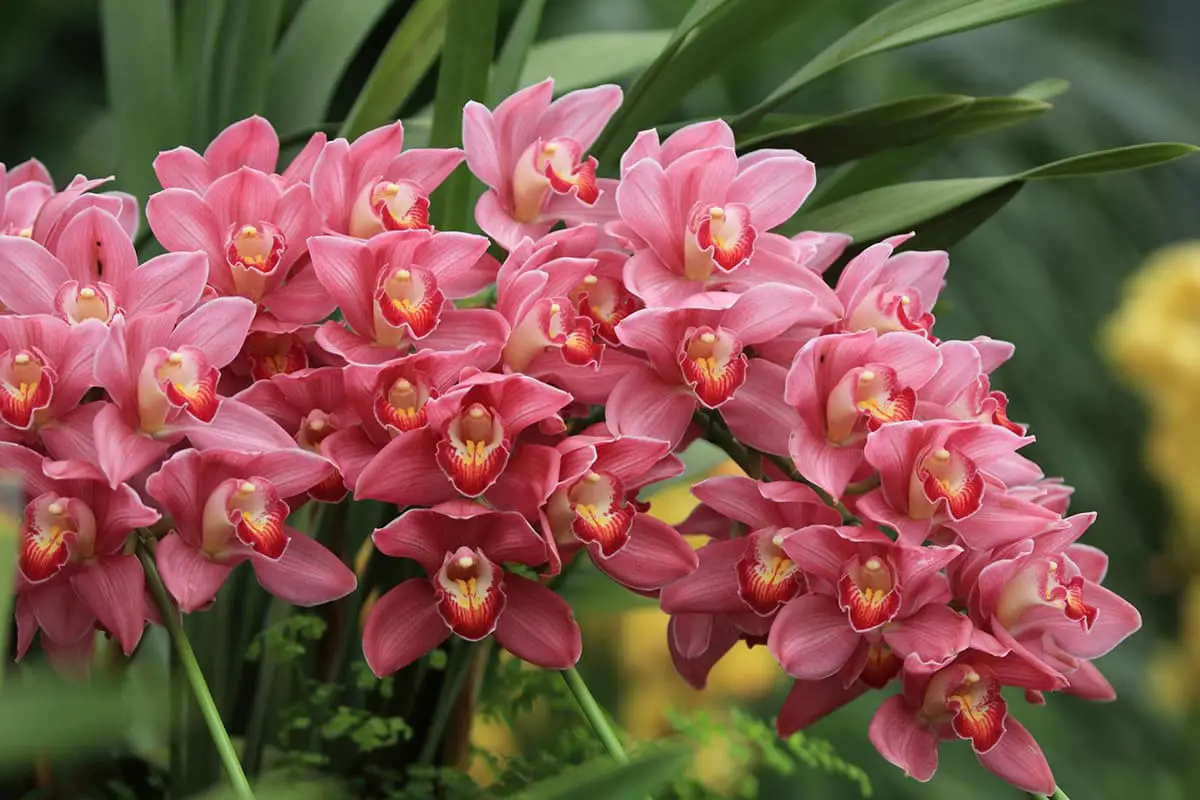
The flowers are large, with a diameter of 6 to 10 centimeters, and come in white, yellow, green, purple-red, or with purple-brown markings.
Cymbidium hybridum plants are erect or pendulous, with bright and showy flowers, primarily used for potted cultivation and ornamental purposes.
Cymbidium hybridum belongs to the Orchidaceae family, Cymbidium genus. Its petals are very large, reaching a diameter of up to 10 centimeters, hence the name. There are numerous varieties, with over a thousand known.
It is a group of varieties created through more than a hundred years of multi-generational artificial hybridization using large-flowered epiphytic species, small-flowered pendulous species, and some terrestrial orchids from the Cymbidium genus.

The first known variety of Cymbidium hybridum in the world is Cymbidium ‘Eburneo-lowianum’, created by using the Chinese native species Cymbidium eburneum as the mother plant and Cymbidium lowianum as the father plant.
It was first cultivated in the United Kingdom in 1889. Subsequently, more than ten wild species such as Cymbidium insigne, Cymbidium hookerianum, Cymbidium erythrostylum, and Cymbidium tracyanum from Tibet participated in hybridization breeding.
Cymbidium hybridum has long, emerald green leaves and a robust and magnificent appearance, making it a world-famous “new star of orchids.”
It combines the elegance and fragrance of native orchids with the richness and diversity of exotic orchids, making it highly popular in the international flower market and beloved by flower enthusiasts.

Evergreen perennial epiphytic herb, with thick and robust pseudobulbs, belonging to the sympodial orchid. Pseudobulbs usually have 12-14 nodes (varying among different varieties), each node with hidden buds.
The size of the buds varies depending on the node position, with larger buds on the first to fourth nodes and smaller, lower-quality buds on the nodes above the fourth (Lu Sicong, 2004).
The hidden buds can develop into either flower buds or leaf buds depending on the age of the plant and environmental conditions.
The leaves are arranged in two rows, elongated lanceolate in shape, with significant variations in length and width among different varieties. The leaf color is greatly influenced by the intensity of light, ranging from yellowish-green to dark green.
The root system of Dendrobium is well-developed, with cylindrical fleshy roots that are thick and robust. They are mostly grayish-white in color, without a clear distinction between primary and lateral roots, and have a prominent root cap at the tip.
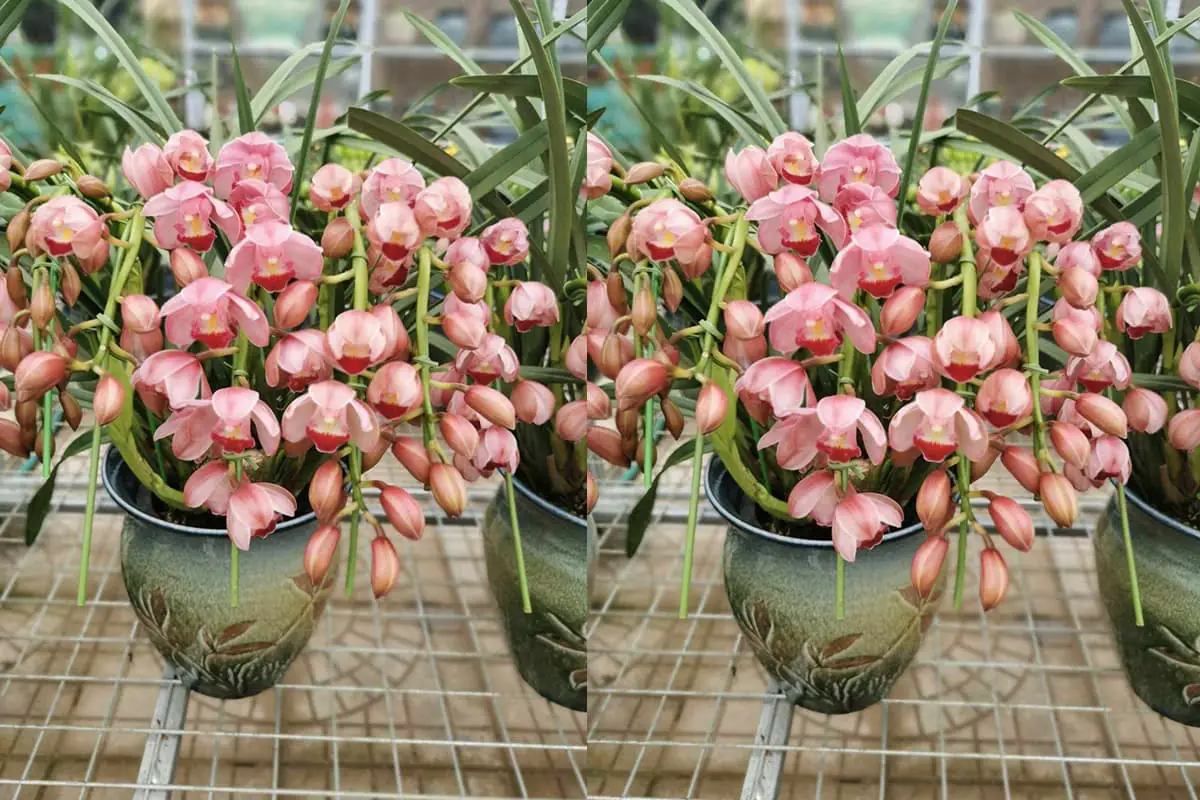
The internal structure follows the typical monocotyledonous plant pattern, with a well-developed cortex that serves to prevent root desiccation.
The inflorescence of Dendrobium is relatively long, with generally more than 10 small flowers, showing significant differences among varieties.
The perianth consists of six segments, with three outer segments being sepals and petal-like. The inner segments are petals, with the lowermost one specialized into a lip.
The fruit of Dendrobium is a capsule, with varying shapes and sizes depending on the parent or native species. The seeds are extremely small, usually with underdeveloped embryos and almost no endosperm, making it difficult for them to germinate under natural conditions.
Many green varieties have a fragrant scent. The flowers are large, with a diameter of 6-10 centimeters, and come in colors such as white, yellow, green, purple-red, or with purplish-brown markings.
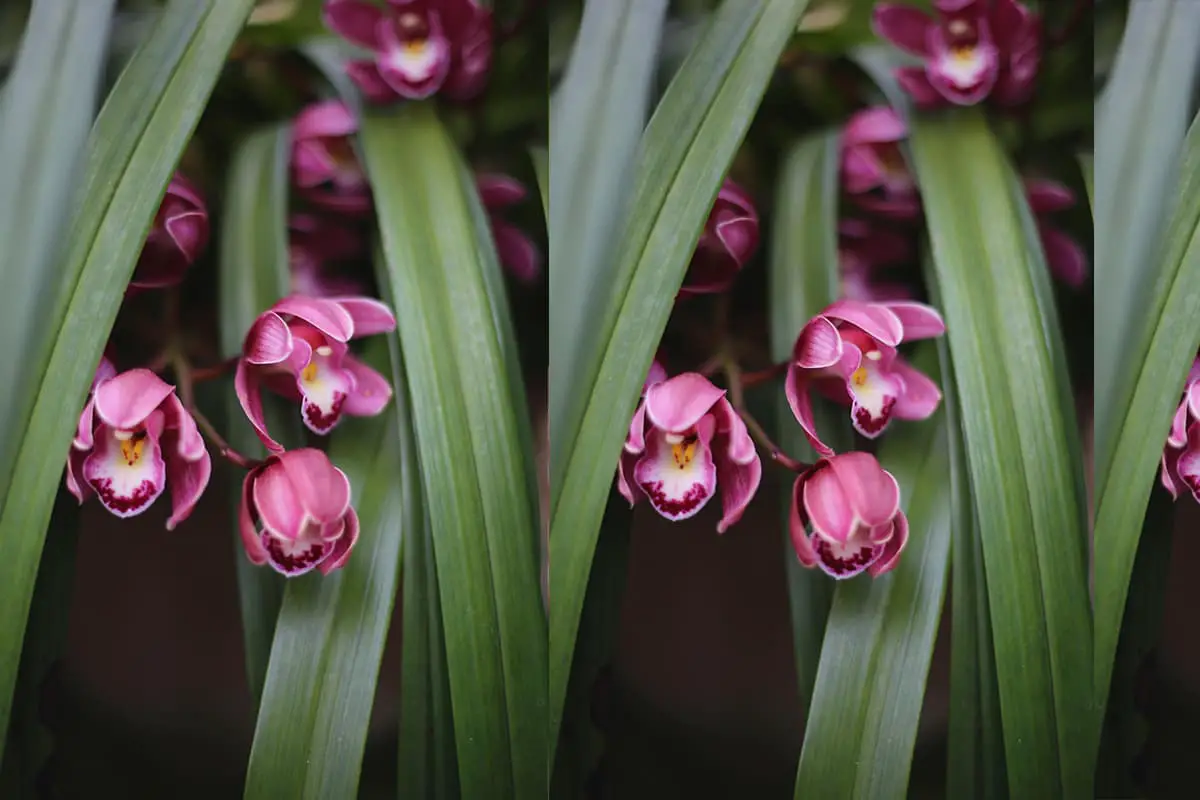
Cultivated varieties: The commercially cultivated varieties of Dendrobium in China mainly come from Japan and South Korea, but in recent years, there have been many domestic companies involved in variety breeding.
Common cultivated varieties include cut flower varieties and potted varieties.
They are commonly found in semi-shaded environments along streams and under the forest canopy. They prefer warm winters and cool summers, with an optimal temperature range of 10-25°C.
A nighttime temperature of around 10°C is preferable. The leaves are green, and the flower buds develop normally, with flowering occurring from February to March.
If the temperature drops below 5°C, the leaves turn yellow and the flower buds do not grow, resulting in a delayed flowering period in April to May. Additionally, the flower stems do not elongate, which affects the quality of flowering.
When the temperature is around 15°C, the flower buds suddenly elongate and bloom in January to February, but the flower stems are soft and cannot stand upright. If the nighttime temperature reaches 20°C, the foliage becomes dense, affecting flowering, and the flower buds may wither.
In summary, the formation of flower buds, elongation of flower stems, and flowering of large-flowered orchids all require significant temperature differences between day and night.
Water Quality: Large-flowered orchids have relatively high water quality requirements and prefer slightly acidic water. They are sensitive to calcium and magnesium ions in water. Watering with rainwater is ideal.
They require higher humidity during the growing season. If the humidity is too low, the plants will have poor growth, slow and small root development, thick and narrow leaves, and yellowing. Overall, large-flowered orchids dislike dry conditions but tolerate wet conditions.
Light: Light is an important factor affecting the growth and flowering of large-flowered orchids. Among orchids, large-flowered orchids are considered light-loving plants. Sufficient light promotes leaf production, flower stem formation, and flowering.
Excessive shading leads to thin and elongated leaves, inability to stand upright, reduced pseudobulb size, susceptibility to diseases, and impaired flowering.
In the summer, 50-60% shading is recommended, while in autumn, more sunlight is beneficial for flower bud formation and differentiation. In winter, during rainy or snowy days, providing supplemental light is extremely beneficial for flowering.
Large-flowered orchids are primarily found in Japan, Korea, China, Australia, and the United States.
Large-flowered orchids have tall and upright or pendulous flower stems, with large and brightly colored flowers. They are mainly used for potted ornamental purposes.
They are suitable for indoor flower stands, balconies, and windowsills, adding an elegant and luxurious touch with a high level of taste and charm.
When multiple plants are grouped together to create large-scale potted displays, they are suitable for decorating hotels, shopping malls, train stations, and airport halls, creating a grand and eye-catching atmosphere. Large-flowered orchids are loved by people for their majestic appearance and large, beautiful flowers.
Indoor Potted Plants: Large-flowered orchids have robust and vigorous growth, with upright or pendulous flower stems and graceful flower shapes.
They are suitable for indoor flower stands, balconies, and windowsills, adding an elegant and luxurious touch with a high level of taste and charm.
When 10-20 plants are combined to create large potted displays, they are suitable for decorating hotels, shopping malls, train stations, and airport halls, creating a grand and eye-catching atmosphere.
Peggie was once a high school mathematics teacher, but she set aside her chalkboard and textbooks to follow her lifelong passion for flowers. After years of dedication and learning, she not only established a thriving flower shop but also founded this blog, “Flowers Library”. If you have any questions or wish to learn more about flowers, feel free to contact Peggie.
 English
  العربية
  Bahasa Indonesia
  Deutsch
  Français
  Italiano
  Nederlands
  Português
  Русский
  日本語
日本語