600+ Types of Flowers A To Z (With Names and Pictures)
Types Of Flowers By Names (A-Z) Types Of Flowers By Color Types Of Flowers By Season Types Of Flowers By Blooming Time 600+ Types of Flowers No. Flower Name No.…

Crocus sativus, This product is the upper part of the stigma and style of the plant Crocus sativus, which belongs to the family Iridaceae. The flowers are harvested on sunny mornings in September and October.
The stigmas and styles are removed and dried to become dried saffron. If further processed to make it oily and shiny, it becomes wet saffron. The quality of dried saffron is better. It should be stored in a cool and dry place, tightly sealed.
This product is the upper part of the stigma and style of the plant Crocus sativus, which belongs to the family Iridaceae. The flowers are harvested on sunny mornings in September and October.
The stigmas and styles are removed and dried to become dried saffron. If further processed to make it oily and shiny, it becomes wet saffron. The quality of dried saffron is better. It should be stored in a cool and dry place, tightly sealed.
Sweet and neutral.
Enters the heart and liver channels.
Activates blood circulation and disperses blood stasis, relieves depression and resolves stagnation. Used for depression with blood stasis, chest stuffiness, hematemesis, frenzy in typhoid fever, horror and confusion, women’s amenorrhea, postpartum blood stasis abdominal pain, and injuries with swelling and pain from falls.
Perennial herb. Underground bulbs are spherical and covered with brown membranous scales. Leaves, 9-15 in number, arise from the white bulbs, without petioles, linear in shape, 15-20 cm long and 2-3 cm wide, with rolled-up margins, fine hairs, and surrounded at the base by 4-5 broad scales.
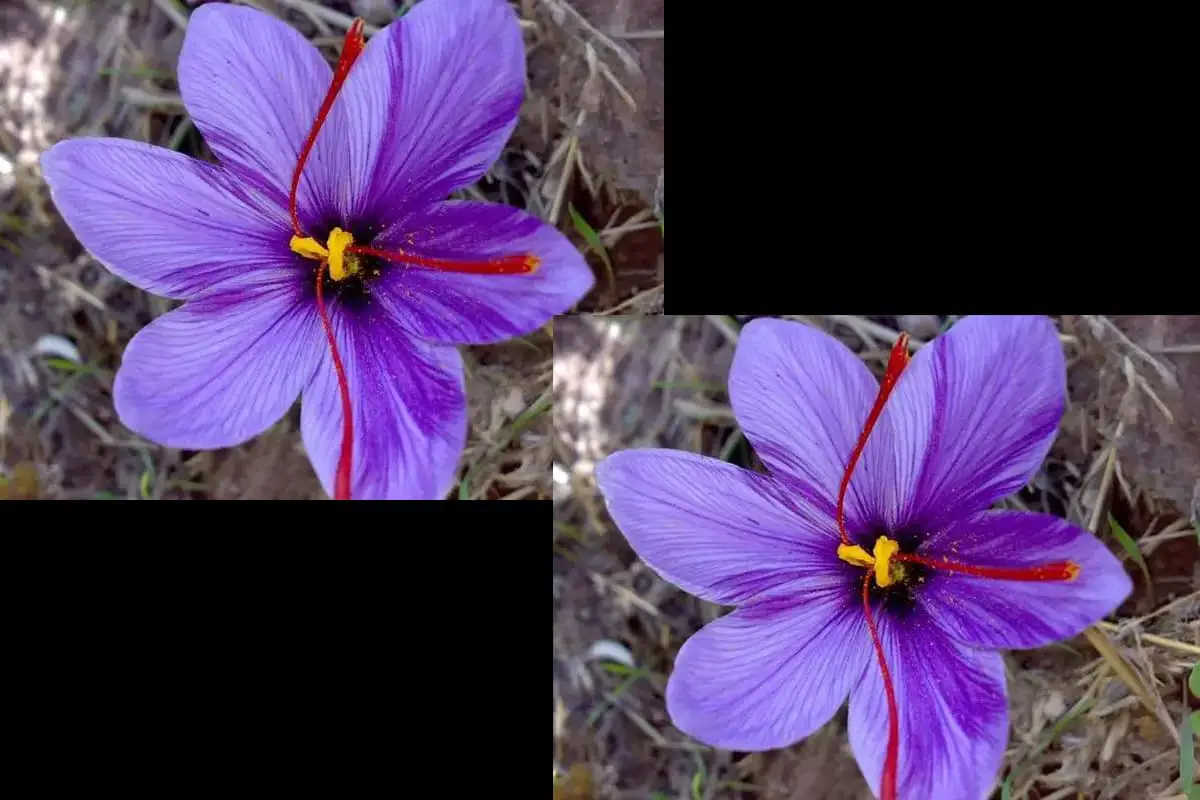
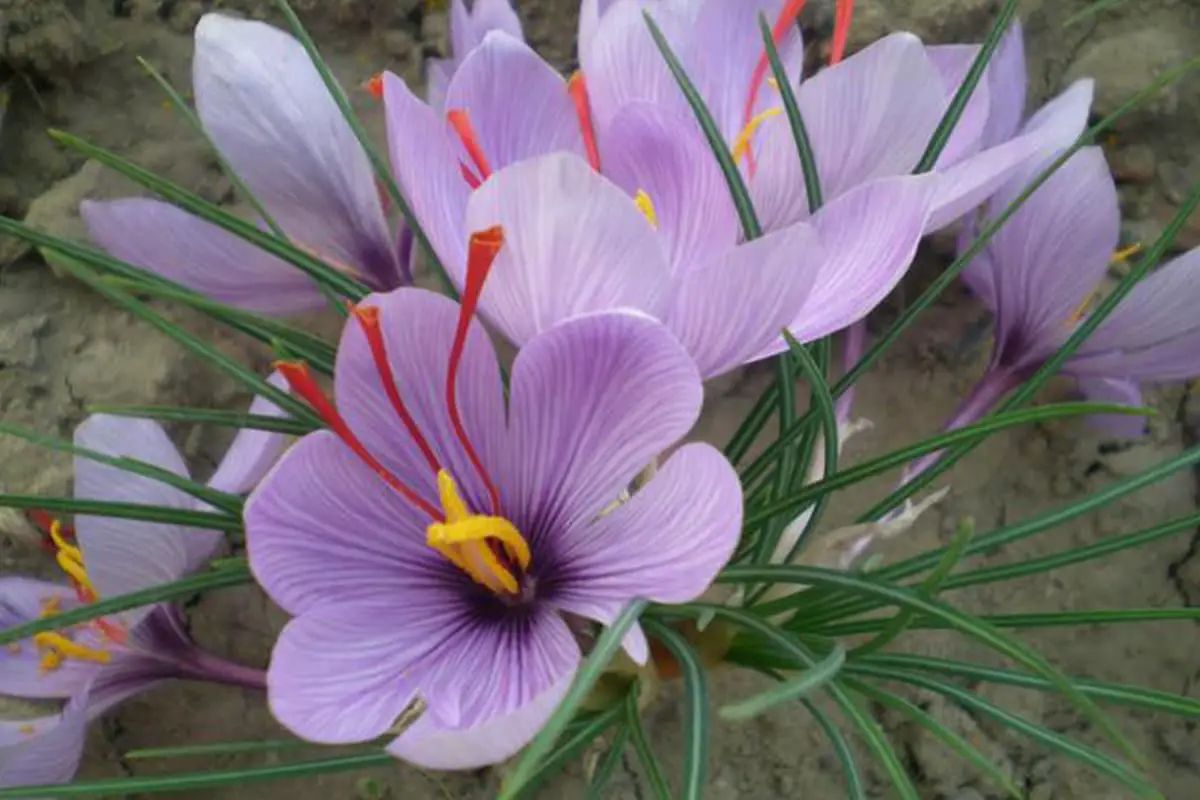
Flowers arise at the top, with a diameter of 2.5-3 cm; 6 tepals are inverted ovate, pale purple, with a slender tubular corolla, 4-6 cm long; 3 stamens with large anthers and arrow-shaped bases; 3 carpels connate, with an inferior ovary, slender yellow styles, three deep splits at the apex, extending outside the corolla, drooping, deep red, and with slightly enlarged stigmas forming a funnel-shaped opening.
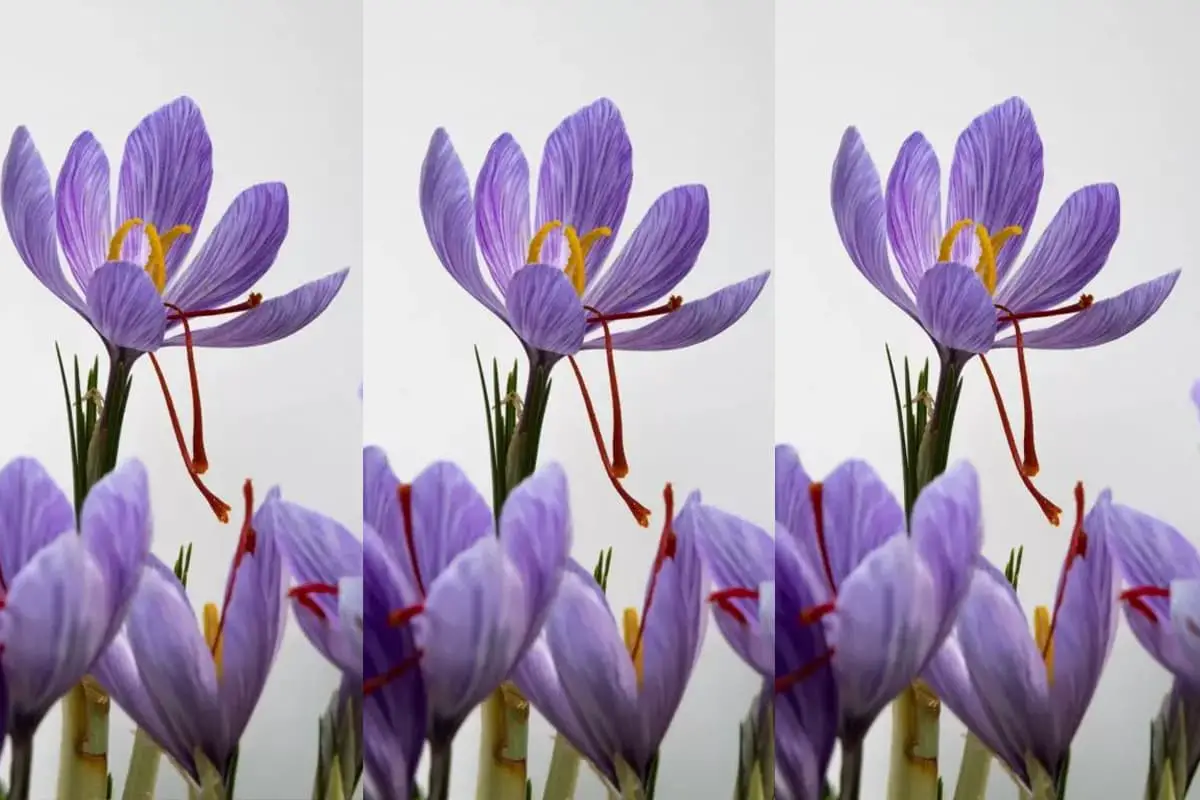
Capsule elongated, with three blunt angles, about 3 cm long and 1.5 cm wide, reaching the ground when ripe. Numerous seeds, spherical and with a leathery seed coat. Flowering period is from early to mid-November.
Distributed in various countries in Southern Europe and Iran.
①Wet safflower stigma is reddish-brown in color, with a shiny and oily appearance. It is long and thread-like, measuring about 3 centimeters in length.
The base is narrow and gradually widens towards the top, with a short crack on the inside and irregular tooth-like edges on the top. The stigma is often found individually, but sometimes three stigmas are connected to a short style.
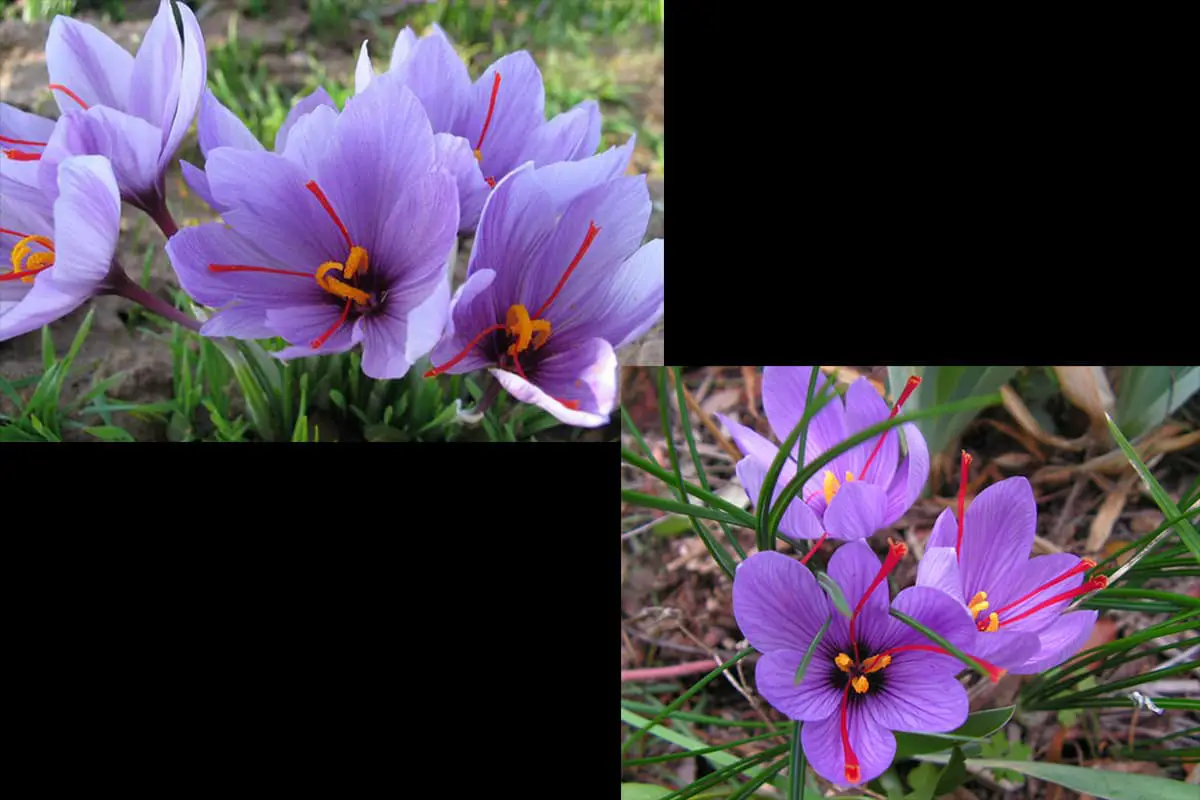
The stigma is orange-yellow in color. When soaked in water, the stigma expands and takes on a trumpet-like shape, dyeing the water yellow.
It has a fragrant and sweet aroma, with a bitter taste. The best quality safflower stigma is moist, glossy, red in color, and has minimal yellow threads.
②Dried safflower stigma is thin and curved, with a dark reddish-brown color and some yellow-brown parts. It is light and loose, without shine or oily texture.
Otherwise, it is the same as wet safflower stigma. The aforementioned medicinal plants are produced in Spain, Greece, and the Soviet Union, among other places.
Decoction: 1-2 qian (3-6 grams); or soak in alcohol.
①Effects on the Uterus: Decoctions of safflower stigma have excitatory effects on the isolated uterus and in situ uterus of mice, guinea pigs, rabbits, dogs, and cats.
Small doses can cause tension or rhythmic contractions in the uterus, while large doses can increase the tension and excitability of the uterus, leading to increased automatic contractions and even spasms.
The effect is more pronounced in pregnant uterus. In experiments with uterine fistula in rabbits, an excitatory effect was also observed, with the duration of effect lasting up to 4 hours after a single dose.
The order of effectiveness for various extracts is: decoction > ethanol extract > volatile components > ether extract. Small doses can also have inhibitory effects on the uterus, or initial inhibition followed by excitation.
In particular, when ethanol extract is applied to non-pregnant rabbit uterus, inhibitory effects are often observed. The excitatory effect on the uterus can be partially blocked by epinephrine blockers (adrenergic blockers), but not by atropine.
Therefore, it is believed that the effects on the uterus are partly due to direct effects on uterine smooth muscle cells, and partly related to adrenergic receptors.
②Effects on the Circulatory System: Decoctions can lower blood pressure in anesthetized dogs and cats, and maintain it for a longer time. They also have excitatory effects on respiration.
During blood pressure reduction, kidney volume decreases, indicating constriction of renal blood vessels. They also cause constriction of blood vessels in frogs. Significant inhibitory effects were observed on isolated frog hearts.
Some studies have explored its use as a drug to induce temporary cardiac arrest during surgery, and found that safflower extract can rapidly and completely stop the heart in diastole in isolated frog hearts, rat hearts, and acute cat hearts, lasting for more than ten minutes, and is easily reversible.
When used in combination with acetylcholine, the cardiac arrest is even faster and complete. No fibrillation occurs during recovery, and the cardiac activity is enhanced after recovery.
However, chemical analysis has shown that the component responsible for inhibiting the heart is related to potassium salts. This is worth noting, as safflower contains a large amount of potassium salts, which not only inhibit the heart and lower blood pressure, but also have excitatory effects on the tension and contraction of smooth muscles such as the intestines, uterus, bronchi, and blood vessels.
Therefore, future pharmacological research on safflower should first remove potassium salts.
③Other Effects: Safflower can prolong the estrous cycle in mice. Feeding normal mice with food containing 0.23-2% safflower for 3 weeks prolonged the duration of keratinization in vaginal smears from the normal 1-2 days to 3-4 days.
The effect disappears rapidly after discontinuation of the treatment. When injected into the lymph sac of frogs, the skin glands secrete a large amount of secretion. In acute toxicity tests on mice, the median lethal dose when administered orally is 20.7 grams per kilogram.
Pregnant women should avoid taking it.
The flowers contain approximately 2% saffron pigment, which is a combination of saffron acid and digalactosyl ester. They also contain about 2% saffron acid dimethyl ester, approximately 2% saffron bitter pigment, and 0.4-1.3% volatile oil (mainly saffron aldehyde).
Saffron aldehyde is derived from the hydrolysis of saffron bitter pigment. Saffron pigment and saffron bitter pigment may combine to form original saffron pigment, which is present in the herbal medicine.
Additionally, saffron contains abundant vitamin B2. The bulb contains glucose, amino acids, and saponins.

Peggie was once a high school mathematics teacher, but she set aside her chalkboard and textbooks to follow her lifelong passion for flowers. After years of dedication and learning, she not only established a thriving flower shop but also founded this blog, “Flowers Library”. If you have any questions or wish to learn more about flowers, feel free to contact Peggie.
 English
  العربية
  Bahasa Indonesia
  Deutsch
  Français
  Italiano
  Nederlands
  Português
  Русский
  日本語
日本語