600+ Types of Flowers A To Z (With Names and Pictures)
Types Of Flowers By Names (A-Z) Types Of Flowers By Color Types Of Flowers By Season Types Of Flowers By Blooming Time 600+ Types of Flowers No. Flower Name No.…

Clerodendrum bungei, commonly known as the Stinking Glorybower or Rose Glorybower, is a distinctive shrub belonging to the Lamiaceae family. This comprehensive guide delves into its botanical characteristics, cultivation requirements, and traditional uses.
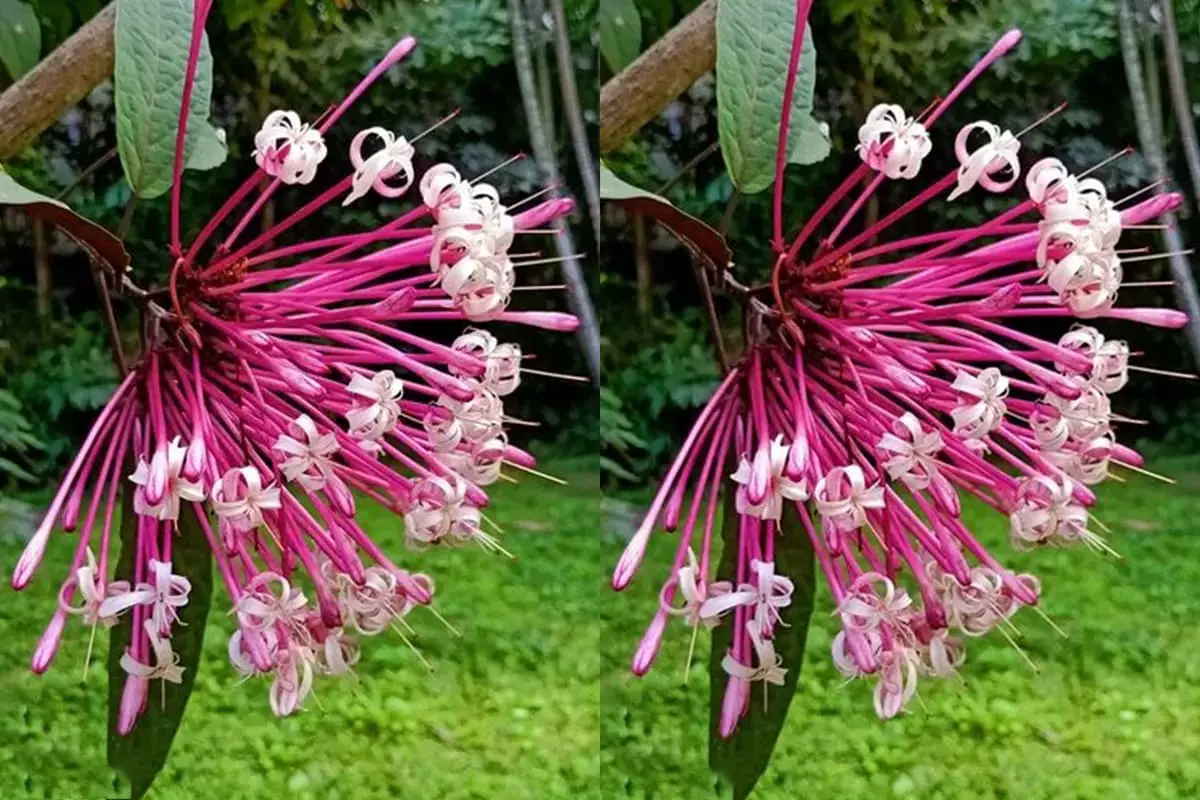
Clerodendrum bungei was named after the Russian botanist Alexander von Bunge, who collected specimens in China during the 19th century. The plant’s common name, Stinking Glorybower, derives from its strong, unpleasant odor, which contrasts with its beautiful flowers that resemble peonies from a distance.
The Stinking Glorybower is a deciduous shrub typically growing 1-2 meters tall, characterized by:

The flowering and fruiting period extends from May to November, providing a long season of ornamental interest.
Clerodendrum bungei
The inflorescence axes, petioles, and young branches are densely covered with deciduous trichomes that range in color from brown to yellow-brown or purple. This pubescence is a key identifying feature of the species.
The young branches are nearly cylindrical with prominent lenticels, which are important for gas exchange. The leaves have a papery texture and are broad-ovate to ovate in shape, characteristics that aid in species identification.
The cymes (flower clusters) are terminal and compact, showcasing the plant’s flowering habit. The corolla color varies from pale pink to red or purple-red, offering ornamental value. The drupes (fleshy fruits) are nearly spherical and ripen to a blue-black color, an important trait for seed dispersal and propagation.
Clerodendrum cyrtophyllum
The young branches are slightly quadrangular, a distinct morphological feature. The entire plant is covered with dense, yellow-brown, velvety hairs, which is a key difference from C. bungei.
The leaves are ovate to broad-ovate, similar to C. bungei but with potentially different dimensions. The cymes are densely clustered in a head-like form, either axillary or pseudo-terminal, with peduncles 3.5 to 13 centimeters long, indicating variability in inflorescence structure. The corolla is white, contrasting with the pink to red flowers of C. bungei. The drupes are nearly spherical, green when immature, and ripen to purple-black, following a similar color progression to C. bungei but potentially with different timing.
Clerodendrum bungei is indigenous to China and has a wide distribution across Asia, including Northern India, Vietnam, and Malaysia. Its altitudinal range extends up to 2,500 meters, demonstrating its adaptability to various elevations. The species thrives in diverse habitats including hillsides, forest margins, gullies, roadsides, and moist shrublands, indicating its ecological versatility.
Clerodendrum bungei exhibits high adaptability to various light conditions, preferring full sun to partial shade. It thrives in warm, moist environments but shows remarkable tolerance to wet, drought, and cold conditions, making it suitable for a range of climates.
While not particularly demanding in terms of soil quality, C. bungei performs best in fertile, loose, sandy soils that provide good drainage and aeration. Its ability to grow in mildly to moderately saline-alkali soils demonstrates its tolerance to challenging soil conditions. The plant’s exceptional performance in areas with accumulated domestic waste or debris suggests its potential for phytoremediation or landscaping in disturbed urban environments.
Clerodendrum bungei Steud. var. megacalyx C. Y. Wu ex S. L. Chen is a notable variety distinguished primarily by its inflorescence structure and calyx characteristics. The looser inflorescence and significantly larger calyces (about 1 cm long) with triangular teeth approximately 3 mm in length are key identifying features.
This variety is endemic to Sichuan, China, specifically found on forest edges at an altitude of 1,050 meters. The type specimen’s collection from Nanchuan, Chongqing, provides important information for botanical reference and future research.
Clerodendrum bungei can be propagated through both division and seed sowing, offering flexibility in cultivation practices.
Seed propagation:
Maintaining consistent soil moisture is crucial for successful germination, which typically occurs within 30-40 days. This detailed propagation information provides gardeners and horticulturists with the necessary knowledge to successfully cultivate C. bungei from seed.
The stinking glorybower (Clerodendrum bungei) can be cultivated in containers or directly in the ground, each method requiring specific considerations.
For container cultivation, use a well-draining potting mix comprising garden soil enriched with an appropriate ratio of balanced, slow-release fertilizer. For containers 15-20 centimeters in diameter, plant one specimen. Larger containers can accommodate 2-3 plants. Using soil with intact root balls facilitates establishment.
Ground planting methods should be adapted to the cultivation purpose:
For ornamental use, transplant seedlings according to the desired landscape design, considering mature plant size and spacing requirements.
For medicinal production, prepare larger cultivation areas with thorough soil preparation. Create raised beds 1.5-1.8 meters wide with proper drainage channels between them. Utilize pit planting, spacing holes 30-40 centimeters apart, with 1-2 plants per pit.
When transplanting, ensure roots are spread out, then water thoroughly to eliminate air pockets and promote root establishment. During dry periods, maintain consistent soil moisture through regular irrigation.
In the first two years, perform cultivation and weeding 2-3 times annually: early summer, early fall (when weed growth is vigorous), and after leaf drop in winter. Follow each cultivation with fertilization, applying organic compost in summer and fall, and a balanced slow-release fertilizer in winter. Once plants are well-established and have filled in, intensive field management becomes less necessary.
Diseases: Rust (Aecidium clerodendri) and Botrytis blight are common issues. For Botrytis, apply a fungicide containing carbendazim as the active ingredient, diluted according to manufacturer’s instructions. Treat rust with a systemic fungicide containing triazoles, following label directions for dilution and application.
Pests: Leaf beetles (Chrysomelidae family) and stinging moths (likely referring to species in the Limacodidae family) can be problematic. Control with a pyrethroid insecticide such as deltamethrin, diluted and applied as per product guidelines. Always follow integrated pest management practices, including cultural and biological controls when possible.
Ornamental: Clerodendrum bungei is prized for its showy, fragrant flowers and extended blooming period, typically from mid-summer to early fall.
Landscaping: The large, dark green leaves and dense, vibrant pink to red inflorescences make it an excellent choice for gardens and courtyards. It’s particularly suitable for borders, mass plantings, and as a flowering hedge. The long-lasting flower stems are valuable in floral arrangements.
Medicinal: Various parts of C. bungei are utilized in traditional Chinese medicine:
Traditional applications include treatment of skin conditions (carbuncles, furuncles, breast abscesses, eczema, erysipelas), hemorrhoids, rheumatic pain, and hypertension. However, it’s crucial to note that while these uses are based on traditional practices, scientific validation of efficacy and safety is ongoing, and consultation with a qualified healthcare professional is advised before medicinal use.

Peggie was once a high school mathematics teacher, but she set aside her chalkboard and textbooks to follow her lifelong passion for flowers. After years of dedication and learning, she not only established a thriving flower shop but also founded this blog, “Flowers Library”. If you have any questions or wish to learn more about flowers, feel free to contact Peggie.
 English
  العربية
  Bahasa Indonesia
  Deutsch
  Français
  Italiano
  Nederlands
  Português
  Русский
  日本語
日本語