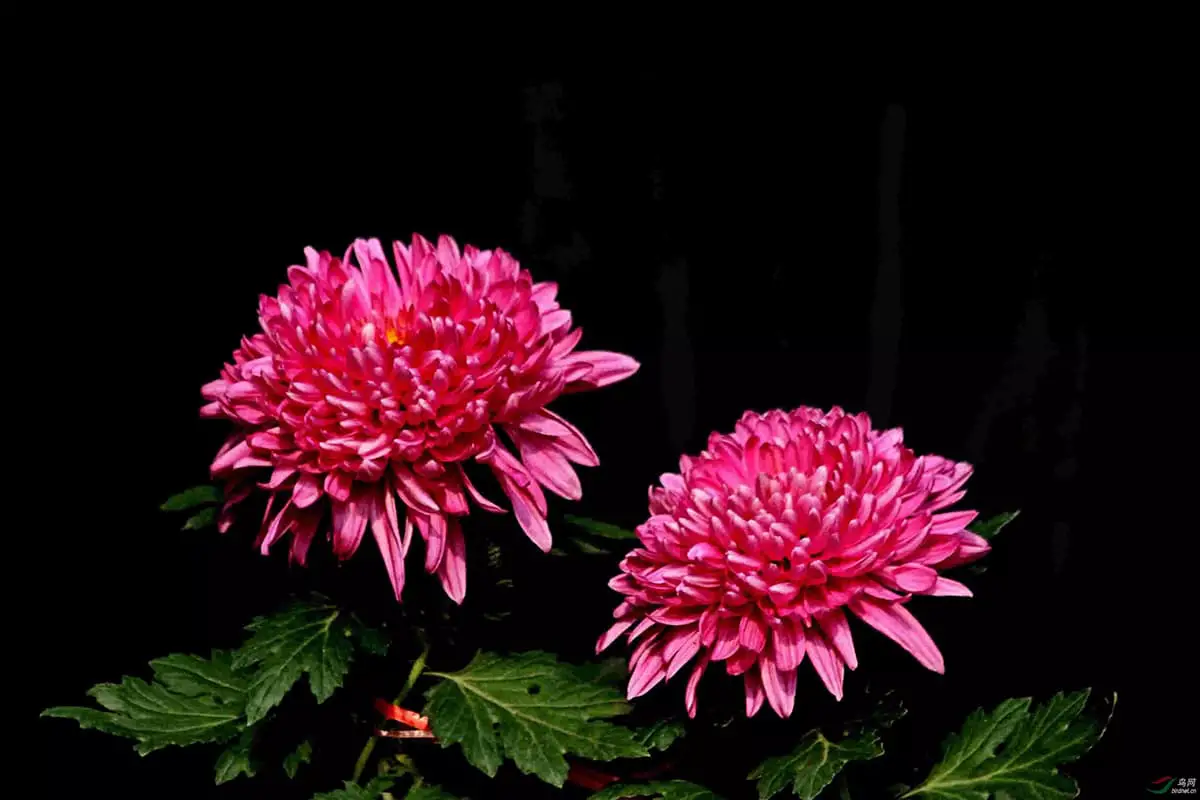
The chrysanthemum has long been seen as a symbol of solitary brilliance and elegant defiance of frost, representing the refinement and friendship of scholars. Because it blooms unafraid of the autumn chill, it was dearly loved by ancient Chinese literati.
The chrysanthemum is a traditional and celebrated flower in China with a long cultivation history. So, do you know how to grow chrysanthemums? How do you take care of a potted chrysanthemum? Let’s find out.
How to Grow Chrysanthemums
- Choose a Pot
Choose a pot that is about 20 cm in diameter and 20 cm deep.
- Soil
The soil can be a mixture of garden soil and orange leaf soil, or garden soil and vermiculite, mixed evenly.
- Choose Branches
Between April and May, cut about 5 cm off the new branches sprouting from the old roots, preferably the ones that are not shrinking and are growing strongly. These can usually be bought at a flower and bird market.
- Cutting
(1) First, place broken tile pieces about 2-3 cm thick at the bottom of the pot to aid drainage.
(2) Put the prepared soil into the pot, and use a thin bamboo stick to poke holes about 1 cm deep in the soil.
(3) Insert the cuttings into the small holes in the pot soil, and gently press the surrounding soil with your fingers.
(4) Each pot can accommodate about 10 cuttings, each one should be spaced about 3 cm apart. After cutting, water the pot with a spray bottle until a small amount of water flows out of the drainage hole at the bottom of the pot.
(5) For the first three days after cutting, water the pot once a day at 18:00, until water flows out of the drainage hole, to keep the soil moist. After three days, water once every two days, but do not overwater, just moisten the soil.
(6) During the day, keep the pot in a cool indoor place to prevent sun exposure, and in the evening, the pot can be placed outside.
- Repotting
(1) About 15 to 20 days after successful cutting, the chrysanthemum will grow roots and can then be repotted.
(2) Repotting should be done on a cloudy day, with the potting soil unchanged. Choose a small pot with a diameter of 12 cm, one plant per pot. When repotting, carefully dig the seedling out of the soil, keeping some soil at the roots, and place it in the new pot with your hands.
(3) When the chrysanthemum begins to sprout buds, transfer it to a pot with a diameter of 20 cm.
(4) After repotting, water thoroughly and place in a cool indoor area. A few days later, once you see the seedling grow new leaves, it can be moved outside for care.
How to Care for Potted Chrysanthemums
- Watering
(1) Spring: When the chrysanthemum seedlings are small, water sparingly, once every two days. The best time to water is around 17:00, just enough to moisten the soil. This promotes the development of the root system.
(2) Summer: As the chrysanthemum seedlings grow, water until it flows out of the bottom of the pot. Water once at 8:00 and again at 18:00, and spray the chrysanthemum branches, leaves, and surrounding ground with a water bottle until they are wet.
(3) Before the start of autumn, moderately control the watering, watering once every two days, until water flows out from the bottom of the pot. The watering time is the same as in spring.
After the start of autumn and before flowering, increase the amount of watering, watering until water flows out from the bottom of the pot. Water twice a day, with the watering time the same as in summer.
(4) Winter: Once the branches stop growing, strictly control the watering, watering once every four days is appropriate. The best time to water is around 17:00, just enough to moisten the soil.
- Fertilizer Control
Chrysanthemums need plenty of organic fertilizer (usually used as base fertilizer). During the growth period, nitrogen fertilizer should be applied primarily, supplemented with some phosphorus, potassium, and trace element fertilizers.
This can promote strong and upright stems and large leaves. In the middle and late stages of growth, phosphorus and potassium fertilizers should be applied primarily, and special flower fertilizers can also be applied.
Fertilizer can be applied by combining soil and foliar application, and water should be applied in time after fertilization. If the leaves of the chrysanthemum are small and thin and the leaf color is yellow, a 0.1% urea solution can be sprayed several times.
- Placement and Sunlight
In addition to good soil, fertilizer, and water management, the daily management of potted chrysanthemums also requires timely pot rotation according to the growth and environmental conditions of the potted chrysanthemums, to avoid effects on growth due to sunlight. It should be noted that chrysanthemums are short-day plants.
Experiments have shown that chrysanthemums grow under 14.5 hours of sunlight each day, and 12 hours or more of darkness and a night temperature of 10 degrees Celsius are suitable for bud development.
- Pruning and Shaping
The spatial distribution and crown shape of potted chrysanthemums directly affect their ornamental value.
Pruning and shaping are very important during the growth period of chrysanthemums. Potted chrysanthemums can be shaped into fan-shaped crowns, umbrella-shaped crowns, semi-circular crowns, triangular crowns, etc., according to needs.
Generally, in the early stage of growth, the shoots need to be pinched and buds removed at irregular intervals according to the growth of the branches, in order to induce branching and shape an ideal plant shape.
- Bud Thinning
During the robust seedling period of chrysanthemums, many axillary buds will sprout, which must be pinched off in time, otherwise, they will consume a lot of nutrients.
During the bud-setting period, lateral buds sometimes appear on the small branches under the top buds, except for those that need to be kept, the lateral buds should also be removed early to promote the growth of the top buds.
Also, during the later growth and flowering period, branches that affect flowering and flower quality can be removed as needed, and spent flowers should be pruned timely to save nutrients for the later blooming flowers.
- Pest Control
The main pests and diseases of potted chrysanthemums include powdery mildew, brown spot disease, aphids, and mites. Many diseases occur in environments with high air humidity, insufficient light, poor ventilation, and large differences between day and night temperatures.
Therefore, reasonable control of air humidity, moisture, and temperature is the main means of preventing these diseases. Carbendazim and methotobuzin can be used as the main physical methods of prevention and control.


 English
  العربية
  Bahasa Indonesia
  Deutsch
  Français
  Italiano
  Nederlands
  Português
  Русский
  日本語
日本語