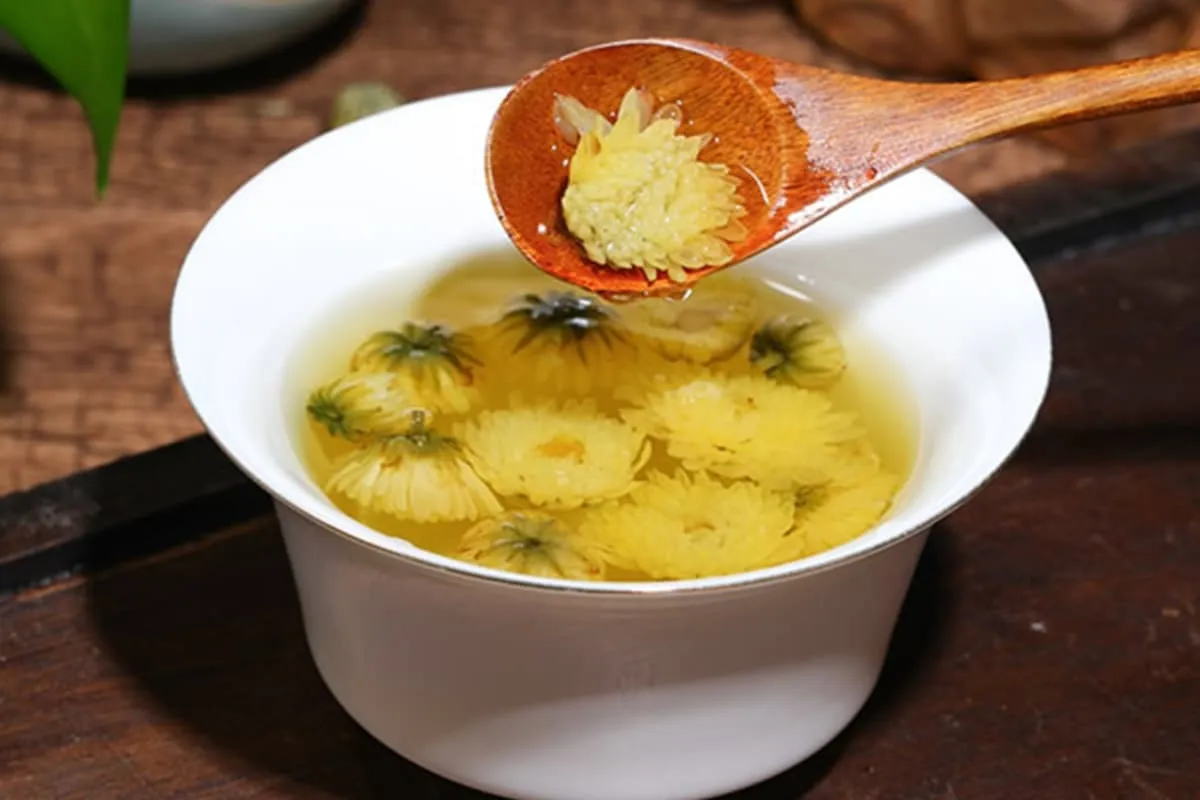
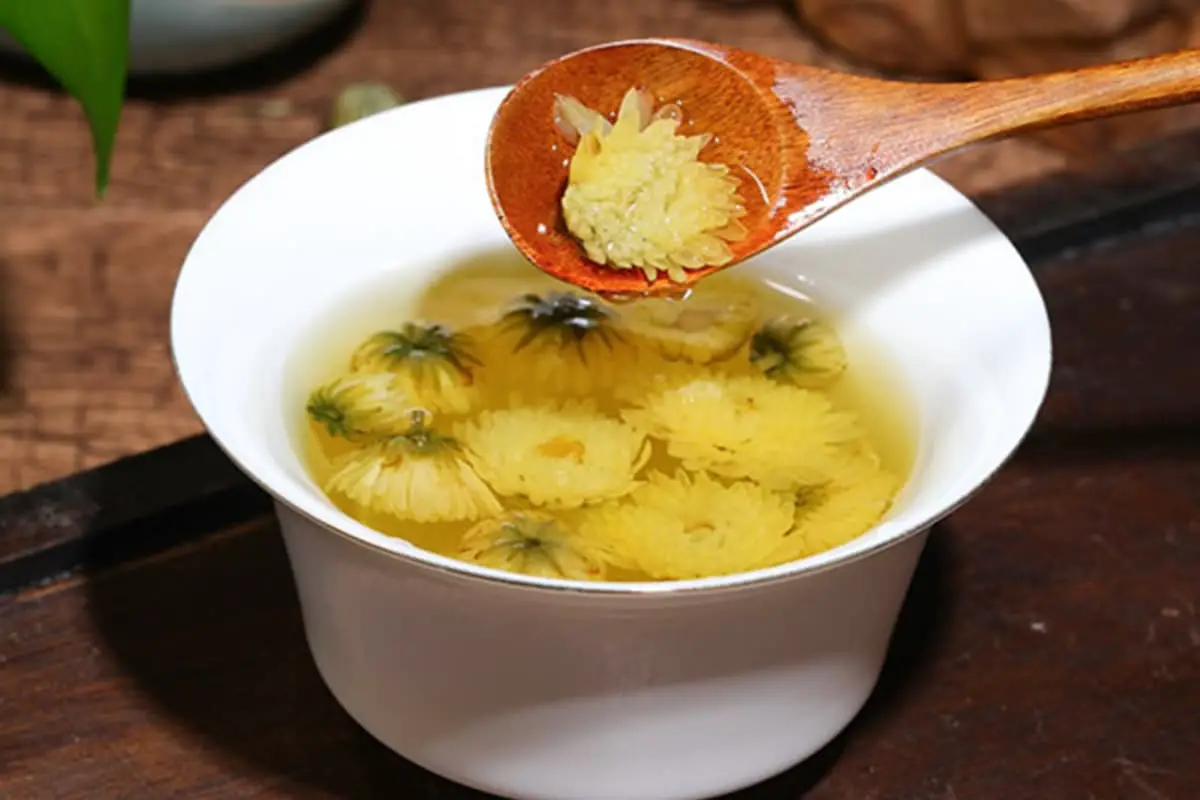
Chrysanthemum buds, also known as fetal chrysanthemums, are harvested before the Hangbai chrysanthemum flowers fully bloom, often sun-dried, and then steeped in water for consumption.
So, what are the benefits of drinking chrysanthemum bud tea? There are many benefits to drinking chrysanthemum bud tea in moderation, including heat-clearing, fire-purging, summer-heat relieving, eye-brightening, and anti-aging effects, as well as reducing eye puffiness.
How to make chrysanthemum bud tea? What precautions should be taken when drinking chrysanthemum bud tea? Let’s find out!
1. Benefits of Drinking Chrysanthemum Bud Tea
Heat-clearing and Fire-purging, Summer-heat Relieving: Chrysanthemum buds are excellent for reducing internal heat. Drinking chrysanthemum bud tea in moderation can effectively alleviate discomforts caused by excessive internal heat, such as acne, throat inflammation, wind-heat, headaches, and oral ulcers.
Eye-brightening and Nourishing: Chrysanthemum buds also have eye-brightening properties. Therefore, drinking chrysanthemum bud tea can help prevent eye fatigue. Moreover, chrysanthemum bud tea can nourish the spirit, making it suitable for office workers who often use computers.
Reducing Eye Puffiness: For those who often stay up late, morning eye puffiness can be alleviated with chrysanthemum buds.
Anti-aging: Certain components in chrysanthemum buds can significantly enhance brain cell activity, delay brain function decline, reduce the formation of excess free radicals, and achieve anti-aging purposes. Additionally, drinking chrysanthemum bud tea in moderation can help dilate cerebral blood vessels, increase cerebral blood flow, and provide good protection for the brain.
2. How to Make Chrysanthemum Bud Tea?
Making chrysanthemum bud tea is straightforward. Take 3-4 chrysanthemum buds, put them in a glass cup, add boiling water (100 degrees), cover the cup, and steep for 3-5 minutes before drinking while it’s hot.
When there’s about one-third of the tea left, add more boiling water to brew, ensuring an evenly concentrated tea.
3. Precautions for Drinking Chrysanthemum Bud Tea
Lesser consumption for those with Spleen and Stomach Deficiency: Chrysanthemum buds are cold in nature. Those with weak spleen and stomach should avoid drinking too much chrysanthemum bud tea as it may cause diarrhea and stomach pain.
Not suitable for those with Yang Deficiency: Individuals with Yang deficiency should avoid chrysanthemum bud tea as it can lead to further body weakness, damage the body’s yang energy, stimulate the stomach, causing discomfort. Specific symptoms include discomfort in the intestines and loose stools.
Not for Pregnant Women: Chrysanthemum buds are cold and can impact the health of pregnant women and potentially threaten the health of the fetus.
Avoid Consuming Overnight Chrysanthemum Bud Tea: One should not drink chrysanthemum bud tea left overnight due to oxidation and potential bacterial growth, which can harm one’s health.
Share
Facebook
Twitter
LinkedIn
Email
Share is Caring.
Peggie
Founder of FlowersLib
Peggie was once a high school mathematics teacher, but she set aside her chalkboard and textbooks to follow her lifelong passion for flowers. After years of dedication and learning, she not only established a thriving flower shop but also founded this blog, “Flowers Library”. If you have any questions or wish to learn more about flowers, feel free to contact Peggie.
Before you go
You May Also Like
We picked them just for you. Keep reading and learn more!
You often see beautiful flowers adorning cakes, desserts, and gourmet dishes. These stunning flowers aren’t just pleasing to the eye; they’re delicious too! Eating flowers isn’t strange at all, many…
Chrysanthemums are short-day plants that bloom earlier under short-day conditions. They are perennial herbaceous plants from the Asteraceae family and Chrysanthemum genus. They love sunlight, detest shade, are somewhat cold-resistant,…
The Chrysanthemum King refers to the first batch of chrysanthemums harvested at the end of October each year. Due to its neatly arranged form, golden color, and sweet, rich nectar…
The rose, a deciduous shrub of the Rosaceae family, is characterized by branches filled with numerous thorns. It has odd-pinnate compound leaves, with 5-9 elliptical leaflets that possess marginal spikes.…
The tradition of Mother’s Day originated in ancient Greece, where people paid tribute to and celebrated the “mothers” of Greek gods such as Zeus and Poseidon. It expressed reverence and…


 English
  العربية
  Bahasa Indonesia
  Deutsch
  Français
  Italiano
  Nederlands
  Português
  Русский
  日本語
日本語