600+ Types of Flowers A To Z (With Names and Pictures)
Types Of Flowers By Names (A-Z) Types Of Flowers By Color Types Of Flowers By Season Types Of Flowers By Blooming Time 600+ Types of Flowers No. Flower Name No.…

The Japanese Quince, also known as Chaenomeles japonica, or Japanese Flowering Quince, is a spectacular ornamental variety originally from Japan. Its blossoms are captivating and grand, creating a tapestry-like display when in full bloom.
Its lengthy flowering season provides a tantalizing yet sophisticated allure. Not only is it an exquisite ornamental tree, but it is also an up-and-coming star in landscape greenery and an excellent choice for public square beautification. It is often potted and placed on balconies or indoors.
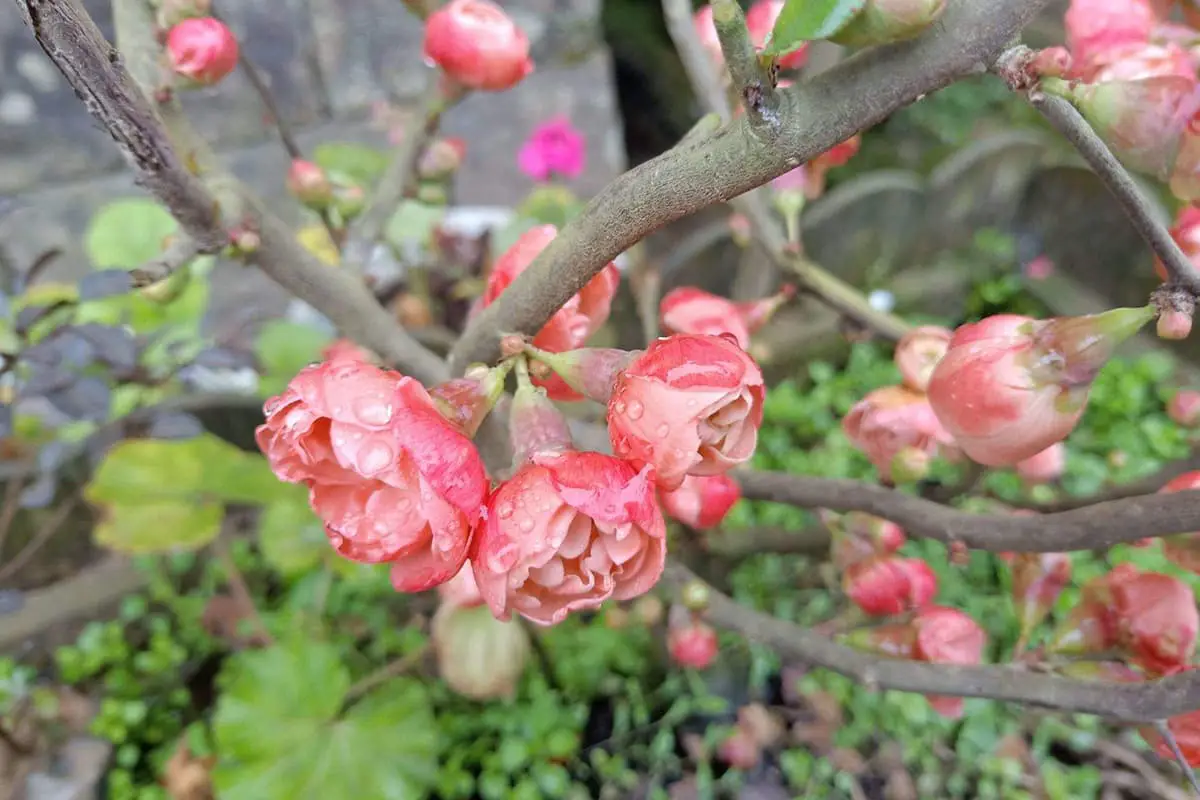
The Japanese Flowering Quince belongs to the Rosaceae family. It is a low-growing shrub, approximately one meter in height, with sprawling branches and small thorns. Its shoots are rough and cylindrical, with a purplish-red color and velvety texture when young.
The second-year branches develop wart-like protrusions, turn black-brown, and lose their hair. The leaves are ovate, spoon-shaped to broad ovate, measuring 3-5 cm in length and 2-3 cm in width.
The flowers, appearing in clusters of three to five, are nearly stemless and hairless. The fruit is nearly spherical, 3-4 mm in diameter, and yellow, with calyx lobes that fall off. It blooms from March to June, and fruits from August to October.
The plant is native to Japan and has a high adaptability, capable of withstanding temperatures as low as -32℃ and as high as 42℃. It favors sunlight and can tolerate cold, but prefers well-draining soils.
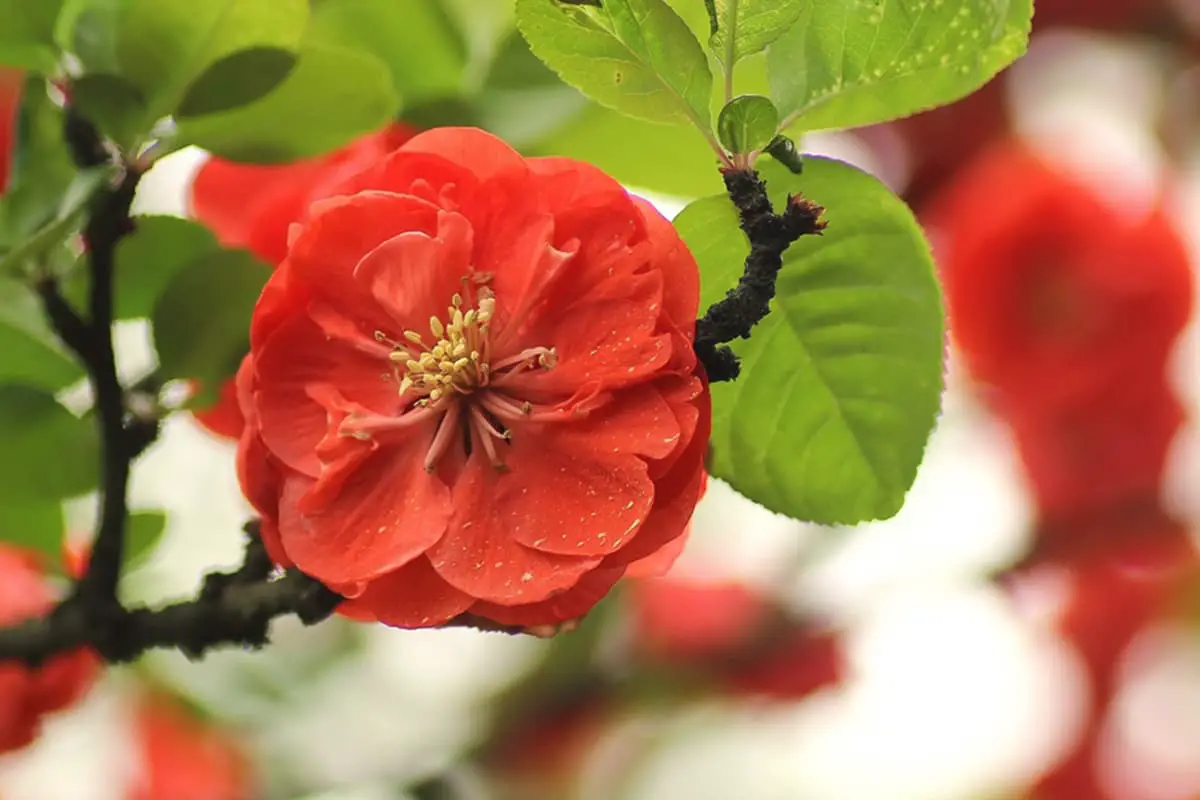
It can be planted in courtyards, along roadsides, on slopes, and is often potted for indoor or balcony display. Its fruit is used in traditional medicine for its wind-dispelling, muscle-relaxing, and pain-relieving properties.
Originally from Japan. It thrives in abundant sunlight, but can also tolerate partial shade and slight cold. Its growth is poor in alkaline and clayey soils.
It prefers moisture, yet fears waterlogged conditions that can rot its roots. The plant is highly adaptable, withstanding low temperatures of -32°C and high temperatures of 42°C.
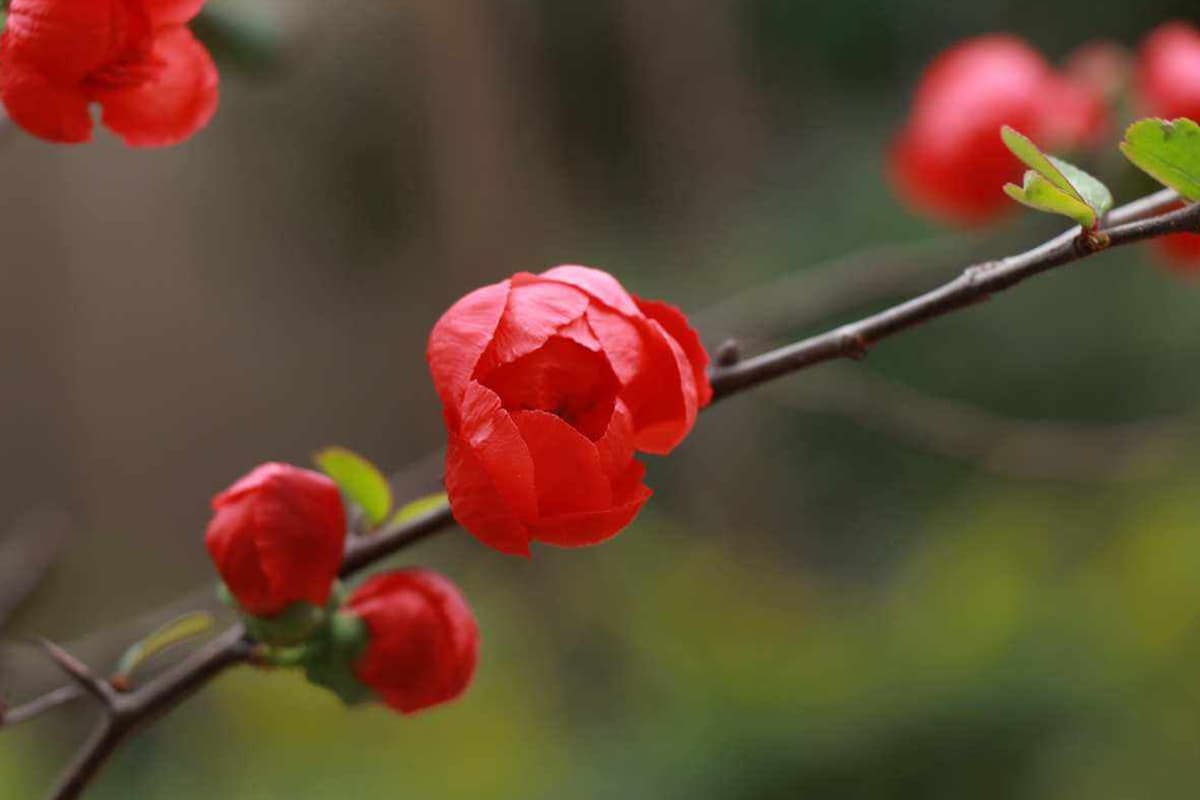
This dwarf shrub grows approximately 1 meter high, with wide-spreading branches and fine thorns. The twigs are rough, cylindrical, and covered with fuzz when young.
They turn purplish-red, and the second-year branches develop wart-like protrusions, turning dark brown and hairless. The winter buds are triangular-ovate with sharp tips, hairless, and purplish-brown.
The leaves are ovate, spoon-shaped to broad ovate, 3-5 cm long, 2-3 cm wide, with rounded or occasionally sharply pointed tips. The base is wedge-shaped or broad wedge-shaped, with rounded serrated edges.
The teeth of the leaves curve inward and have no hairs. The petioles are about 5 mm long and hairless. The stipules are kidney-shaped with rounded teeth, 1 cm long and 1.5-2 cm wide.
The flowers, 3-5 in number, cluster together, with short or nearly stemless pedicels that are hairless. The flowers are 2.5-4 cm in diameter. The calyx tube is bell-shaped, hairless on the outside.
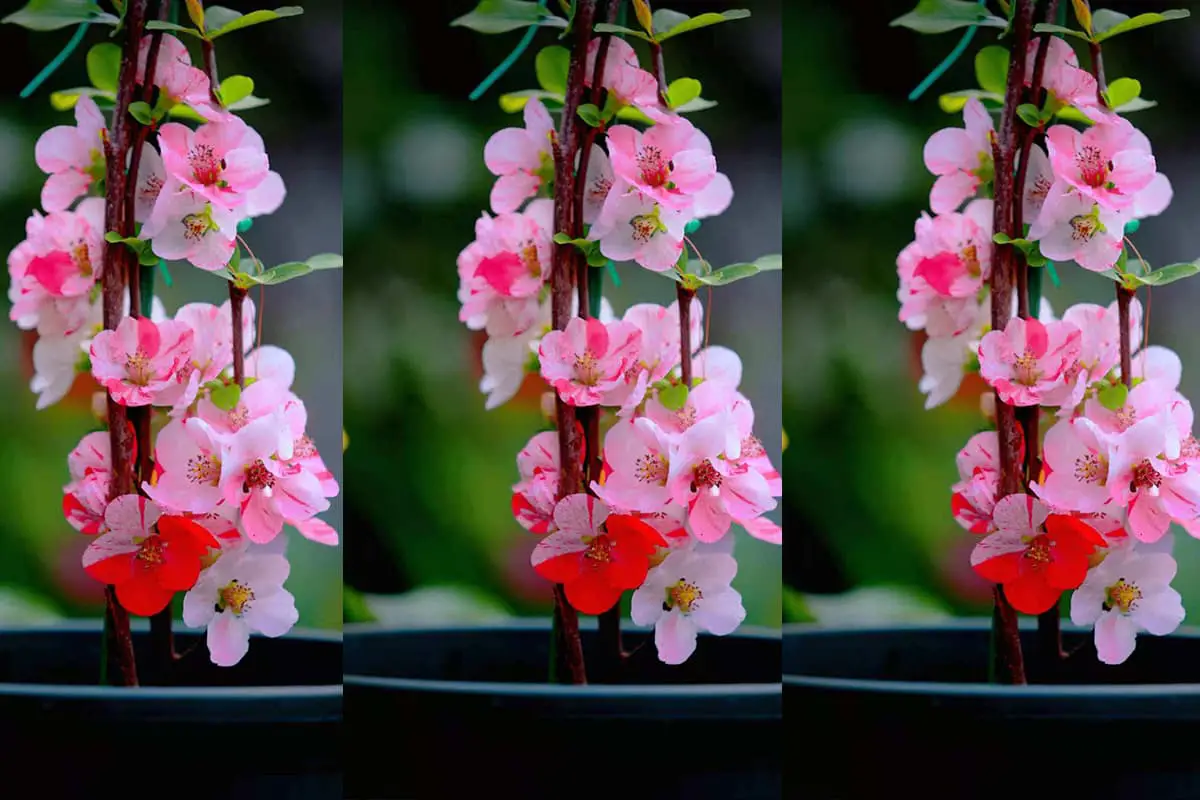
The sepals are ovate, sometimes semi-circular, 4-5 mm long and about half the length of the calyx tube, with sharp or rounded tips and inconspicuous serrated edges. They are hairless on the outside and have brown short soft hairs and eyelashes at the base on the inside.
The petals are ovate or nearly round, extending into short claws at the base, approximately 2 cm long and about 1.5 cm wide, brick-red in color. There are 40-60 stamens, about half the length of the petals.
The five pistils are fused at the base, hairless, with head-shaped stigma and inconspicuous splits, approximately the same length as the stamens.
The fruit is nearly spherical, 3-4 mm in diameter, yellow in color, with sepals falling off. It blooms from March to June and bears fruit from August to October.
Propagation by seeding: When the Japanese papaya seedlings sprout four true leaves, they are divided and transplanted. Cuttings propagation: Once the cuttings’ new roots grow about 2-3 centimeters, they are potted, generally first in smaller pots.
Once the seedlings branch out, they are then transplanted into pots with a diameter of 18-20 centimeters.
The cultivation soil should be fertile and loose, preferably sandy loam rich in organic matter with good drainage. After planting the Japanese papaya, water it thoroughly.
Apply liquid fertilizer every 10-15 days, ideally using mature bean cake water or sesame cake water.
During the growth phase, it’s necessary to regularly spray mist to maintain a humid micro-environment. Take care to water when the soil in the pot is dry, and keep the soil moist.
When the seedlings sprout 5-6 leaves, pinch the top to lower the plant’s shape, promote branching, and encourage more flowering.
For the Japanese papaya to bloom well and abundantly, the key is pinching. When the Japanese papaya seedling grows to about 10 centimeters, remove its top bud to encourage the axillary buds to grow tender branches.
To keep the Japanese papaya plant’s crown large, neat, and attractive, remove the flower buds as soon as they appear to encourage lateral branch growth. Pinching is necessary before and after flowering.
After flowering, use your hands or small scissors to remove the flowering top stem along with the remaining flowers to promote the growth of tender branches from the lower axillary buds.
About 15 days after pinching, the top of the tender branch can nourish the flower buds. Continuous pinching in this manner not only lowers the plant’s shape for an attractive posture but also ensures continuous flowering.
The Japanese papaya is succulent, with a high water content. From early summer (April-June), its growth period requires a high moisture level and air humidity.
If the water supply is insufficient, the stems and leaves will wilt, affecting growth and flowering, and in severe cases, the stems and leaves will shrivel and die.
Therefore, keep the potting soil moist. In summer, when the Japanese papaya’s growth slows and the flowers are small and few, reduce watering to keep the soil slightly dry, but regularly spray the surface or leaves to increase air humidity.
In the cooler weather of September and October, the Japanese papaya enters its prime growth and flowering period, so increase watering to keep the potting soil moist.
In winter, when the greenhouse’s air humidity is high, adhere to the principle of alternating dry and wet watering. Although the Japanese papaya requires a lot of water, it should not be too wet, as overly moist soil can cause stem rot.
Each time the Japanese papaya flowers, it consumes a lot of nutrients. If the fertilizer is insufficient, the plant’s growth will weaken. Therefore, adhere to the principle of applying light, frequent fertilization.
During the Japanese papaya seedling stage, apply nitrogen-based fertilizer once a week to promote leaf and branch growth. During the budding and flowering stage, apply phosphorus-based fertilizer once a week to encourage bud development and vibrant flowering.
Common diseases of the Japanese papaya include stem rot. Its symptoms are dark spots that initially appear at the base of the stem near the soil surface, which then expand into a brownish-black color, shrink, and rot.
The pathogen infects the leaves of the Japanese papaya, causing dark green water-soaked circular spots; it infects the petioles, causing them to rot brown. This disease is mainly caused by overly wet potting soil.
When it occurs, remove diseased and old leaves in time, control watering, and ensure that the potting soil is not overly wet to prevent it.
Common pests of the Japanese papaya include aphids, red spiders, and leaf rollers.
Symptoms of Damage: Aphids generally occur more in spring and autumn, which are the growth and flowering season of the Japanese papaya. If ventilation is poor and the environment is stuffy, it is prone to occur.
Prevention and Control Methods: Improve ventilation, and spray with a solution diluted 1500 times of 50% aphid pine emulsion, a solution diluted 2000 times of 50% thiamethoxam emulsion, or a solution diluted 1500 times of 20% metasystox emulsion.
Symptoms of Damage: Red spiders generally occur in dry, hot summer weather. Red spiders suck the juice on the back of tender leaves, causing small brown spots to appear on the leaves, and severe cases will cause leaf yellowing and falling.
Prevention and Control Methods: When pests are found, remove diseased leaves in time to prevent spreading. In severe cases, spray a solution diluted 1000-5000 times of 40% Le Guo emulsion, a solution diluted 1500 times of 50% Jiuxiao phosphorus emulsion, or a solution diluted 1500 times of 40% water-ammonia sulfur emulsion.
Symptoms of Damage: The leaf roller is also one of the common pests of the Japanese papaya. The larvae eat tender leaves and flowers, directly affecting plant growth and flowering.
Prevention and Control Methods: If it occurs in small amounts, manual capture is sufficient; in severe cases, spray a solution diluted 1000 times of 40% oxidized Le Guo for prevention and control.
Ornamental: The flowers are beautiful, the calyx is large, and when in full bloom, it is as splendid as brocade, extremely beautiful.
It has a long flowering period, the fruit is a yellow ball shape, it is a very beautiful ornamental flower and fruit tree species, a new talent in garden greening, an excellent ornamental tree species for square greening, and often used for pot planting, placed on the balcony, indoor viewing.
Medicinal: The fruit is used for medicinal purposes, it has the effects of dispelling wind, relaxing muscles, and relieving pain.

Peggie was once a high school mathematics teacher, but she set aside her chalkboard and textbooks to follow her lifelong passion for flowers. After years of dedication and learning, she not only established a thriving flower shop but also founded this blog, “Flowers Library”. If you have any questions or wish to learn more about flowers, feel free to contact Peggie.
 English
 العربية
 Bahasa Indonesia
 Deutsch
 Français
 Italiano
 Nederlands
 Português
 Русский
 日本語