600+ Types of Flowers A To Z (With Names and Pictures)
Types Of Flowers By Names (A-Z) Types Of Flowers By Color Types Of Flowers By Season Types Of Flowers By Blooming Time 600+ Types of Flowers No. Flower Name No.…

Cerasus japonica: a shrub that grows to a height of 1-1.5 meters. The twigs are gray-brown, with young branches being green or green-brown and without hair. The winter buds are oval-shaped and hairless.
The leaves are ovate or lanceolate, dark green on the upper surface, hairless, light green on the lower surface, and either hairless or with sparse soft hairs along the veins, with 5-8 pairs of lateral veins.
The flowers are clustered, with 1-3 flowers per cluster, and the flower leaves open simultaneously or before the leaves; the petals are white or pink, and inversely ovate-elliptic in shape.
The stamens are approximately 32 in number, and the pistil is nearly as long as the stamens, and hairless. The fruit is nearly spherical, deep red in color, with a diameter of about 1 centimeter, and a smooth surface.
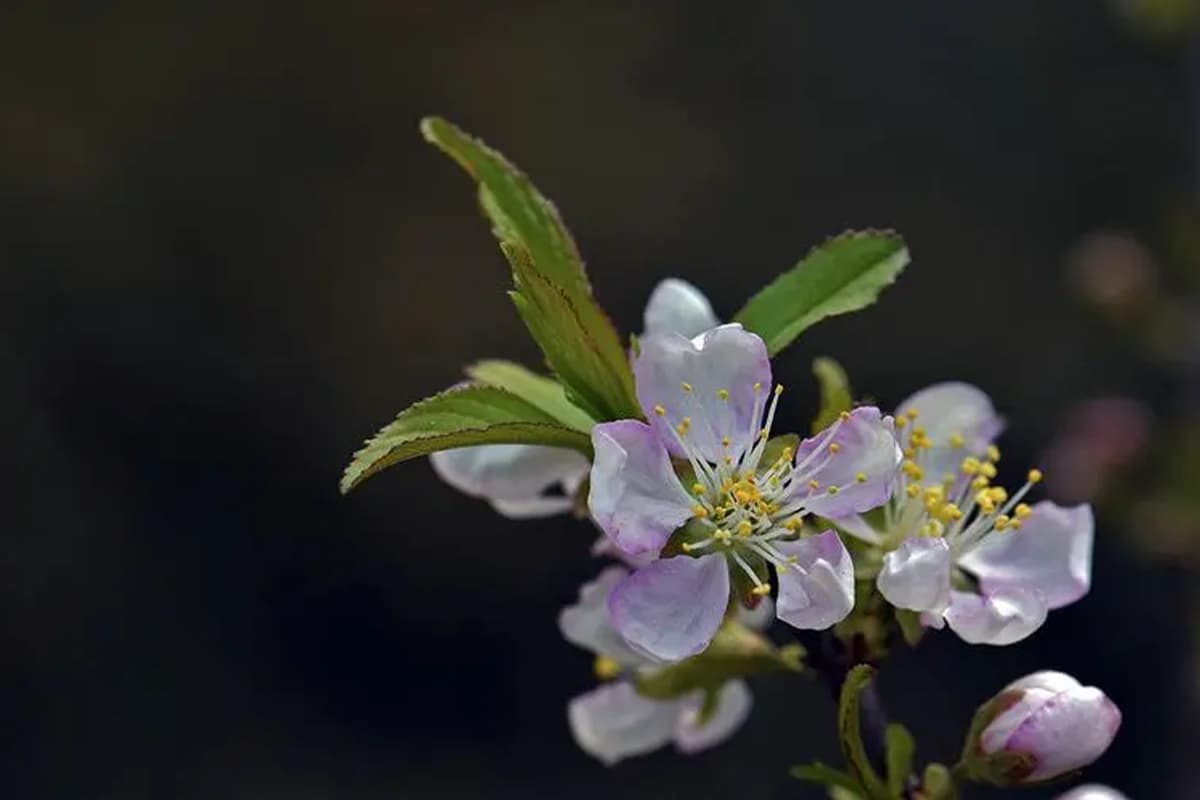
The flowering period is in May, and the fruiting period is in July-August. The chromosome number is 2n=16. It grows in the understory of hillsides, shrubbery, or cultivation, at an elevation of 100-200 meters.
It is also distributed in Japan and Korea. The seeds of Cerasus japonica are used in medicine and are known as Yuli Ren. The combination of Cerasus japonica and its seeds has a significant antihypertensive effect.
Cerasus japonica, also known as Yuli, is a shrub that grows to a height of 1-1.5 meters. The twigs are gray-brown, with young branches being green or green-brown and without hair. The winter buds are oval-shaped and hairless.
The leaves are ovate or lanceolate, measuring 3-7 centimeters in length and 1.5-2.5 centimeters in width. They have a gradually pointed tip, a rounded base, and serrated edges with sharp notches.
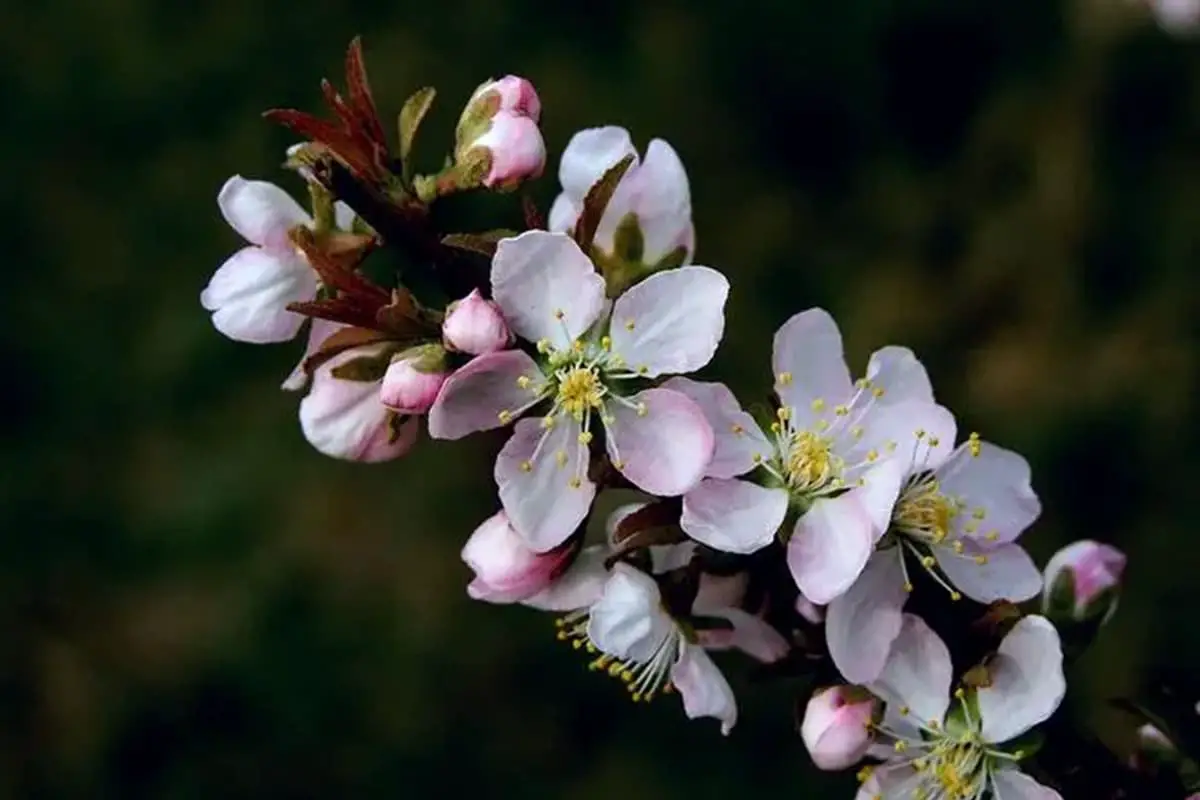
The upper surface of the leaves is dark green and hairless, while the lower surface is light green and either hairless or with sparse soft hairs along the veins. There are 5-8 pairs of lateral veins.
The leaf stalk is 2-3 millimeters long and hairless or sparsely hairy. The stipules are linear, measuring 4-6 millimeters in length, and have glandular teeth.
The flowers are clustered, with 1-3 flowers per cluster, and the flower leaves open simultaneously or before the leaves. The flower stalk is 5-10 millimeters long, hairless or sparsely hairy.
The calyx tube is spiral-shaped, with nearly equal length and width, measuring about 2.5-3 millimeters, and without hair. The sepals are elliptical, slightly longer than the calyx tube, with a rounded and blunt tip and fine teeth along the edges.
The petals are white or pink, and inversely ovate-elliptic in shape. There are approximately 32 stamens, and the pistil is nearly as long as the stamens and hairless.
The fruit is nearly spherical, deep red in color, with a diameter of about 1 centimeter, and a smooth surface. The flowering period is in May, and the fruiting period is in July-August. The chromosome number is 2n=16.
Cerasus japonica grows in the understory of hillsides, shrubbery, or cultivation, at an elevation of 100-200 meters. It is also distributed in Japan and Korea.
Cerasus japonica prefers a sunny and warm, moist environment. It has a strong and adaptable growth habit, being tolerant of heat, drought, humidity, and dust.
It has a well-developed root system and can withstand cold temperatures, safely overwintering at temperatures as low as -15°C. It is not demanding in terms of soil requirements and can tolerate poor and infertile soil.
It thrives particularly well in alkaline soil, especially limestone soil. It grows best in well-drained, neutral, fertile, and loose sandy loam soil, but can also adapt to slightly acidic soil.
Cerasus japonica is a beautiful ornamental flowering tree with attractive fruits. It is suitable for planting in groups, as well as for landscaping in front of steps, next to buildings, on rocky slopes, or as accents along forest edges and around lawns. It can also be used for creating flower paths and hedges.
The seeds of Cerasus japonica, known as Yuli Ren, have a pungent, bitter, and sweet taste, and are considered neutral in nature. They have the properties of moistening dryness, lubricating the intestines, relieving gas, and promoting diuresis.
They are used to treat conditions such as intestinal dryness, food stagnation, abdominal distension and constipation, edema, athlete’s foot, and painful urination.
The seeds are used in medicine under the name Yuli Ren. The combination of Cerasus japonica and its seeds has a significant antihypertensive effect.

Peggie was once a high school mathematics teacher, but she set aside her chalkboard and textbooks to follow her lifelong passion for flowers. After years of dedication and learning, she not only established a thriving flower shop but also founded this blog, “Flowers Library”. If you have any questions or wish to learn more about flowers, feel free to contact Peggie.
 English
  العربية
  Bahasa Indonesia
  Deutsch
  Français
  Italiano
  Nederlands
  Português
  Русский
  日本語
日本語