600+ Types of Flowers A To Z (With Names and Pictures)
Types Of Flowers By Names (A-Z) Types Of Flowers By Color Types Of Flowers By Season Types Of Flowers By Blooming Time 600+ Types of Flowers No. Flower Name No.…

The Callistephus chinensis is an Asteraceae family herbaceous plant that can be annual or biennial. It grows to a height of 30-100 centimeters (occasionally starting from 15 cm), with an erect, solitary stem covered in coarse white hairs.
Its foliage varies from ovate to elongated-oval in shape, and it boasts capitulum-type inflorescences with petals in shades of pale white, light red, and bluish-purple.
The hermaphroditic flowers have yellow corollas, and the plant produces narrowly obovate, slightly flattened achene-type fruits. Its flowering and fruiting period spans from May to October.
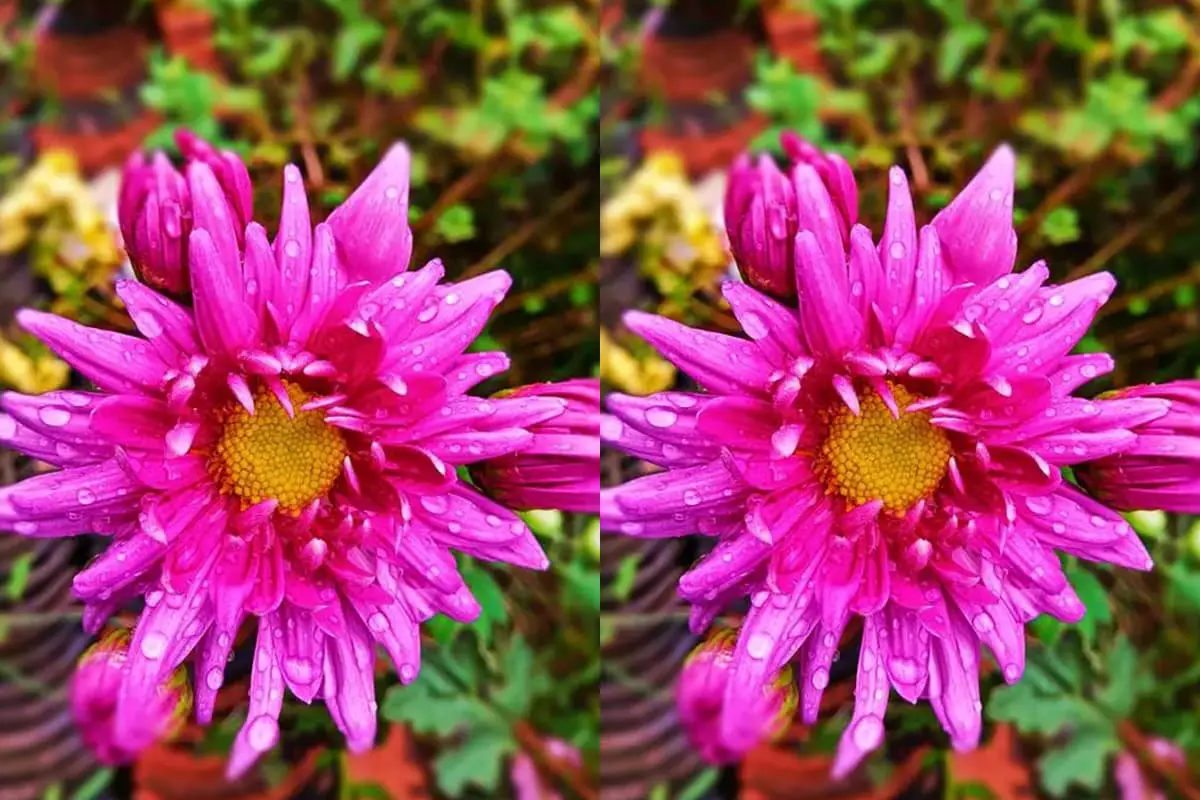
It thrives on hillside wastelands, grassy slopes, near water, or in the shade of sparse forests at altitudes ranging from 30 to 2700 meters.
Widely cultivated in botanical gardens, parks, courtyards, and other public spaces for its ornamental qualities, it is highly regarded by horticulturists both domestically and internationally.
Dwarf varieties are used in pots and flower beds, while the taller varieties are popular as cut flowers. It is extensively cultivated and found in the wild in Japan and Korea, and it’s also introduced in botanical gardens across the former Soviet Union and Europe for ornamental purposes.

This annual or biennial herb stands tall at 30-100 cm, with a possibility of starting as low as 15 cm. The stem is erect, solitary, ribbed, and covered with coarse white hair, measuring 6-7 mm in diameter at the base or as slender as 1 mm, with branches that ascend obliquely or are unbranched.
The lower stem leaves may fall off or persist during the flowering period; the middle stem leaves range from ovate, diamond-shaped, to spoon-shaped or nearly circular, measuring 2.5-6 cm in length and 2-4 cm in width.
They taper to a tip, with the base being truncate, cuneate, or round, and have irregular coarse serrations on the edge.
Both surfaces are sparsely covered with short, stiff hairs. The petioles are 2-4 cm long, covered with white short stiff hairs, and have narrow wings.

The upper stem leaves become progressively smaller, diamond-shaped to lanceolate, long-oval, or inversely lance-shaped, with 1-2 serrations on the edge or linear and entire.
The capitulum flower heads stand alone at the top of the stem branches, measuring 6-8 cm in diameter with a long peduncle.
The involucre is hemispherical, 2-5 cm wide; the involucral bracts are in 3 layers, almost equal in length, with the outer layer being long-oval lanceolate or spoon-shaped, leaf-like, measuring 1-2.4 cm in length and 2-4 mm in width, with blunt tips and white long cilia on the edges.
The middle layer is spoon-shaped, shorter, thinner, and tinged with purple, while the inner layer of bracts is long-oval, membranous, semi-transparent, and blunt at the top.
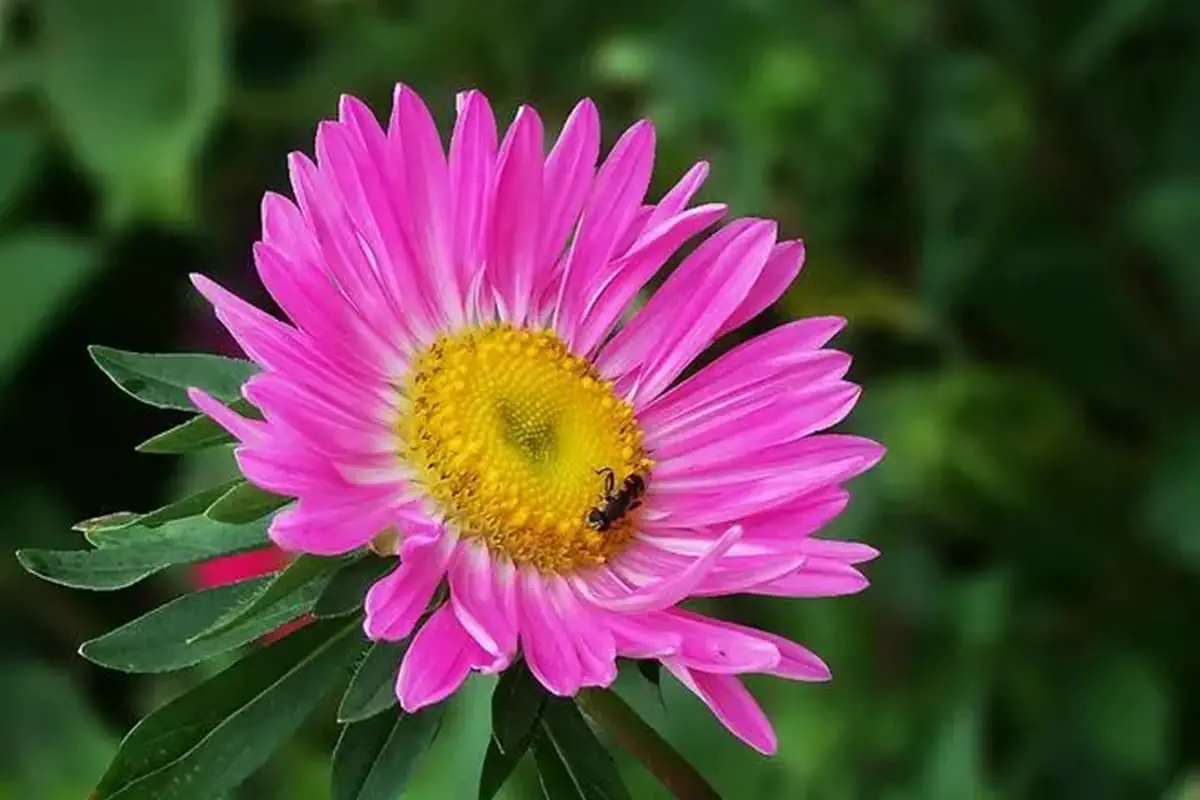
Female flowers are in one layer, which can be multiple layers in horticultural cultivation, in colors of red, light red, blue, yellow, or light bluish-purple.
The ligules are tongue-shaped, 2.5-3.5 cm long, 2-7 mm wide, with a short tube part of 2-3 mm; the hermaphroditic flowers have yellow corollas, with the limb part being 4-7 mm long and the tube part 1-1.5 mm long.
The fruits are narrowly obovate, slightly flattened achenes, 3-3.5 mm in length, with the upper part covered in soft hair.
The outer pappus is persistent, and the inner pappus is snow-white, of unequal lengths, 3-4.5 mm long, tapering to a tip, and easily shed. The flowering and fruiting period extends from May to October.
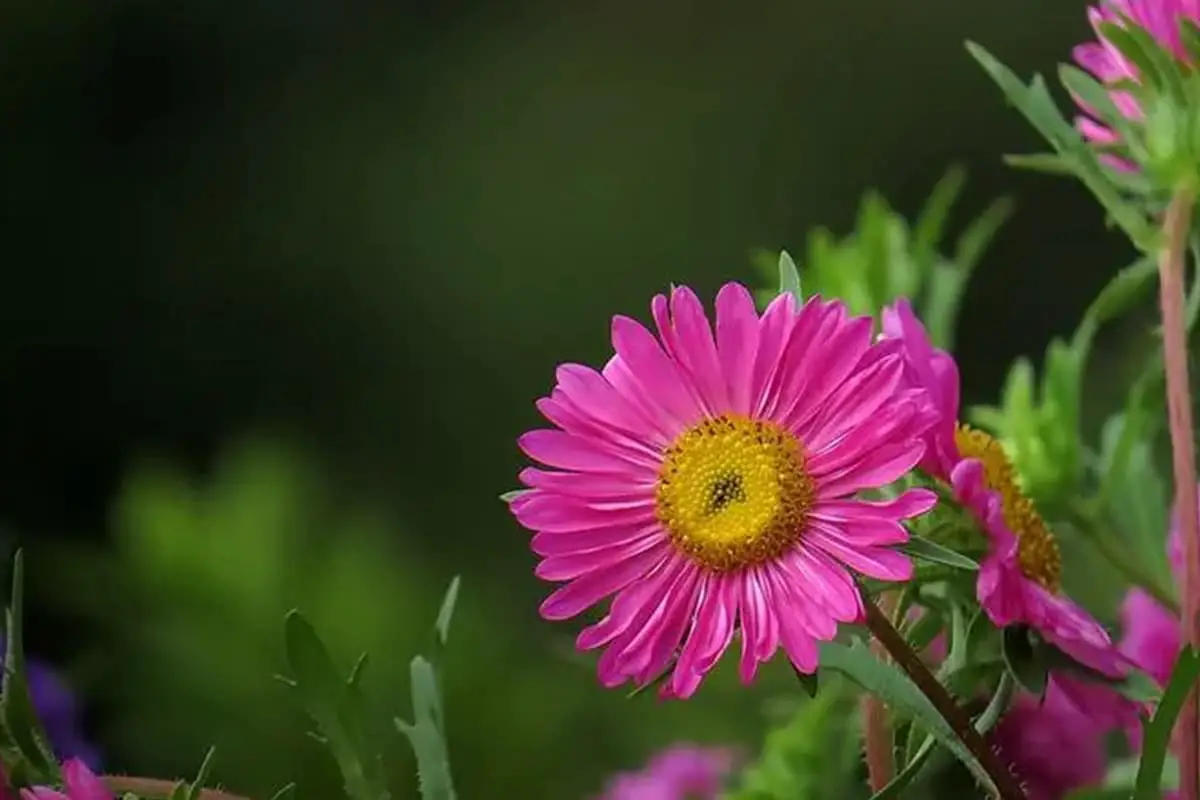
China Asters grow on hillside wastelands, grassy slopes, near water, or in the shade of sparse forests at altitudes of 30 to 2700 meters. They are frequently introduced for ornamental cultivation in botanical gardens, parks, courtyards, and other public areas.
In Japan and Korea, there’s a broad cultivation and wild presence. Botanical gardens in the former Soviet Union and other European countries also cultivate this plant for its flowers.
The China Aster is a shallow-rooted plant that requires careful watering during dry seasons. It’s robust and not particular about soil but prefers fertile sandy soil for optimal growth.
It loves sunlight and moisture but does not tolerate waterlogging, and it’s prone to pests and diseases in high heat and humidity. It has poor tolerance to both heat and cold.
Tall varieties are highly adaptable and can be planted anywhere, while medium and dwarf varieties are less adaptable and require meticulous care.
China Asters are propagated through seeds, which germinate easily when sown in rows. Under conditions of 14-16 degrees Celsius, germination takes about four days, and seedlings emerge around ten days later.
Seeds are typically sown in spring but can also be sown in summer or autumn, with flowering occurring two to three months after sowing. Sowing can be staggered to control the timing of flowering.
For dwarf varieties, seeds are sown in greenhouses in February and March or in outdoor beds in March, with flowering in May and June; if sown outdoors in April and May, flowering occurs in July and August; sowing in early July results in flowers by “eleven” (likely referring to November); if sown in mid-August, seedlings winter in cold frames and bloom by “May Day” (May 1st) the following year.
Medium varieties sown in May and June flower in August and September; if sown in August, they require overwintering in cold frames and bloom in May and June of the following year.
Tall varieties can be sown in spring or summer and bloom in the fall, though early summer sowing is preferred. Early sowing leads to taller plants with older leaves, and lower leaves may turn yellow and wither.
Rust: Infected plants should be pulled and destroyed. Spray with Bordeaux mixture diluted to 120 to 160 times the regular strength or with sodium o-phenylphenate diluted 150 to 300 times.
Black Spot: Upon infection, promptly remove and destroy the affected plants and spray with a 7% solution of tolclofos-methyl at an 800-fold dilution for prevention.
Virus Diseases: Infected plants must be removed and eradicated in a timely manner, and insects that spread viruses should be eliminated as well.
Verticillium Wilt: Sterilize seeds before sowing by soaking them in a solution of mercuric chloride at a dilution of 1000 to 3000 times for half an hour.
Avoid over-moistening the soil, apply phosphorus and potassium fertilizers appropriately, promptly remove and burn infected plants, and disinfect the soil with a 100-fold formalin solution.
Chrysanthemum Wilt: This is a serious and common disease from the seedling stage to the flowering stage. Infected plants wilt and die rapidly. Seedlings may show symptoms within a week of infection or may not exhibit any until they mature.
When young plants are infected, all leaves wilt and the root system often rots to varying degrees. In mature plants, leaves turn pale yellow-green, with lower leaves wilting first, and brown longitudinal streaks appear on the stems.
Sometimes symptoms are only visible on one side of the plant. Often, the entire root system rots, leading to the wilt and death of the whole plant.
Control Measures:
Chrysanthemums are highly valued ornamental plants both domestically and internationally. Dwarf varieties are used for potting and flower bed displays, while taller varieties are popular for cut flowers.
In China, chrysanthemums are mainly used for potting and garden displays, becoming one of the important potted flowers.
For flower beds, dwarf chrysanthemum varieties are suitable for landscaping and potting, while taller varieties are commonly used for cut flowers.
Using blue chrysanthemums for vase arrangements or window decorations exudes a simple and elegant charm.
Composing a wall arrangement with yellow chrysanthemums as the main flower, complemented by Dianthus, nephrolepis, and calla lilies creates a vibrant yet sophisticated look that is full of contemporary flair.
Potted chrysanthemums have an elegant appearance; the spherical varieties are particularly charming. When displayed on windowsills, balconies, or flower racks, they bring a novel touch.
Group arrangements in squares, flower beds, and halls are refreshing, aesthetically pleasing, and embody the spirit of the times.
Chrysanthemums also offer many excellent cut flower varieties. When the outer petals start to open, they can be cut and stored wet at 0-4°C for 1-2 weeks.
As ornamental plants, chrysanthemums with their diverse sizes and rich colors are frequently used in landscaping, widely applied to various landscape projects.
Chrysanthemums make excellent materials for flower borders, creating richly varied floral landscapes when combined with different seasonal plants in suitable landscape spaces.
For balconies and rooftop gardens, chrysanthemums are premium plants for greening and beautifying these small spaces, offering a rich variety of colors, extended blooming periods, and attractive decorative effects.
In landscape pairing, chrysanthemums are often used in the foreground with taller flowers or flowering shrubs as the backdrop, creating rich layers of landscape beauty and colorful combinations.
Chrysanthemum-themed gardens are ideal for combining various chrysanthemum varieties and types, creating specialized gardens for ornamental viewing.

Peggie was once a high school mathematics teacher, but she set aside her chalkboard and textbooks to follow her lifelong passion for flowers. After years of dedication and learning, she not only established a thriving flower shop but also founded this blog, “Flowers Library”. If you have any questions or wish to learn more about flowers, feel free to contact Peggie.
 English
  العربية
  Bahasa Indonesia
  Deutsch
  Français
  Italiano
  Nederlands
  Português
  Русский
  日本語
日本語