600+ Types of Flowers A To Z (With Names and Pictures)
Types Of Flowers By Names (A-Z) Types Of Flowers By Color Types Of Flowers By Season Types Of Flowers By Blooming Time 600+ Types of Flowers No. Flower Name No.…

The Callistemon rigidus is an evergreen shrub belonging to the Myrtaceae family. The tree bark is hard and grayish-brown, with young branches initially bearing long silky hair that soon becomes hairless.
Its leaves are leathery and linear. The spikelike inflorescence sprouts from the tip of the branches, with green, oval petals, bright red stamens, and dark purple, oval anthers. The fruit is hemispherical and the seeds are strip-shaped. The flowering period is from June to August.
Originally from Australia, the Red Bottlebrush is cultivated in Guangdong and Guangxi provinces in China.
It thrives in warm and humid climates, can withstand intense summer heat, and is relatively cold-resistant. It prefers fertile, acidic soil but can also tolerate poor soil. Propagation is through seeding and cutting.
The Red Bottlebrush has a warm nature and spicy taste. It is known for its ability to warm the body, dispel cold, regulate qi, and relieve pain, making it useful for symptoms like stomach bloating and cold-induced vomiting.
As an aromatic plant, its leaves are used for extracting essential oils. With a high content of eucalyptus in its fresh leaves, it is a valuable resource for producing eucalyptus oil. Its essential oil is used in the formulation of cosmetics, soaps, daily necessities, and detergents.
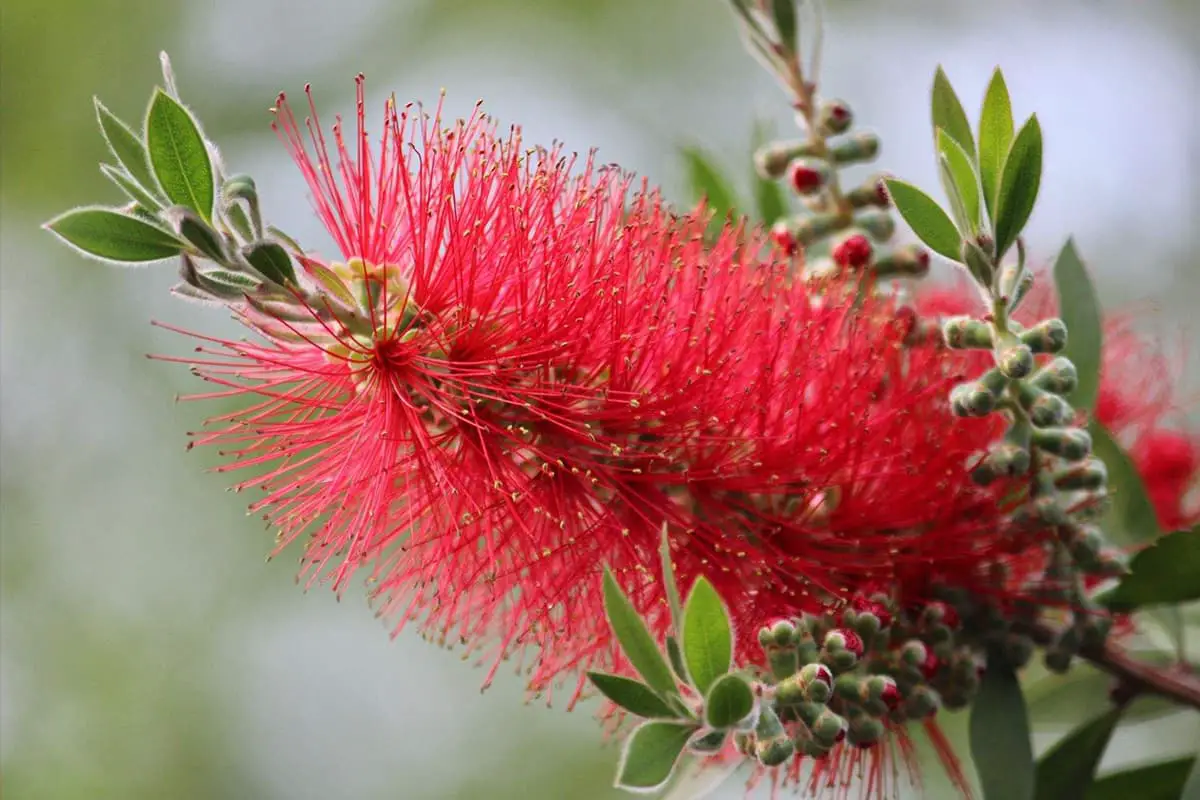
The Red Bottlebrush is a small shrub with hard, gray-brown bark. Young branches are ridged, initially with long silky hairs that soon fall off. Its leaves are leathery and linear, measuring 5-9 cm long and 3-6 mm wide.
The pointed tips are initially hairy but soon become hairless. The oil glands are prominent and protruding when dried. Both surfaces of the midrib are raised, with clear lateral veins and marginal veins along the edges.
The spikelike inflorescence sprouts from the tip of the branches. The calyx tube is slightly hairy with semi-circular, almost membranous sepals. The petals are green and oval, measuring 6 mm long and 4.5 mm wide, with oil glands.
The stamens are bright red, 2.5 cm long, with dark purple, oval anthers. The pistil is slightly longer than the stamens, with a green tip and the rest in red.
The fruit is hemispherical, measuring 5 mm long and 7 mm wide, with a flat top, round calyx mouth, slightly depressed fruit valves, and 3 fissures that shed the fruit segments. The seeds are strip-shaped and 1 mm long. The flowering period is from June to August.
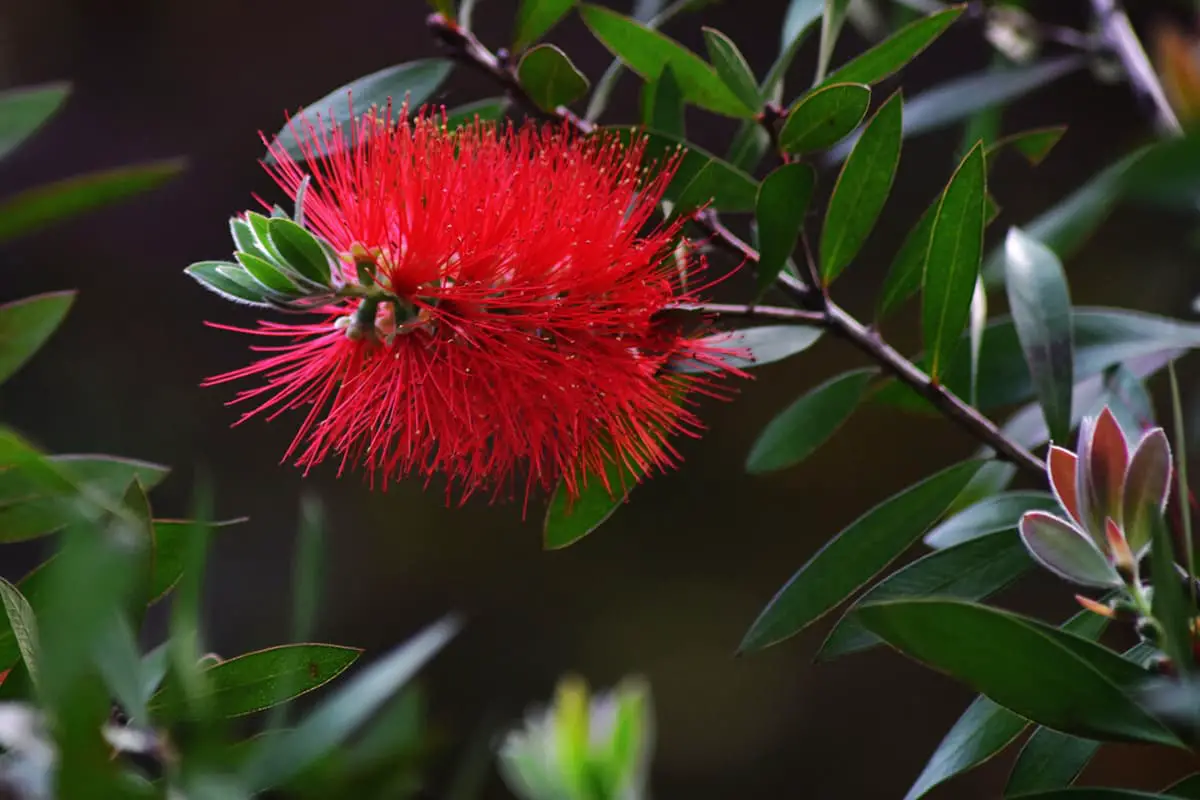
This plant thrives in warm, humid climates, can tolerate intense sunlight and high temperatures, and is somewhat cold-resistant. It prefers fertile, acidic soil, but can also survive in poor, thin soil.
In southern China, young seedlings can winter outdoors, withstanding temperatures as low as -10°C and as high as 45°C. The optimal growing temperature is around 25°C. The plant doesn’t require a lot of water, but it grows faster in moist conditions.
Due to its extreme drought and barren soil tolerance, it can also be cultivated in suburban wastelands or forest parks near towns.
Originally from Australia, it belongs to South Asian tropical tree species.
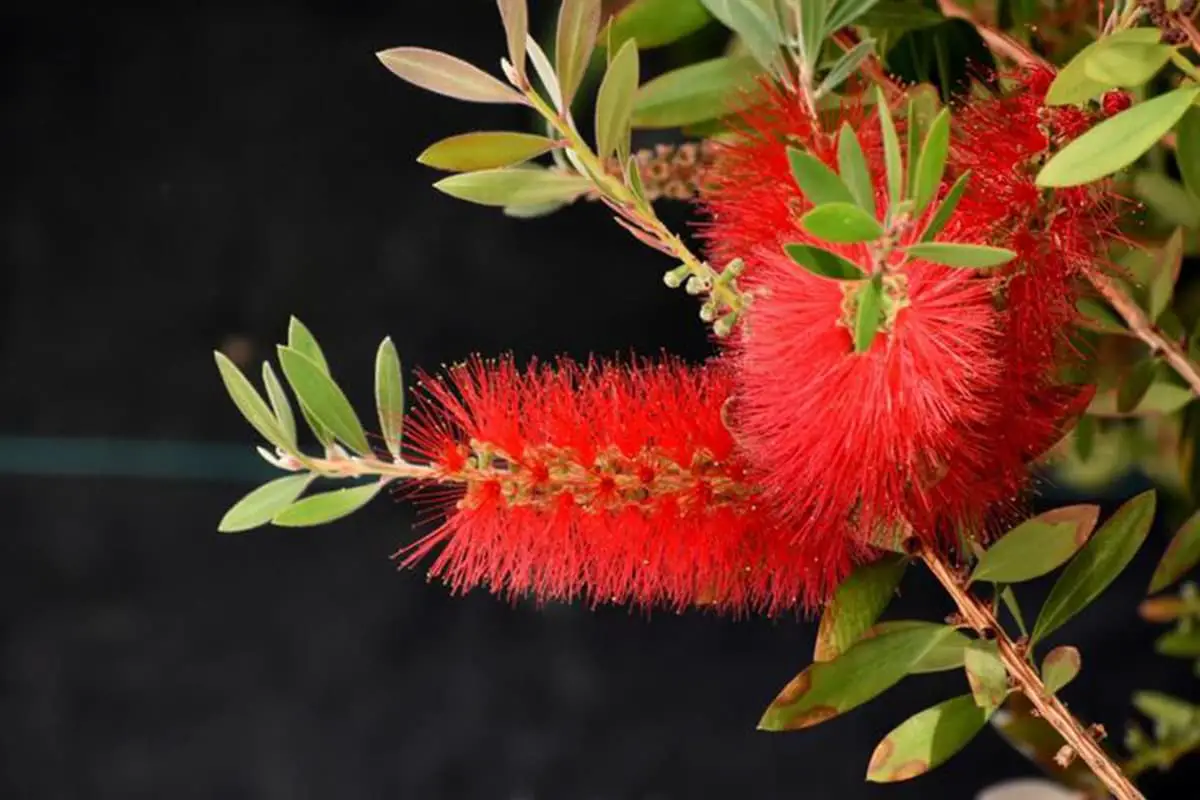
Red thousand layers propagation is done by seeding and cutting. Some places use grafting for propagation.
Seeding: When the fruit is ripe, it clings to the branches in clusters, doesn’t fall or crack, and seeds can be harvested all year round. Cut the fruit-bearing branches and place them in a windless place to dry in the shade or sun for 2-3 days.
The center of the fruit’s top cracks open, and the tiny seeds fall out. Prevent them from being blown away by the wind. Seeding requires high technical skills. Use sieved sandy loam soil with small particles and rich in humus.
Soak the soil thoroughly after leveling. Mix seeds with fine sand in a 1:15 ratio, spread evenly, do not cover with soil, then spray thoroughly with water using a fine-hole watering can. Cover with plastic film or glass for moisture and heat preservation.
The optimal germination temperature for seeds is 10-18°C, and they can germinate after more than 10 days. The germination rate is low, only around 20-35%.
Once the buds have sprouted, remove the film or glass and place in a slightly shaded area for care. If in open fields, provide appropriate shading. When seedlings grow to 3-5 cm, they can be transplanted.
Cutting: Indoor and outdoor cuttings are done. Indoor cuttings are done from February to March each year, and outdoor cuttings from June to August. Choose healthy, pest-free, mature or semi-woody branches grown in the current year.
Cut into 8 cm long sections, thin out the outer leaves, cut the base at an angle to make cuttings, and place them in a nursery bed with a mixture of yellow heart soil and sand (1:1) at a spacing of 8 cm x 8 cm, 3 cm deep.
After planting, water thoroughly, and spray water during the day to maintain a relative humidity of about 80%, and a temperature of 25-35°C. Most cuttings root after 30 days.
Greenhouse beds can also be used, or choose a sunny location, build a plastic shed, at least 50 cm high, the area depends on the number of cuttings. The same planting method applies.
When the root system is developed, and the cuttings sprout new leaves, they can be potted. Plain sandy soil is suitable for the pot. With normal management, they enter the flowering period after 18 months.
After cultivation, the Red Thousand-Layer plant can retain well-developed and intact root hairs. However, the balance of water will not recover quickly after transplantation.
Pre-lifting pruning is an effective measure to reduce water evaporation, helping to maintain the water balance within the plant, especially during transplantation in hot summer. Evaporation is large, so pruning becomes more critical.
The pruned branches and leaves account for about one-third of the whole plant, mainly the inner branches (shady branches) and newly sprouted tender branches.
During winter and spring transplantation, it is essential to retain the top branches with flower buds so that they can bloom after transplantation in summer and achieve greening effects.
The soil should not be too wet or too dry. The size of the soil ball should be about 40-50 cm in diameter and 30-40 cm in height, preferably cylindrical. Avoid pot-bottom shape.
After lifting the seedlings, they should be immediately wrapped with straw or other materials, handled gently to prevent the soil ball from falling apart and exposing the roots, which is a crucial step for survival.
The tree hole should be about 80×80 cm, with a good base fertilizer applied. The fertilizer should be mixed with soil in a 1:1 ratio at the bottom, topped with clean soil about 5 cm thick and compacted to prevent the roots from contacting the fertilizer and getting burned.
After removing the soil ball packaging, place the plant in the hole so that the surface of the soil ball is level with the ground. Then fill the soil in layers and tamp it down to avoid any gaps at the bottom. After planting, water thoroughly immediately.
Water the plant 1-2 times daily after planting, thoroughly watering the soil layer. Also, spray the branches and leaves to keep them moist, which is crucial for reducing water evaporation and maintaining the plant’s internal water balance.
Spraying the branches and leaves is another important step for plant survival after planting. For some plants with part of the soil fallen off, survival is still possible if the branches and leaves are sprayed more frequently.
From June to September, when the weather is hot and water evaporation is high, increase the frequency of spraying the branches and leaves.
Fertilizing is extremely important for the plant to quickly recover its growth. After 15 days of planting, apply a thin layer of nitrogen fertilizer once, and a high-quality organic fertilizer one month later. After this, apply high-quality organic fertilizer 1-2 times a year.
After each flowering period, prune and trim the plant once to control its growth height, maintain its beautiful shape, and encourage the sprouting of more new branches for blooming.
Diseases: The main disease is stem rot. In severe cases, the diseased seedlings should be removed. In mild cases, Bordeaux mixture can be sprayed for prevention and control.
Pests: These include tiger beetles, mole crickets, and green weevils. Use a 1000 times dilution of either insecticide or aldicarb for prevention and control, spraying once every seven days, for two to three times in succession.
The Poinsettia is unique in shape and vibrant in color, offering high ornamental value when in bloom. It is widely used in parks, gardens, and roadside green spaces.
Park and Scenic Area Greening
In practice, the Poinsettia is one of the most beloved tree species. With its elegant shape and beautiful flowers, it can be planted individually to showcase its beauty or in clusters for distant viewing. Especially when planted in groups on open lawns, its landscaping effect is more prominent.
Square and Roadside Greenspaces
Squares and roadside greenspaces are occupying an increasingly larger proportion of urban green space systems, playing a significant role in regulating the urban environment and climate.
Due to urban heat island effects and exhaust emissions from vehicles, roadside temperatures are usually 3-5℃ higher than other places. The Poinsettia is not demanding in terms of water requirements, it can tolerate dry and infertile soil, and is highly adaptable.
It is commonly used for roadside planting. In design, it can be paired with other colorful flowering shrubs to create a rich garden atmosphere, or with deciduous trees to enrich different seasonal effects, providing visual beauty while also purifying the air, reducing dust, absorbing noise, and providing shade.
Industrial Park Greening
In industrial parks where factories are concentrated, many enterprises emit large amounts of waste gas, wastewater, waste residue, and dust every day. Many garden plants cannot grow and develop normally due to pollution, and some even wither and die.
The Poinsettia, being resistant, can absorb toxic pollutants like sulfur dioxide, chlorine, hydrogen chloride, and dust in industrial parks. Therefore, it is widely used in the greening of industrial parks.
In design, it can be planted in rows or groups, or as the main tree species, paired with other resistant small trees or shrubs, creating an environment that combines ecology and aesthetics.
Residential Area Greening
Residential area greening is an important part of urban greening, vital for improving residents’ living environment quality and promoting physical and mental health.
The Poinsettia is small and graceful, harmless, and blooming profusely in summer, it can meet residents’ aesthetic requirements for the community garden.
According to the overall layout of the community, local landscaping can be used in combination with other garden elements such as ground cover plants, rocks, and water bodies to create a layered, picturesque living environment.
The Poinsettia is a fragrant plant, its leaves can be used for essential oil extraction. Fresh leaves yield 0.75-1.20% oil, mainly 1,8-cineole, which is as high as 69.56%, comparable to Eucalyptus, making it a potential source for eucalyptus oil production. Its essential oil can be used in the formulation of cosmetics, soaps, daily products, and detergents.
The branches and leaves are used in traditional medicine. They have a spicy taste and are neutral in nature. They have the effects of dispelling wind, resolving phlegm, and reducing swelling. They are mainly used for treating colds, coughs, rheumatism, eczema, and injuries from falls.

Peggie was once a high school mathematics teacher, but she set aside her chalkboard and textbooks to follow her lifelong passion for flowers. After years of dedication and learning, she not only established a thriving flower shop but also founded this blog, “Flowers Library”. If you have any questions or wish to learn more about flowers, feel free to contact Peggie.
 English
  العربية
  Bahasa Indonesia
  Deutsch
  Français
  Italiano
  Nederlands
  Português
  Русский
  日本語
日本語