600+ Types of Flowers A To Z (With Names and Pictures)
Types Of Flowers By Names (A-Z) Types Of Flowers By Color Types Of Flowers By Season Types Of Flowers By Blooming Time 600+ Types of Flowers No. Flower Name No.…

The Aster tataricus, also known as Qingyuan, Zi Qian, and Xiaobian, is a perennial herb of the Asteraceae family. It has an ascending rhizome. The stem is erect, standing 40-50 cm tall, robust, with fibrous remains of dead leaves at the base and often with adventitious roots.
Its stem has edges and grooves, and is covered with sparse, coarse hair, supporting sparsely distributed leaves. The basal leaves wilt during flowering and are oblong or oval-spoon shaped, tapering towards the lower half into a long petiole.
This plant is predominantly found in regions such as Hebei, Inner Mongolia, and the three northeastern provinces in China, as well as in North Korea and Japan. It usually grows in damp riverside areas and is used in traditional Chinese medicine to treat cold-induced cough, asthma, and to curb coughing and blood-streaked sputum due to physical weakness.
A perennial herb, Aster tataricus has an ascending rhizome. The stem is erect, reaching a height of 40-50 cm, and robust, with fibrous remains of dead leaves and often adventitious roots at the base. The stem has edges and grooves, covered with sparse, coarse hair, and bears sparse leaves.
The basal leaves wilt during the flowering period, and are oblong or oval-spoon shaped. They taper into a long stalk at the lower half, with a length of 20-50 cm and width of 3-13 cm, tapering or gradually tapering at the apex. The margins have rounded teeth or shallow teeth with small tips.
The lower leaves are spatulate-oblong, generally smaller, and taper or abruptly taper into a stalk with broad wings. They are gradually sharp, and apart from the apex, the margins have close serrations; the middle leaves are oblong or oblong-lanceolate, sessile, entire, or shallowly toothed, while the upper leaves are narrow and small.
All the leaves are thickly papery, covered with short, rough hair on the top and sparsely, but along the veins, more densely covered with short, rough hair underneath. The midrib is robust and there are 5-10 pairs of lateral veins, prominent on the underside, with obvious reticulate veins.
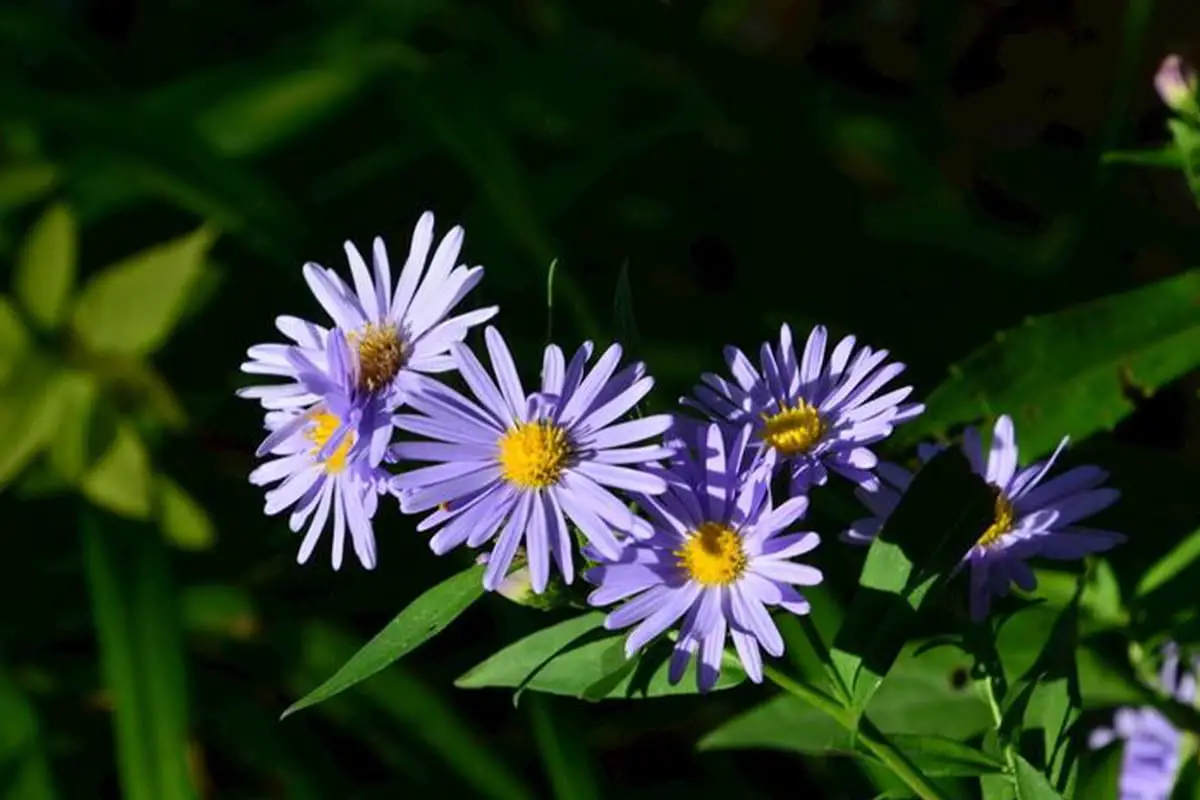
The head inflorescence is numerous, with a diameter of 2.5-4.5 cm, arranged in corymbose formations at the tips of stems and branches.
The peduncle of the inflorescence is long and bears linear bracts. The involucre is hemispherical, 7-9 mm long, and 10-25 mm in diameter. The involucral bracts are arranged in 3 layers, linear or linear-lanceolate, sharp or round at the top.
The outer layer is 3-4 mm long and 1 mm wide, all or mostly herbaceous, densely short hairy, while the inner layer can reach 8 mm in length and 1.5 mm in width, with a broad membranous edge and purplish-red, bearing a herbaceous midrib.
There are about 20 ray florets, with a tube 3 mm long, and the ligules are blue-purple, 15-17 mm long and 2.5-3.5 mm wide, with 4 or more veins. The tube florets are 6-7 mm long and slightly hairy, with segments 1.5 mm long; the style appendages are lanceolate, 0.5 mm long.
The achene is oblong-ovate, purple-brown, 2.5-3 mm long, with 1 or occasionally 3 veins on each side, and sparsely covered with coarse hair at the top.
The pappus is dirty white or red, 6 mm long, with several unevenly long rough hairs. It blooms from July to September and bears fruit from August to October.
The Aster tataricus grows in damp areas on shaded slopes of low hills, on mountaintops, in lowland grasslands, and swamps at altitudes ranging from 400-2000 meters.
It tolerates waterlogging and cold temperatures, but fears drought. The plant thrives in warm, humid climates, tolerates cold and flooding, but fears drought. Its roots can safely overwinter at temperatures as low as -20℃.
Except for saline-alkali soils, it can be planted anywhere, particularly favoring deep, loose, fertile soils rich in humus and with good drainage. Clayey soil is not suitable for cultivation. It does not tolerate continuous cropping.
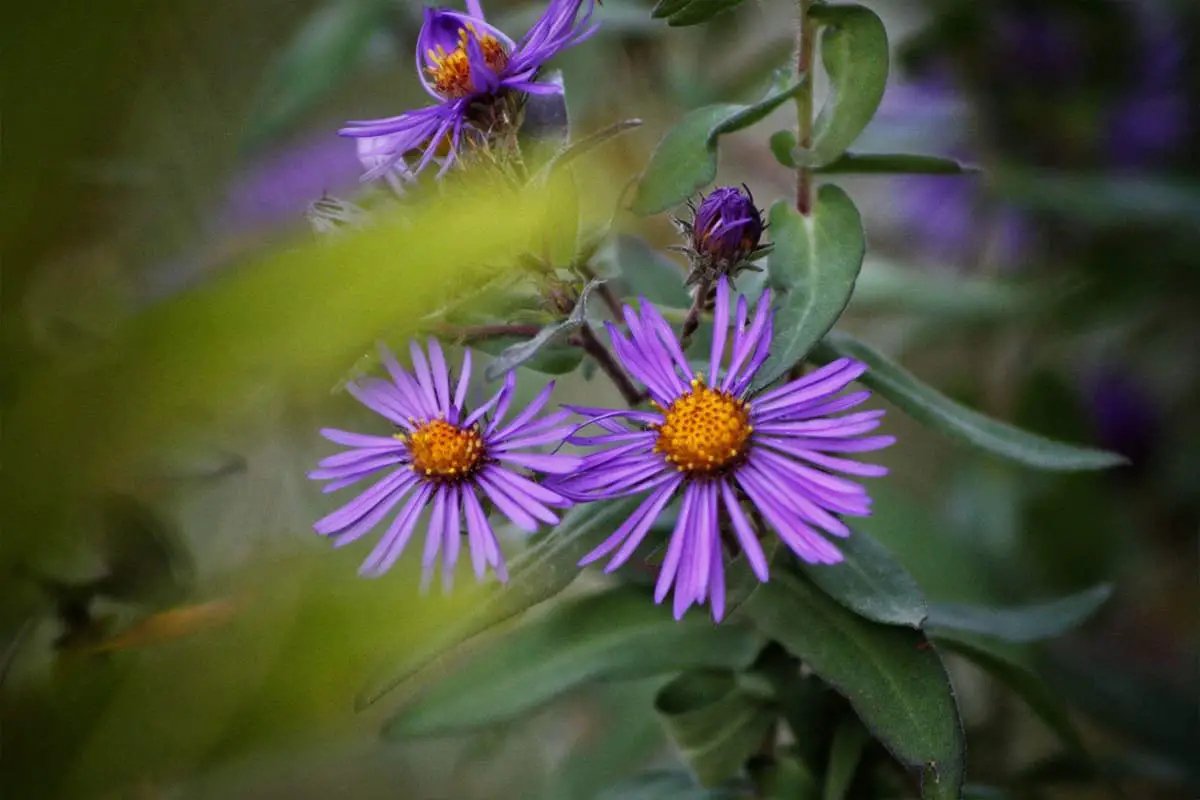
The Aster tataricus is found in many parts of China, as well as in North Korea, Japan, and the eastern part of Soviet Siberia. It grows in damp areas on shaded slopes of low hills, on mountaintops, in lowland grasslands, and swamps at elevations ranging from 400-2000 meters.
Choose a flat area with deep, loose, fertile soil, and good drainage for planting. Before planting, deeply till the soil over 30 cm and while tilling, apply 3000 kg of well-rotted farmyard manure and 50 kg of superphosphate per mu (667 m²), incorporated into the soil as a base fertilizer.
Till the soil lightly again to a depth of 20 cm just before sowing. After leveling and raking finely, prepare raised beds 1.3 m wide with furrows 40 cm wide around them, and dig drainage ditches all around.
Once the soil thaws to a depth of 10 cm in spring, select robust, purple-red rhizomes with closely spaced, short nodes, and dormant buds for planting. Take the middle part, cut into small sections 5-7 cm long, each with 2-3 dormant buds, and plant immediately after cutting.
When planting, on the prepared bed surface, dig horizontal furrows 25-30 cm apart and 5-7 cm deep. Place the root cuttings bud side up, according to a plant spacing of 15-17 cm, with 1-2 sections per plant.
Cover the soil so it is level with the bed surface, press down slightly after planting, water once, then cover with a layer of straw for insulation and moisture retention. Once the seedlings have emerged uniformly, remove the straw cover, retain moisture and protect the seedlings.
After the seedlings emerge uniformly, lightly loosen the soil and remove weeds. While loosening the soil, apply an additional 1000-1500 kg of well-rotted human and animal manure per mu.
When the seedlings reach a height of 7-9 cm, apply another 1500 kg of well-rotted human and animal manure per mu in conjunction with intertillage.
Before the rows close, apply 300 kg of well-rotted compost and 50 kg of well-rotted cake fertilizer per mu in conjunction with weeding and intertillage, dug into furrows beside the plants and covered with soil afterwards.
After the rows have closed, pull out any weeds by hand. Drain the furrows promptly after rainfall or irrigation and irrigate during drought. Remove flower stems as soon as they are detected.
Diseases include white rot and brown spot disease, which can be treated by spraying 1:1:100 Bordeaux mixture or 200 times solution of polyantibiotic. Pests include cutworms, grubs, and cabbage caterpillars.
This mainly affects the base of the plant’s stem and the part of the stem that emerges from the ground. In the early stages of the disease, the roots and rhizomes turn brown and rot, brown spindle-shaped spots appear at the base of the petiole, and gradually the leaves die off and the rhizomes rot.
Control method: in the early stages of the disease, spray with 50% carbendazim wettable powder at 1000 times dilution or 50% methasulfocarb wettable powder at 1000 times dilution.
In the early stages of the disease, purple-black spots appear on the leaves, which later expand into nearly circular dark brown spots.
Control method: in the early stages of the disease, spray with 65% mancozeb wettable powder at 500 times dilution or 50% methasulfocarb wettable powder at 1000 times dilution, repeat every 7 days for a total of 3 times.
The larvae eat the leaves, causing holes or notches. Control method: spray with a 1000 times dilution of 90% trichlorfon crystals.
Medicinal Value
Properties: Bitter, warm.
Main functions: Warms the lungs, descends Qi, resolves phlegm, stops coughing. It is used to treat wind-cold cough, asthma, cough due to debility, expectoration of pus and blood, sore throat, and urinary difficulties.
Dosage: For internal use, decoction, 0.5-3 qian; or made into pills or powder.
Phlegm resolving action: Traditional Chinese medicine considers Aster tataricus to have the functions of warming the lungs, descending Qi, resolving phlegm and stopping cough.
Experiments show that the decoction has phlegm-resolving action but no cough-suppressing and asthma-relieving action; phenol and methanol extracts also have phlegm-resolving action.
Antibacterial action: Aster tataricus inhibits 7 kinds of Gram-negative intestinal pathogenic bacteria in vitro, including E. coli, Shigella, Proteus, Salmonella typhi, Paratyphi, Pseudomonas aeruginosa and Vibrio cholerae; it also has action against pathogenic fungi.
Antiviral action: The water decoction has a significant inhibitory effect on the influenza virus in the allantoic fluid of chicken embryos.
Tumor-suppressing action: It is reported that the isolated eudesmane alcohol has a tumor-suppressing effect on Ehrlich ascites carcinoma in mice; it is also reported that cyclic peptide compounds isolated from the n-butanol extract of Aster tataricus roots have antitumor activity against S180.
Toxicity: Aster tataricus saponins have hemolytic action, and the preparation should not be injected intravenously.
Legend
It is said to be transformed from a devoted woman who, for her early-deceased lover, quietly opens purple flowers in late autumn waiting for the wandering soul of her lover.
Another legend is that people who die will open light purple flowers around their graves in the fall to comfort their loved ones. The living lover sees these flowers as if seeing the once-loved person, immersing in beautiful memories and thoughts.
The flower language of Aster tataricus is wisdom. It is said that people who are blessed by Aster tataricus are often eloquent and intelligent, and friends will be submissive and respectful to them.

Peggie was once a high school mathematics teacher, but she set aside her chalkboard and textbooks to follow her lifelong passion for flowers. After years of dedication and learning, she not only established a thriving flower shop but also founded this blog, “Flowers Library”. If you have any questions or wish to learn more about flowers, feel free to contact Peggie.
 English
  العربية
  Bahasa Indonesia
  Deutsch
  Français
  Italiano
  Nederlands
  Português
  Русский
  日本語
日本語