600+ Types of Flowers A To Z (With Names and Pictures)
Types Of Flowers By Names (A-Z) Types Of Flowers By Color Types Of Flowers By Season Types Of Flowers By Blooming Time 600+ Types of Flowers No. Flower Name No.…

The Armeniaca vulgaris, commonly known as the Apricot, belongs to the Rosaceae family. The fruit’s flesh and kernel are edible. With a crown that is round, flat, or oblong, the tree’s bark is grayish-brown and longitudinally fissured.
The perennial branches are light brown, with large lenticels. The annual branches are light reddish-brown, glossy, hairless, and have numerous small lenticels. The Apricot flowers bloom before the leaves, typically between March and April.
The petals are white or slightly reddish. The flowers resemble those of peach and plum trees, initially a pure red color that fades after blooming, turning pure white when the flowers fall.
The fruiting period is from June to July, producing dark yellow, sweet, and juicy fruits with sutures and soft hairs, ranging in color from light yellow to yellow-red.
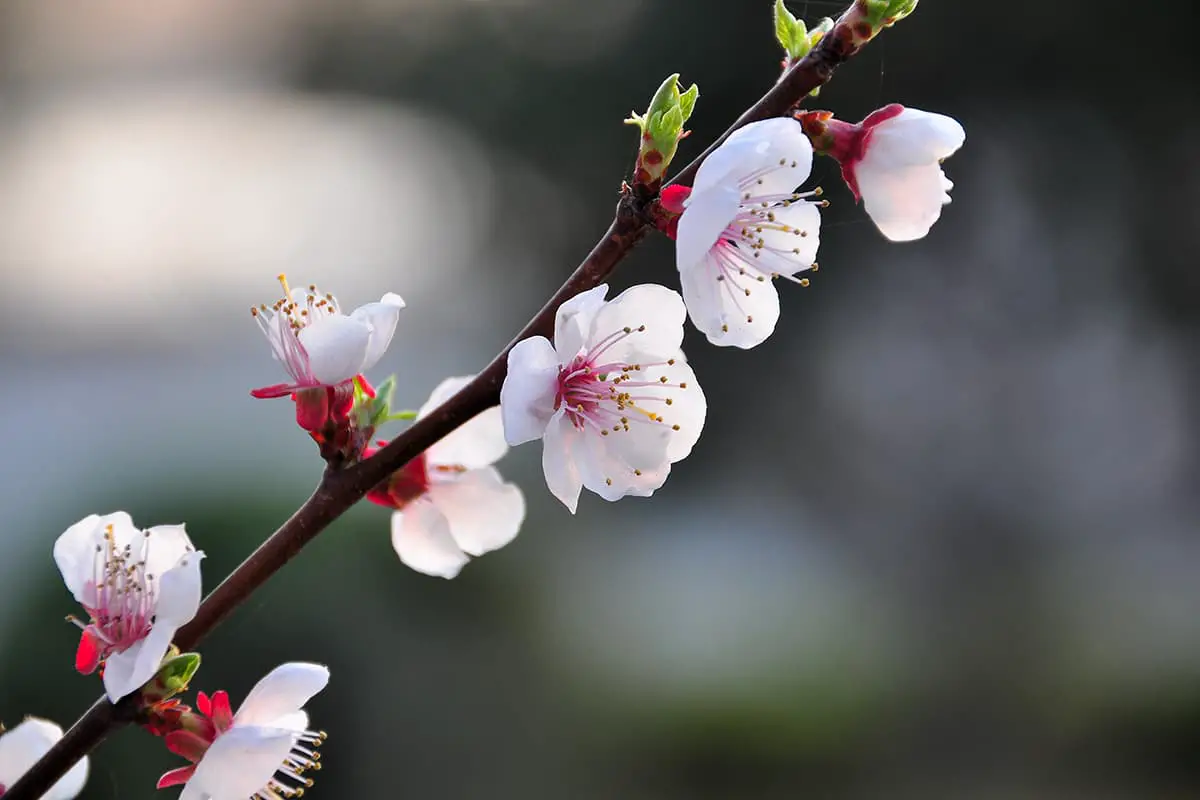
The Apricot is a renowned ornamental tree in China and can be planted in courtyards, corners, roadside, or waterside. It can also be group-planted or mass-planted on slopes or by the water, serving as a primary ornamental tree species in spring.
The Apricot is a deciduous tree, standing 5-8 (12) meters tall. Its crown is round, flat, or oblong. The bark is grayish-brown and longitudinally fissured. Perennial branches are light brown, with large lenticels.
Annual branches are light reddish-brown, glossy, hairless, and have numerous small lenticels. Twigs are either brown or reddish-brown.
The leaves are broad ovate or round ovate, 5-9 cm long, 4-8 cm wide, with the apex acute to abruptly acute, the base round to nearly heart-shaped, and rounded serration along the edge. The leaves are hairless or have soft hairs in the vein axils underneath.
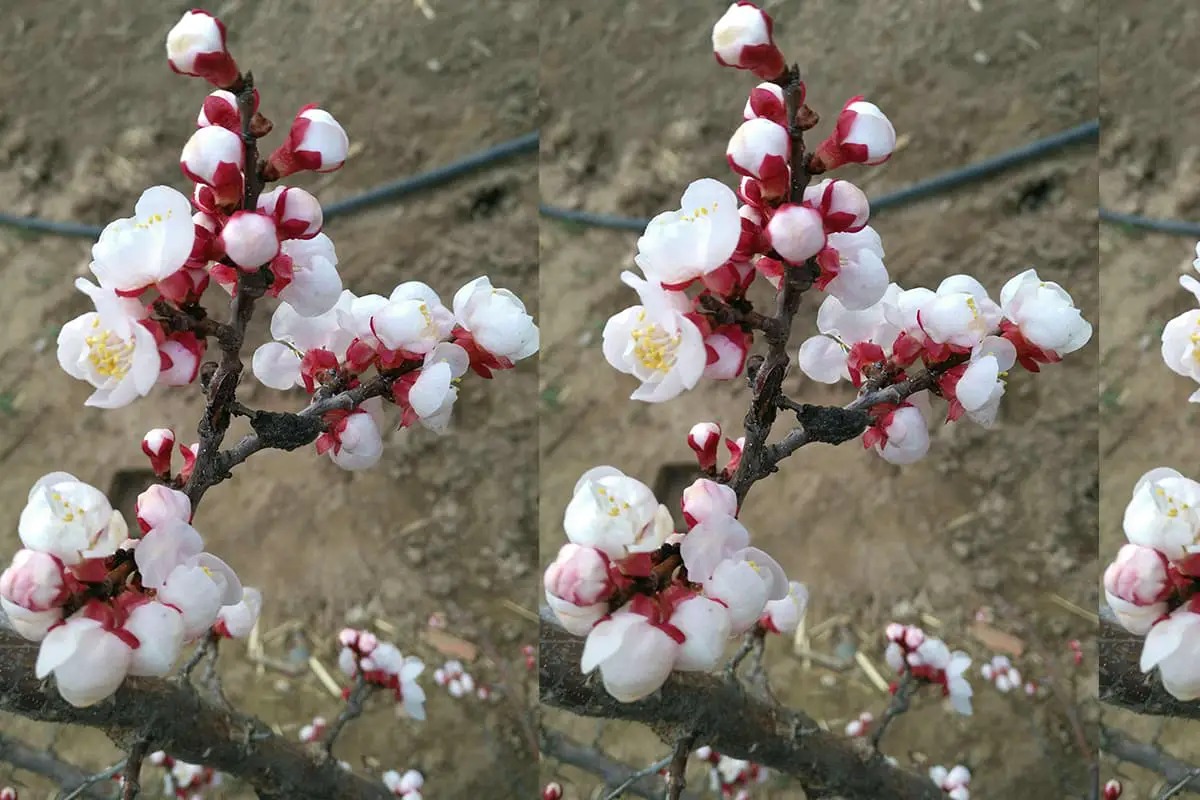
The petioles are 2-3.5 cm long, hairless, and often have 1-6 glandular bodies at the base. The flowers, 2-3 cm in diameter, bloom before the leaves. The pedicels are short, 1-3 mm long, and covered in short soft hairs.
The calyx is purple-green. The calyx tube is cylindric, and the outer base is covered in short soft hairs. The calyx lobes are ovate to elongated ovate, with an acute or rounded apex and are reflexed after flowering. The petals are round to obovate, white or red, with short claws.
There are approximately 20-45 stamens, slightly shorter than the petals. The ovary is covered in short soft hairs. The style is either slightly longer or equal to the stamens, with soft hairs at the base.
The fruit is spherical, rarely obovate, about 2.5 cm or more in diameter, white, yellow, to yellow-red, often with a reddish tinge, and slightly covered in short soft hairs. The fruit is juicy and does not split when ripe.
The pit is ovate or elliptical, flat on both sides, with a rounded top and symmetrical base, rarely asymmetrical. The surface is slightly rough or smooth. The ventral ridge is rounder, often slightly blunt.
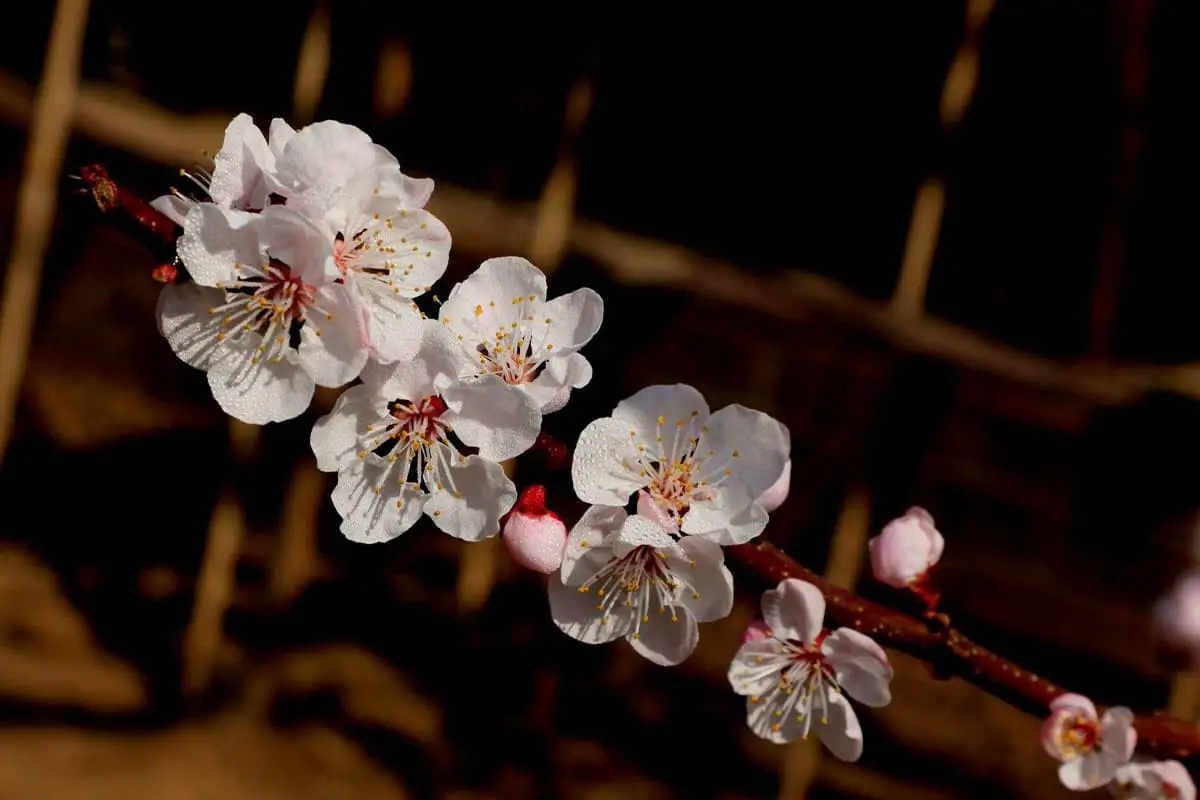
The dorsal ridge is straighter, with a keel-like ridge on the ventral surface. The kernel tastes bitter or sweet. The flowering period is from March to April, with flowers resembling those of peach and plum trees.
Initially a pure red color, the flowers fade after blooming and turn pure white when they fall. The fruiting period is from June to July. The fruit flesh is dark yellow, sweet, juicy, with sutures and soft hairs, ranging in color from light yellow to yellow-red.
Apricot trees have a long lifespan and are commonly seen in North and Northwest China, often exceeding a hundred years, yet still producing high yields. Their economic lifespan is also extensive, around 40 to 50 years.
Apricots adapt well to different soils and terrains, and are often planted on hillside terraces and hilly areas, growing normally even at altitudes of 800 to 1000 meters. They can thrive in loam, clay, slightly acidic soil, alkaline soil, and even in rock crevices.

Apricot trees are cold-resistant, able to withstand temperatures as low as -30℃, and they can tolerate high temperatures, growing normally even at a maximum summer temperature of 43.4℃, while still maintaining excellent quality.
They originate from Central Asia, Japan, and Korea, but have also been found in Armenia and ancient Persia.
China began extensive cultivation of apricots as early as 3000 BC, and they were introduced to western countries mainly through the Silk Road. Apricots are cold-resistant, light-loving, drought-tolerant, and flood-intolerant.

Apricots are famous ornamental trees in China, their flowers exhibit a mixture of red and white, resembling rouge spots, with their rich and delicate charm capturing the spring breeze.
Apricot trees can be planted in front of courtyards, in corners, along roads, near water, or in groups on hillsides and along riversides. They are also suitable for afforestation in deserts and barren mountains.
The fruit can be eaten fresh or processed into preserved fruit, and the kernels can be used for eating or medicinal purposes. Apart from being a famous fruit tree with fruits that can be eaten fresh, they can also be made into dried apricots and preserved apricots.
The kernels can be used for eating, oil extraction, and medicinal purposes. With a long lifespan, often exceeding a hundred years, apricot trees are a major ornamental species in spring.
The beauty benefits of apricot flowers are related to their components that inhibit the esterase activity of skin cells.
Consuming apricot flower porridge can help the stomach and intestines fully absorb its active ingredients that inhibit the tyrosinase activity of skin cells, thus preventing the formation of acne and dark spots.
Seeds or grafting propagation can be used. The rootstocks for grafting can be peach, plum, northeastern apricot, and the bud grafting is carried out in mid to late July. Bud grafting should not be delayed, or else it will be difficult to peel off, resulting in a low survival rate.
If the bud grafting is not successful in that year, grafting can be done in the spring of the following year. Tillering propagation can also be used.
The major pests and diseases include apricot canker, black spot disease, gummosis, apricot weevil, aphids, red spiders, scale insects, and moth caterpillars.
Among them, apricot canker, black spot disease, and scale insects are the most harmful. The following comprehensive measures should be taken to prevent and control them.
First, from winter to before budding, dead branches and fallen leaves in the orchard should be cleaned up, diseased branches should be pruned and destroyed centrally, the old bark should be scraped off, wintering sources of pests and diseases should be cleaned up, and the base number of pests and diseases should be reduced.
Second, before flowering, spray the branches with a 5 Beauveria bassiana sulfur compound to prevent and control apricot canker, black spot disease, scale insects and other overwintering insect eggs.
Third, from mid-March to early April is the time when the apricot weevil comes out of the ground and harms the trees. Utilize its feign death characteristic, shake the tree in the early morning, manually catch and kill the insects, clean up the insect-infected fruit, and timely spray a mixture of 20% quick-kill 2000 times liquid and 50% carbendazim 600 times liquid. Other insecticides and fungicides can also be used to prevent and control apricot weevil, apricot canker, black spot disease, and perforation disease.
Fourth, spray 40% pyrethrum emulsion 1000 times liquid and quick-acting spirit 200 times liquid in mid-April to prevent apricot canker, black spot disease, perforation disease, and peach aphids.
Fifth, in mid-June, use 2000-3000 times liquid of dipterex, 1000 times liquid of quick-kill, and 1500 times liquid of multiple moulds to prevent and control red spiders, scale insects, black spot disease, perforation disease, and other pests and diseases, and manually catch and kill adult longicorn beetles.
Sixth, in mid to late July, manually catch and kill undispersed boat-shaped caterpillars, or spray 2000 times liquid of quick-kill to prevent and control them.
Seventh, spray medicine before budding, specifically during the flower bud swelling period, using 4000-5000 times liquid of imidacloprid. After budding, use 4000-5000 times liquid of imidacloprid and add 2000~3000 times liquid of deltamethrin to kill aphids, and also treat apricot bees. After fruit setting, use 1500 times liquid of aphid net to prevent aphids.

Peggie was once a high school mathematics teacher, but she set aside her chalkboard and textbooks to follow her lifelong passion for flowers. After years of dedication and learning, she not only established a thriving flower shop but also founded this blog, “Flowers Library”. If you have any questions or wish to learn more about flowers, feel free to contact Peggie.
 English
 العربية
 Bahasa Indonesia
 Deutsch
 Français
 Italiano
 Nederlands
 Português
 Русский
 日本語